Loading...
Done


It looks like 2024 has ended and we are still alive (although of course it's not evening yet). Well, let's wish ourselves the same in the future. If someone wants to put USDT TRC20 under the tree: TDWPvSi7RY4wNZPukDRyKghhLGTGsRNRBe (nobody will put anything, of course – but you understand, it's a ritual). Happy New Year! And now disco.
Details
31 Dec 2024 04:28:00
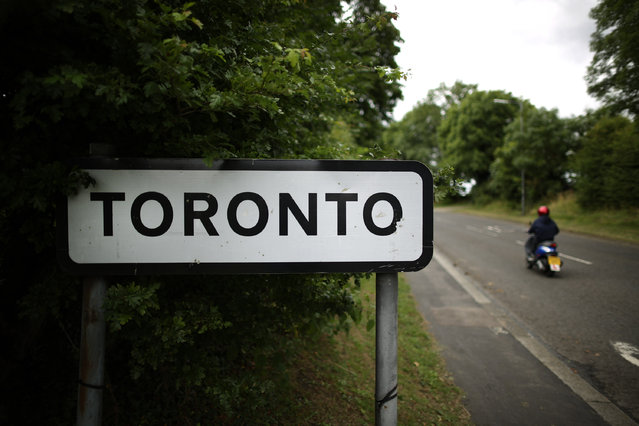
A road sign points the way on August 6, 2013 in Toronto, England. Originally called Newton Cap in the county of Durham, built for workers at the nearby colliery,  owner Henry Stobart re-named the village Toronto after visiting Canada. (Photo by Peter Macdiarmid/Getty Images)

A handful of villages in the U.K. share the same name as cities or countries from around the world, and they’re spending life in the shadows of their more famous namesakes. Photo: A road sign points the way on August 6, 2013 in Toronto, England. Originally called Newton Cap in the county of Durham, built for workers at the nearby colliery, owner Henry Stobart re-named the village Toronto after visiting Canada. (Photo by Peter Macdiarmid/Getty Images)
Details
29 Aug 2014 11:51:00
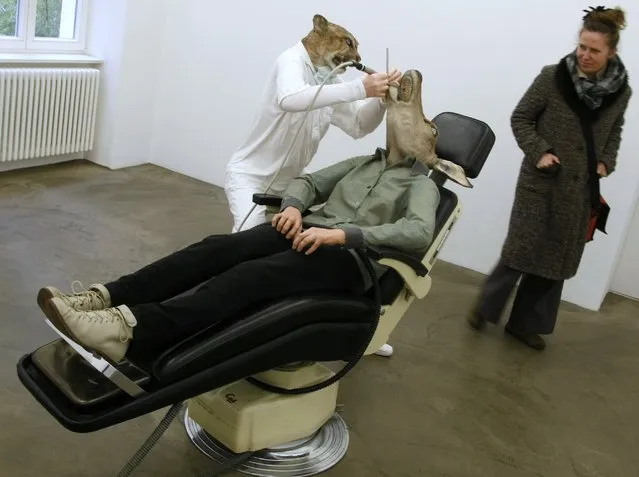
A visitor passes behind the sculpture “Puma-Dentist” made with plastic, wax and original heads of a puma and a hind by Austrian artist Deborah Sengl during an exhibition at the art gallery Deschler in Berlin April 15, 2008. (Photo by Fabrizio Bensch/Reuters)

A visitor passes behind the sculpture “Puma-Dentist” made with plastic, wax and original heads of a puma and a hind by Austrian artist Deborah Sengl during an exhibition at the art gallery Deschler in Berlin April 15, 2008. (Photo by Fabrizio Bensch/Reuters)
Details
11 Mar 2014 07:55:00
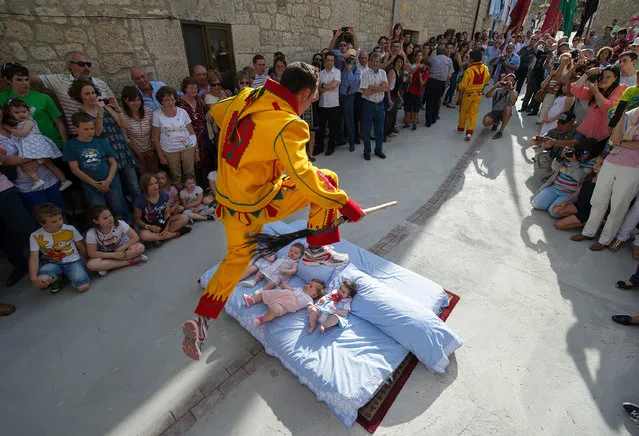
A man representing the devil leaps over babies during the festival of El Salto del Colacho (the devil's jump) on June 22, 2014 in Castrillo de Murcia, Spain. The festival, held on the first Sunday after Corpus Cristi, is a catholic rite of the devil cleansing babies of original sin. (Photo by Denis Doyle/Getty Images)

A man representing the devil leaps over babies during the festival of El Salto del Colacho (the devil's jump) on June 22, 2014 in Castrillo de Murcia, Spain. The festival, held on the first Sunday after Corpus Cristi, is a catholic rite of the devil cleansing babies of original sin. (Photo by Denis Doyle/Getty Images)
Details
29 Jun 2014 09:07:00
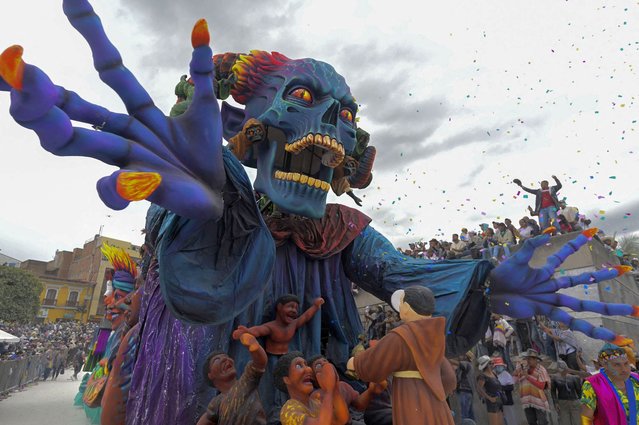
Picture of a float taking part in the “White Day” parade during the Carnival of Blacks and Whites in Pasto, Colombia on January 6, 2024. The Blacks and Whites carnival has its origins in a mix of Andean, Amazonian and Pacific cultural expressions, and it celebrates the ethnic diversity in the region and was proclaimed by UNESCO as intangible cultural heritage in 2009. (Photo by Joaquín Sarmiento/AFP Photo)

Picture of a float taking part in the “White Day” parade during the Carnival of Blacks and Whites in Pasto, Colombia on January 6, 2024. The Blacks and Whites carnival has its origins in a mix of Andean, Amazonian and Pacific cultural expressions, and it celebrates the ethnic diversity in the region and was proclaimed by UNESCO as intangible cultural heritage in 2009. (Photo by Joaquín Sarmiento/AFP Photo)
Details
17 Mar 2025 03:56:00
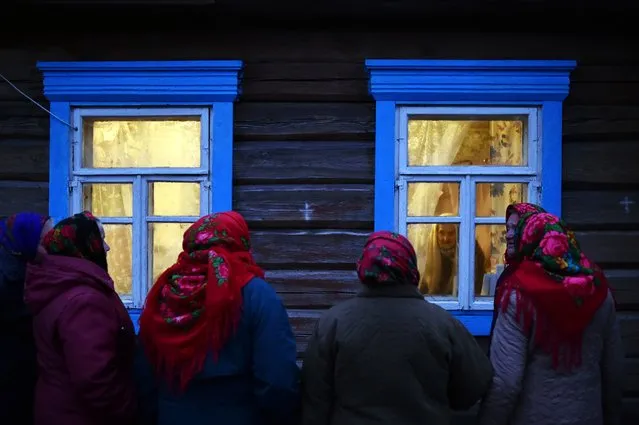
Belarusian villagers celebrate the Christmas carol rite (Kalyady) in the village of Danilevichy, some 320 km south of Minsk on January 7, 2020. Kalyady is an ancient pagan holiday originally celebrated on winter solstice. Dressed-up people walk from house to house singing, dancing, eating and drinking with their neighbours. (Photo by Sergei Gapon/AFP Photo)

Belarusian villagers celebrate the Christmas carol rite (Kalyady) in the village of Danilevichy, some 320 km south of Minsk on January 7, 2020. Kalyady is an ancient pagan holiday originally celebrated on winter solstice. Dressed-up people walk from house to house singing, dancing, eating and drinking with their neighbours. (Photo by Sergei Gapon/AFP Photo)
Details
25 Mar 2020 00:01:00
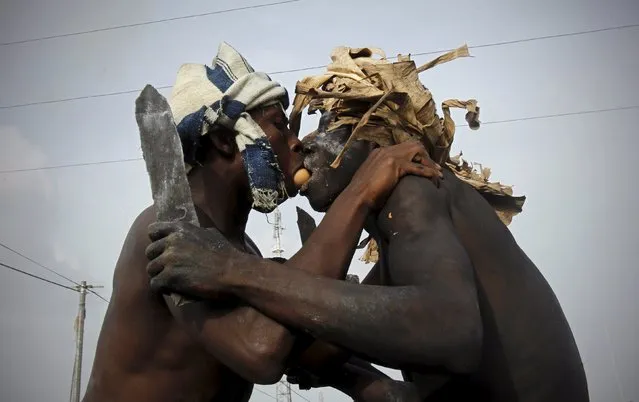
Participants pass an egg using their mouths during a religious ritual as they play the role of traditional fighters in a parade during the Popo (Mask) Carnival of Bonoua, in the east of Abidjan, April 18, 2015. The carnival has its origins in the changes that Aboure youths in Bonoua introduced to the annual festival of yams. (Photo by Luc Gnago/Reuters)

Participants pass an egg using their mouths during a religious ritual as they play the role of traditional fighters in a parade during the Popo (Mask) Carnival of Bonoua, in the east of Abidjan, April 18, 2015. The carnival has its origins in the changes that Aboure youths in Bonoua introduced to the annual festival of yams. (Photo by Luc Gnago/Reuters)
Details
20 Apr 2015 13:36:00
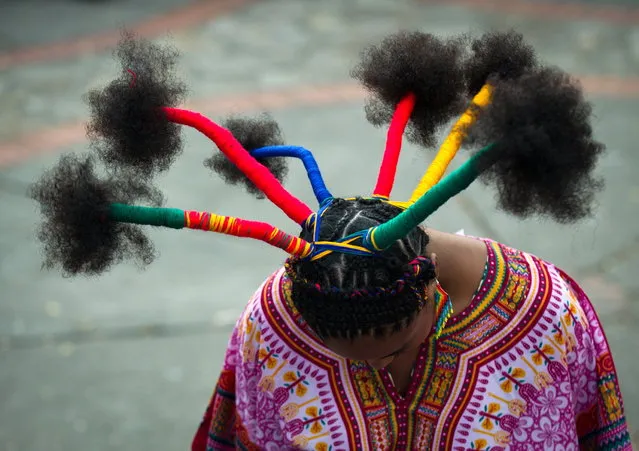
A woman presents an Afro-Colombian hairstyle during the 9th contest of Afro-hairdressers, in Cali, Valle del Cauca departament, Colombia, on May 12, 2013. The Afro hairstyles have their origins in the time of slavery, when women sat to comb their children hair after work. (Photo by Luis Robayo/AFP Photo)

A woman presents an Afro-Colombian hairstyle during the 9th contest of Afro-hairdressers, in Cali, Valle del Cauca departament, Colombia, on May 12, 2013. The Afro hairstyles have their origins in the time of slavery, when women sat to comb their children hair after work. (Photo by Luis Robayo/AFP Photo)
Details
13 May 2013 11:01:00