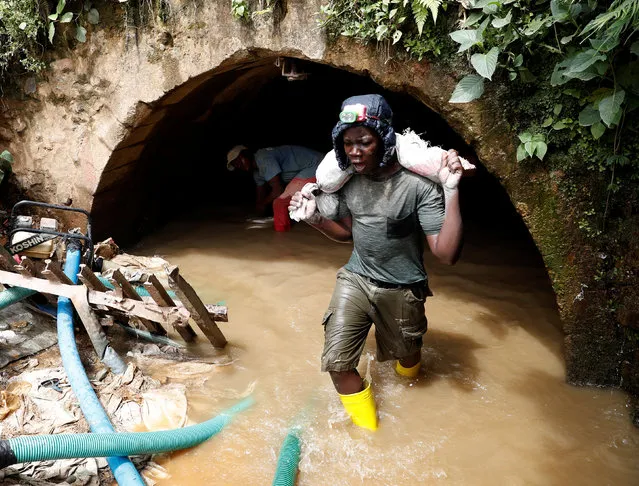
Men work at Makala gold mine camp near the town of Mongbwalu in Ituri province, eastern Democratic Republic of Congo on April 7, 2018. (Photo by Goran Tomasevic/Reuters)
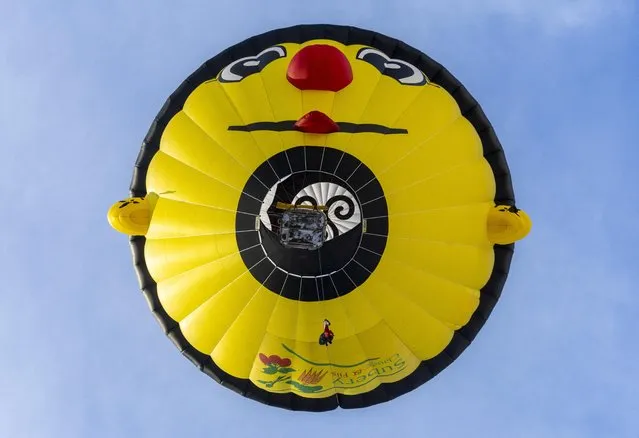
A balloon takes part in the 43rd International Hot Air Balloon Festival in Chateau-d'Oex, Switzerland on January 24, 2023. (Photo by Denis Balibouse/Reuters)
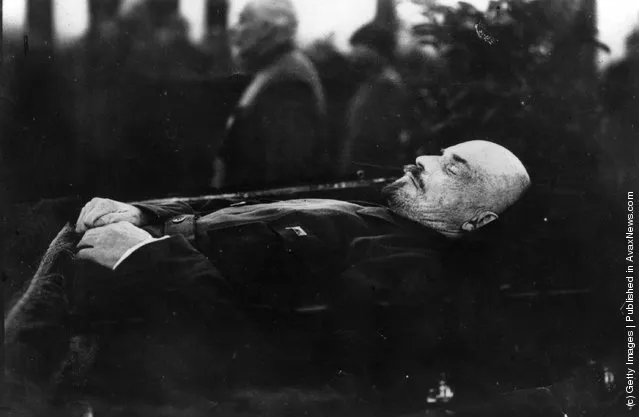
Photo: Vladimir Ilyich Lenin (1870 – 1924) lying in state in the Kremlin. (Photo by Hulton Archive/Getty Images). 1924
Important! For the same article in Russian language click here.
Something quite intriguing is happening within Russian-speaking internet during the last few – should you type a fully academic inquiry (at least, according to Russian academic requirements) in national search engines for "Lenin's mausoleum" – the first thing you get (even in top 10 searches) is website pages talking about black magic and occult. Website authors view this construction differently, but unconditionally agree on one thing: the mausoleum of the "leader of the world proletariat” – the essence of a magical artifact, a sort of “energy vampire”. It was built with a certain purpose: to drain the energy out of miserable Soviet citizens on one hand; and to poison the anthroposphere of one-sixth part of the earth with its vibes (the exact territory that was occupied by the former Soviet Union), depriving the Russian people of will to resist on the other hand. Complete nonsense? No doubt. Nevertheless, an intriguing one. Well, probably because some oddities do exist in mausoleum's history. These oddities are the thing we are going to discuss this time. First, let me refresh you memory on the subject.
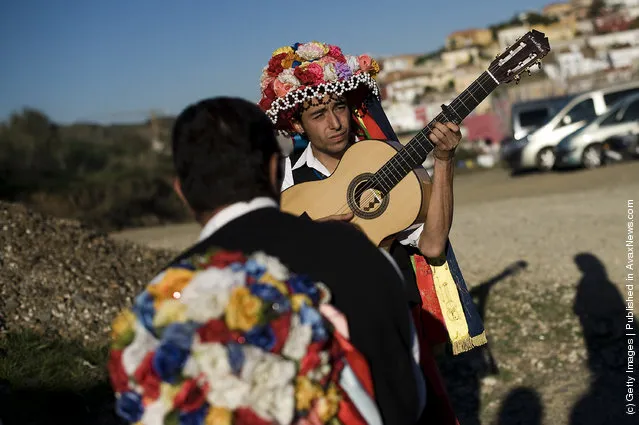
A man in traditional costume tunes his guitar before performing in a traditional Verdiales Flamenco contest on December 28, 2011 in Malaga, Spain. Verdiales is a style of Flamenco thought to originate near the Andalucian port of Malaga, and is performed by groups of musicians known as “Pandas” during the contest held in the outskirts of the city. (Photo by David Ramos/Getty Images)
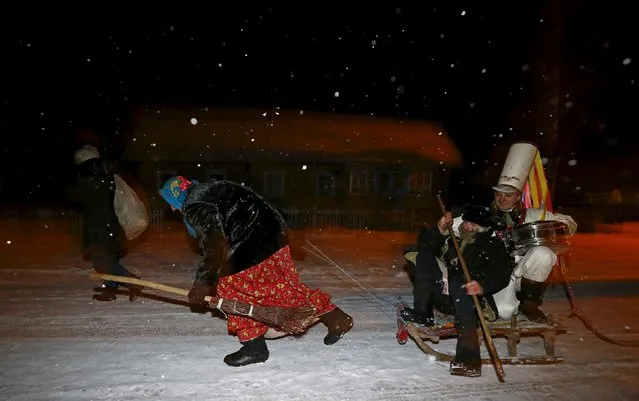
Belarussian villagers perform during a celebration of the “Tsary” rite in the village of Semezhevo, Belarus January 13, 2016. This unique rite originated from the 18th century, and now takes place only in this village marking the New Year, according to the Julian calendar, on January 13. (Photo by Vasily Fedosenko/Reuters)
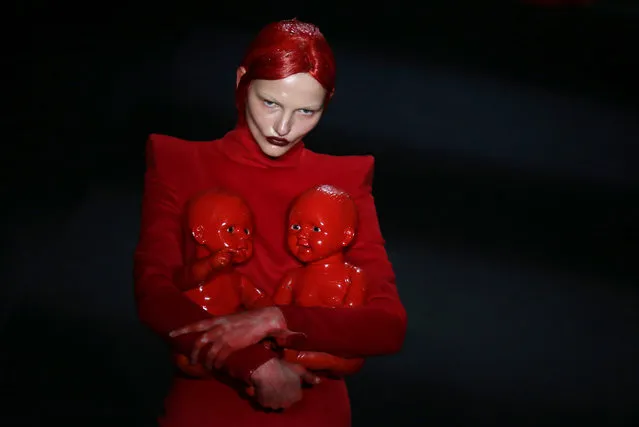
A model presents a creation by Chinese designer Hu Sheguang from Sheguang Hu collection at China Fashion Week in Beijing, March 31, 2016. (Photo by Jason Lee/Reuters)
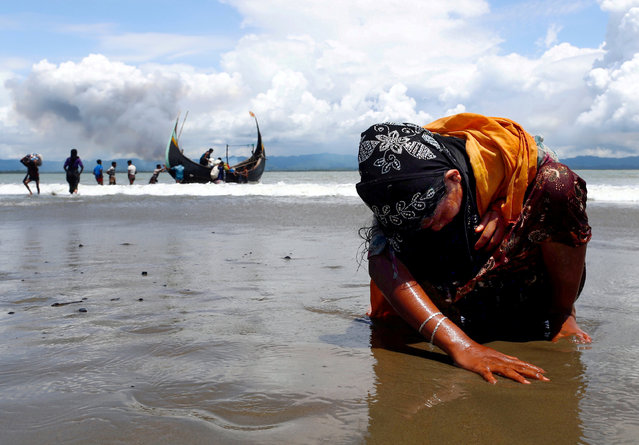
An exhausted Rohingya refugee woman touches the shore after crossing the Bangladesh-Myanmar border by boat through the Bay of Bengal, in Shah Porir Dwip, Bangladesh, September 11, 2017. (Photo by Danish Siddiqui/Reuters)
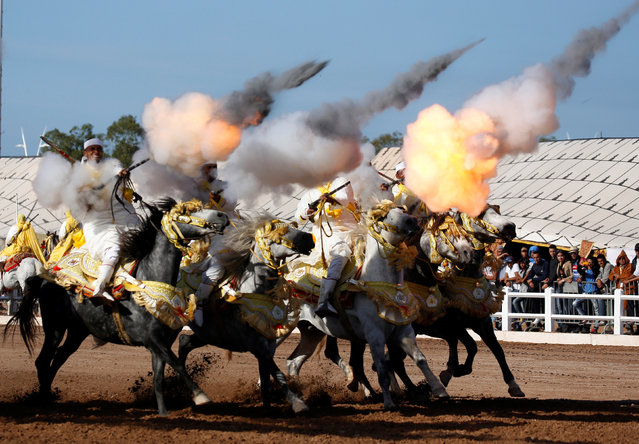
Horse riders perform with guns during the El-Jadida International Horse Show in El-Jadida, south of Casablanca, Morocco, October 15, 2016. (Photo by Youssef Boudlal/Reuters)