Loading...
Done
Maori  People New Zealand

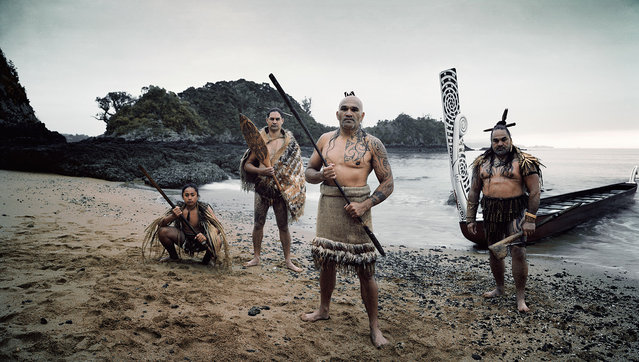
The long and intriguing story of the origine of the indigenous Maori people can be traced back to the 13th century, the mythical homeland Hawaiki, Eastern Polynesia. Due to centuries of isolation, the Maori established a distinct society with characteristic art, a separate language and unique mythology. Defining aspects of Maori traditional culture include art, dance, legends, tattoos and community. While the arrival of European colonists in the 18th centure had a profound impact on the Maori way of life, many aspects of traditional society have survived into the 21th century.
Details
11 Mar 2014 14:40:00
Arctic Hare

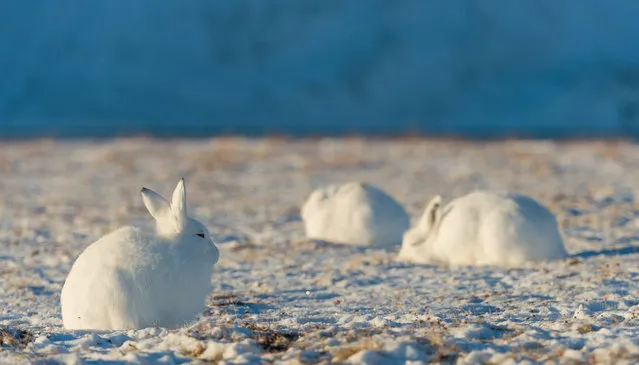
The arctic hare, or polar rabbit, is a species of hare which is adapted largely to polar and mountainous habitats. The arctic hare survives with a thick coat of fur and usually digs holes in the ground or under snow to keep warm and sleep. Arctic hares look like rabbits but have shorter ears, are taller when standing, and, unlike rabbits, can thrive in cold climates. They can travel together with many other hares, sometimes huddling with dozens or more, but are usually found alone, taking, in some cases, more than one partner. The arctic hare can run up to 60 kilometres per hour (40 mph). Its predators include the arctic wolf, arctic fox, and ermine.
Details
17 Mar 2014 13:56:00
How swimming, and lots of love, saved Harper the puppy’s life

On August 31, 2011, a puppy was rescued from a garbage bag in Central Florida. She was afflicted by a condition dubbed “swimmer puppy syndrome”, formally, pectus excavatum. It's rare in puppies, but when it happens it causes them to lie flat on their chests with their legs perpetually splayed out. It's usually a symptom of serious neurological problems that most puppies cannot survive. Veterinarians recommended putting her to sleep... (Photo by Flyin Fur Pet Photography)
Details
23 Jun 2012 09:10:00
Of all the species affected by river regulation in Australia, the ibis is one of the few that has changed its behaviour and moved to coastal cities. (Photo by Rick Stevens/The Guardian)

Tip turkey, dumpster chook, rubbish raptor – the Australian white ibis goes by many unflattering names. But it is a true urban success story, scavenging to survive in cities across Australia as wetlands have been lost. Wildlife photographer Rick Stevens captured them in Sydney. Here: Of all the species affected by river regulation in Australia, the ibis is one of the few that has changed its behaviour and moved to coastal cities. (Photo by Rick Stevens/The Guardian)
Details
11 Apr 2018 00:03:00
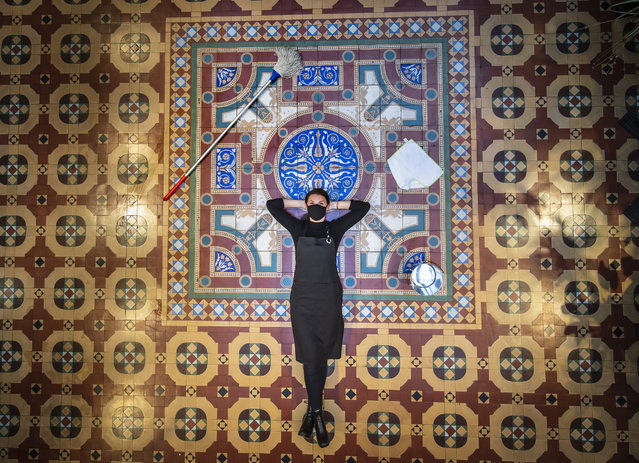
Bar Convent employee Lauren Masterman relaxes after cleaning a historic George and Arthur Maw tiled floor created in 1867, one of only two surviving examples of this assemblage of tiles, at England's oldest living convent Bar Convent on October 13, 2020. Visitors to the convent are being invited to follow in the footsteps of residents from the last 150 years and enjoy the historic space decorated with rare 19th century floor tiles. (Photo by Danny Lawson/PA Images via Getty Images)

Bar Convent employee Lauren Masterman relaxes after cleaning a historic George and Arthur Maw tiled floor created in 1867, one of only two surviving examples of this assemblage of tiles, at England's oldest living convent Bar Convent on October 13, 2020. Visitors to the convent are being invited to follow in the footsteps of residents from the last 150 years and enjoy the historic space decorated with rare 19th century floor tiles. (Photo by Danny Lawson/PA Images via Getty Images)
Details
15 Oct 2020 00:07:00
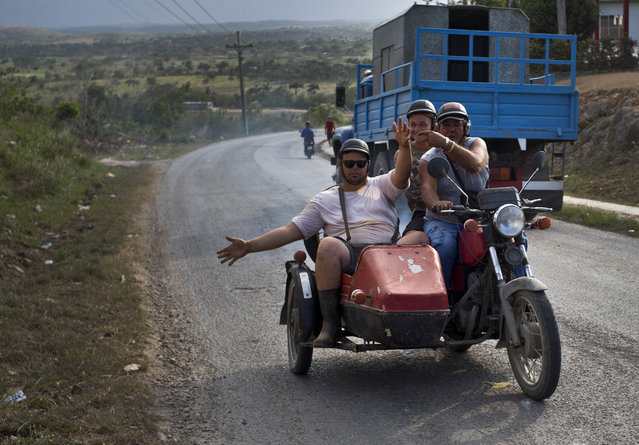
In this April 13, 2018 photo, motorcycle taxi driver Ricardo Medina, 60, transports vegetable vender Rigoberto Herrera Mendez, left, and coconut vendor Osvaldo Ochoa in Campo Florido, east of Havana, Cuba. The three men expressed hope that new government leadership will improve things, saying the country cannot move backwards. “We survive life with our work”, said Medina. (Photo by Ramon Espinosa/AP Photo)

In this April 13, 2018 photo, motorcycle taxi driver Ricardo Medina, 60, transports vegetable vender Rigoberto Herrera Mendez, left, and coconut vendor Osvaldo Ochoa in Campo Florido, east of Havana, Cuba. The three men expressed hope that new government leadership will improve things, saying the country cannot move backwards. “We survive life with our work”, said Medina. (Photo by Ramon Espinosa/AP Photo)
Details
01 May 2018 00:01:00
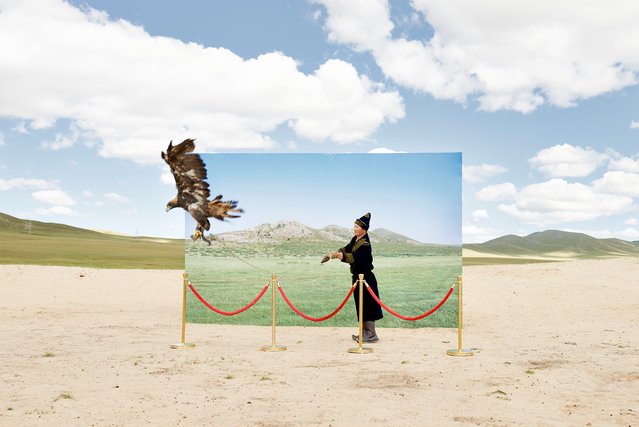
Up to 35% of Mongolians still live a nomadic life, depending on their land to survive. But environmental changes, particularly desertification, means this way of life is under threat. Korean photographer Daesung Lee’s Futuristic Archaeology images show billboard-size backdrops of lush steppe contrasting with actual scenery as former nomads enact scenes of hunting, herding and Mongolian wrestling. (Photo by Daesung Lee)

Up to 35% of Mongolians still live a nomadic life, depending on their land to survive. But environmental changes, particularly desertification, means this way of life is under threat. Korean photographer Daesung Lee’s Futuristic Archaeology images show billboard-size backdrops of lush steppe contrasting with actual scenery as former nomads enact scenes of hunting, herding and Mongolian wrestling. (Photo by Daesung Lee)
Details
24 Nov 2016 08:01:00
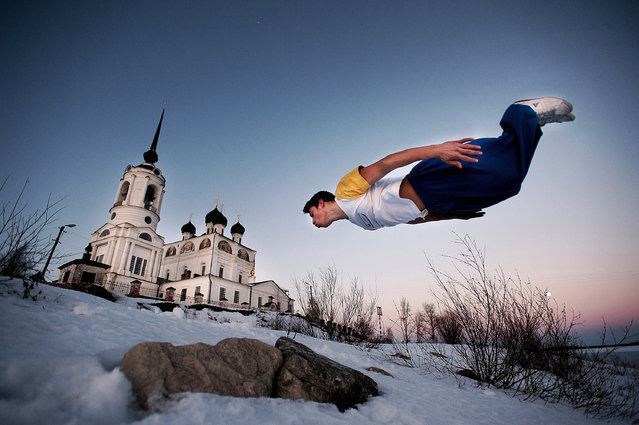
Anton Unitsyn, Russia. Shortlist, Professional , Daily Life. Parkour jumpers on their daily training. On the background – one of the main Solvychegodsk sights – Blagoveshchensky Cathedral. This church is among 3 churches, that survived soviet times. At the begining of 20th century there were 13 churches in Solvichegodsk. After breakdown of the communism, Solvichegodsk as many small towns in russia is stuck in it's past. Despite everything, people in Solvichegodsk still belive in their positive future, and wait for wind of change. (Photo by Anton Unitsyn/Sony World Photography Awards)

Anton Unitsyn, Russia. Shortlist, Professional , Daily Life. Parkour jumpers on their daily training. On the background – one of the main Solvychegodsk sights – Blagoveshchensky Cathedral. This church is among 3 churches, that survived soviet times. At the begining of 20th century there were 13 churches in Solvichegodsk. After breakdown of the communism, Solvichegodsk as many small towns in russia is stuck in it's past. Despite everything, people in Solvichegodsk still belive in their positive future, and wait for wind of change. (Photo by Anton Unitsyn/Sony World Photography Awards)
Details
25 Feb 2016 12:16:00