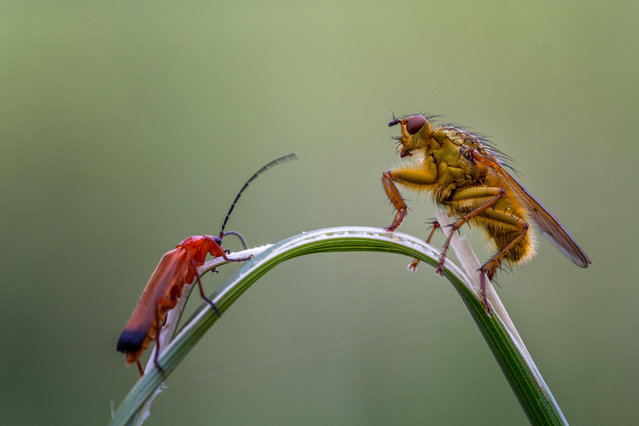
A hogweed bonking beetle and yellow dung fly in a stalk standoff (the fly gave in), in Burley-in-Wharfedale, Yorkshire, England. (Photo by Rebecca Cole/Alamy Stock Photo)
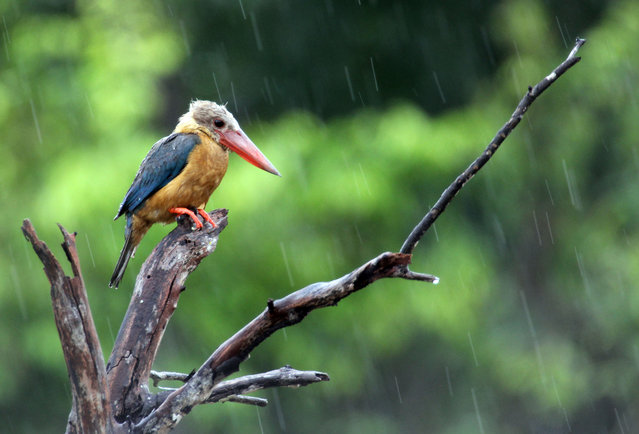
A stork-billed kingfisher (Pelargopsis capensis) is seen perched on a tree during monsoon rain on July 25, 2016 in Bintan, Indonesia. The stork-billed kingfisher is a tree species which is widely but sparsely distributed in the tropical Indian subcontinent and Southeast Asia, from India to Indonesia. This kingfisher is resident throughout its range. It is very large, measuring 35 to 38 cm (14 to 15 in) in length. The adult has a green back, blue wings and tail, and grey head. (Photo by Sijori Images/Barcroft Images)
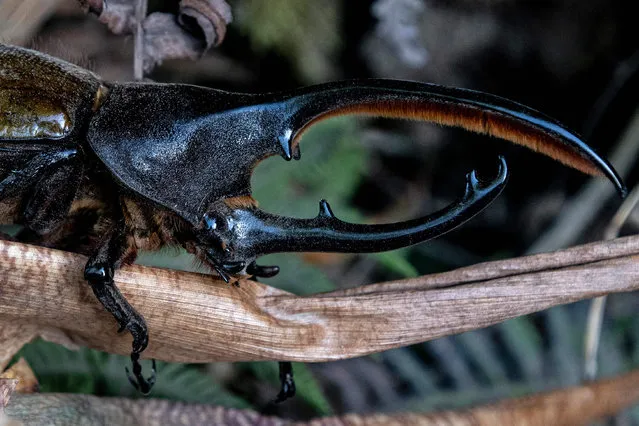
A Hercules beetle, one of the largest species of its kind, in seen at the Monteverde Cloud Forest Biological Reserve, in Puntarenas, Costa Rica, on May 23, 2023. In the Monteverde cloud forest, dense fog among the lush vegetation is increasingly rare and temperatures are increasing each year due to climate change. (Photo by Ezequiel Becerra/AFP Photo)
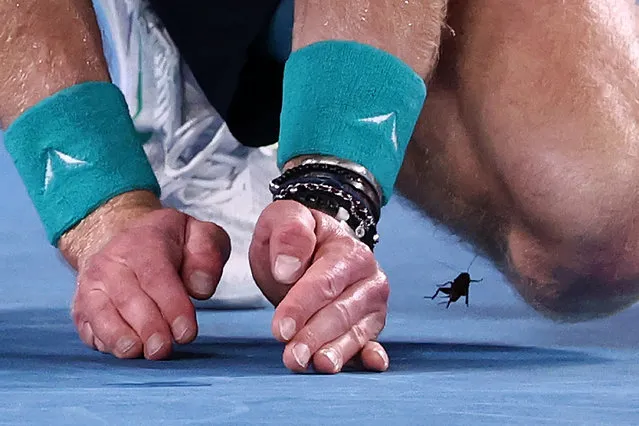
Russia's Andrey Rublev tries to remove a cricket from the court during the men's singles match against USA's Sebastian Korda on day six of the Australian Open tennis tournament in Melbourne on January 19, 2024. (Photo by David Gray/AFP Photo)
In this undated photo entitled “Close Call”, a Hawaiian green sea turtle swims through a breaking wave on the North Shore of Oahu near Haleiwa, Hawaii. The image appears in photographer Clark Little's new book, “The Art of Waves”. (Photo by Clark Little via AP Photo)
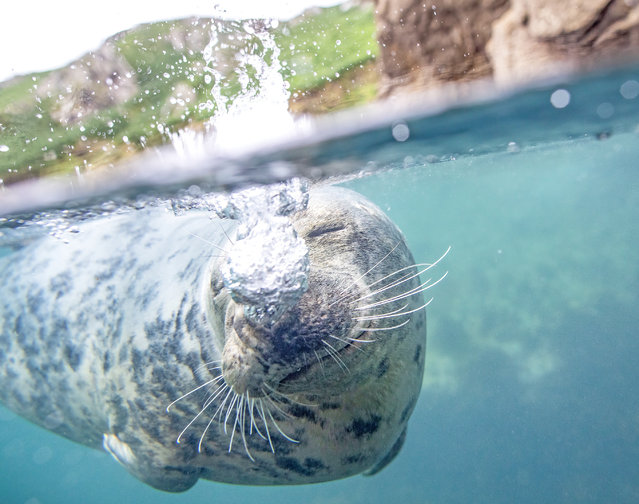
A curious grey seal investigates photographer Brian Matthews at Lundy Island off the north Devon coast, July 2024. *Photo by Brian Matthews/Solent News)
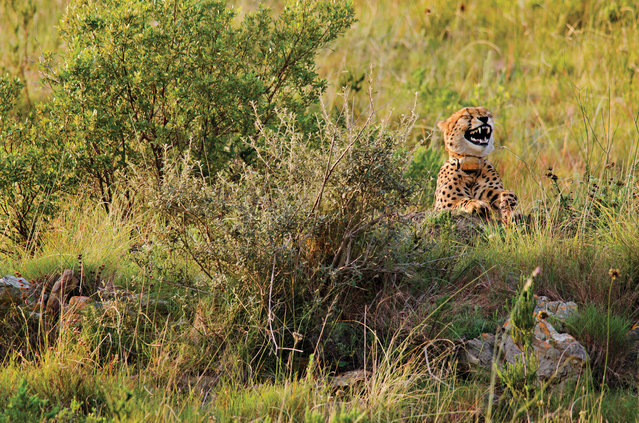
A comedic photo of a cheetah appearing to find something hilarious by Dutton Robert for the Comedy Wildlife Photo Awards 2016, South Africa, April, 2012. (Photo by Dutton Robert/Barcroft Images/Comedy Wildlife Photo Awards)
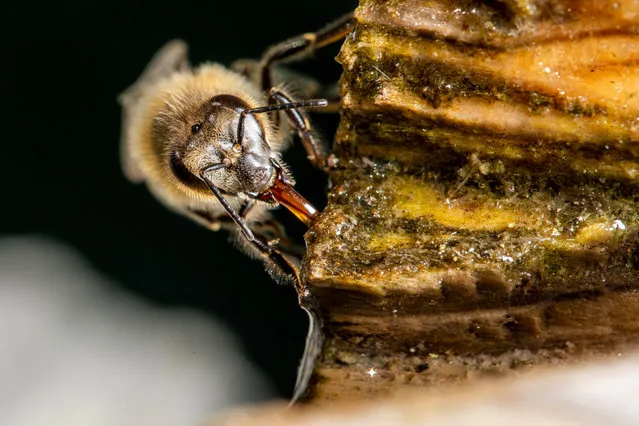
A Western honey bee feeds off acacia pollen at an apiary in Nagyszenas, eastern Hungary, 25 April 2020. The preparation of the bees for the acacia bloom began two weeks later than usual this year; due to the late frosts, this season's yield of Hungaricum acacia honey is expected to be lower. (Photo by Tibor Rosta/EPA/EFE)