Loading...
Done
Tourists use a selfie stick on the Trocadero Square, with  the Eiffel Tower in background, in Paris, Tuesday, January 6, 2015. (Photo by Remy de la Mauviniere/AP Photo)

Tourists use a selfie stick on the Trocadero Square, with the Eiffel Tower in background, in Paris, Tuesday, January 6, 2015. Selfie sticks have become popular among tourists because you don't have to ask strangers to take your picture, and you can capture a wide view in a selfie without showing your arm. But some people find selfie sticks obnoxious, arguing that they detract from the travel experience. (Photo by Remy de la Mauviniere/AP Photo)
Details
09 Jan 2015 13:15:00
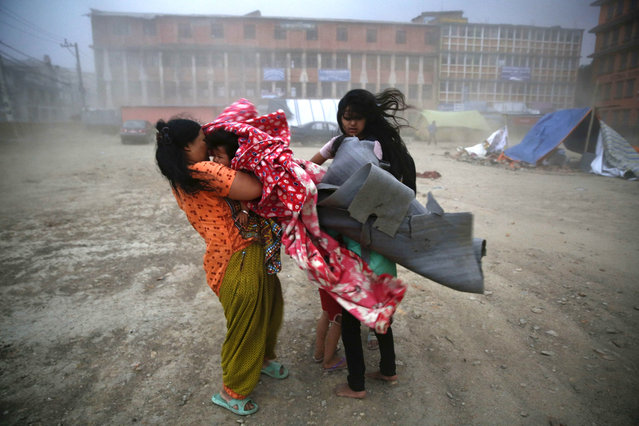
A storm whips through a tented area occupied by Nepalese earthquake survivors as a mother grabs her infant child and runs to find shelter in Kathmandu, Nepal 23 May 2015. Nepalese, who lost their homes in earthquake and fear aftershocks, have been living in temporary shelter in open ground which they had to flee because of the heavy rain and powerful wind. (Photo by Narendra Shrestha/EPA)

A storm whips through a tented area occupied by Nepalese earthquake survivors as a mother grabs her infant child and runs to find shelter in Kathmandu, Nepal 23 May 2015. Nepalese, who lost their homes in earthquake and fear aftershocks, have been living in temporary shelter in open ground which they had to flee because of the heavy rain and powerful wind. (Photo by Narendra Shrestha/EPA)
Details
25 May 2015 10:00:00
Revelers celebrate New Years Eve in socially distanced pods at Times Square on December 31, 2020, in New York City. On average, about one million revelers are drawn to the Crossroads of the World to watch performances and celebrate the New Year. This year a limited live audience of about 40 first responders and essential workers will be allowed to watch the New Years' ball drop from a secure area in Times Square. (Photo by David Dee Delgado/Getty Images)

Revelers celebrate New Years Eve in socially distanced pods at Times Square on December 31, 2020, in New York City. On average, about one million revelers are drawn to the Crossroads of the World to watch performances and celebrate the New Year. This year a limited live audience of about 40 first responders and essential workers will be allowed to watch the New Years' ball drop from a secure area in Times Square. (Photo by David Dee Delgado/Getty Images)
Details
05 Jan 2021 00:07:00
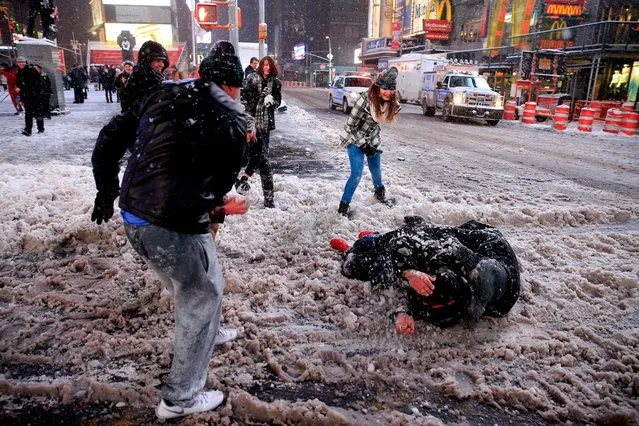
Pedestrians have a snowball fight in Times Square following a mandatory shutdown of the streets at 11 p.m. on January 26, 2015 in New York City. New York, and much of the Northeast, is bracing for a major winter storm which is expected to bring blizzard conditions and 10 to 30 inches of snow to the area. (Photo by Alex Trautwig/AFP Photo)

Pedestrians have a snowball fight in Times Square following a mandatory shutdown of the streets at 11 p.m. on January 26, 2015 in New York City. New York, and much of the Northeast, is bracing for a major winter storm which is expected to bring blizzard conditions and 10 to 30 inches of snow to the area. (Photo by Alex Trautwig/AFP Photo)
Details
27 Jan 2015 12:38:00
Visitors are seen inside a newly opened bookstore in Chongqing, China on January 29, 2019. Covering an area of 1,400 square meters, the Zhongshuge Bookstore in Chongqing attracts readers with its creative decor. (Photo by Reuters/China Stringer Network)

Visitors are seen inside a newly opened bookstore in Chongqing, China on January 29, 2019. Covering an area of 1,400 square meters, the Zhongshuge Bookstore in Chongqing attracts readers with its creative decor. (Photo by Reuters/China Stringer Network)
Details
31 Jan 2019 10:52:00
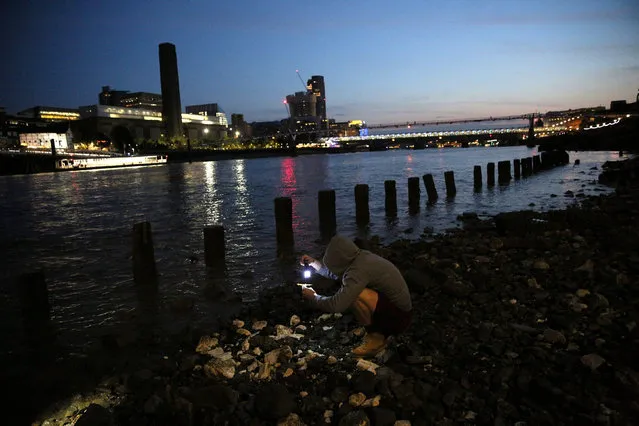
A mudlark uses a torch to look for items on the bank of the River Thames in London, Britain June 06, 2016. Mudlarking is believed to trace its origins to the 18th and 19th century, when scavengers searched the Thames' shores for items to sell. These days, history and archaeology fans are the ones hoping to find old relics such as coins, ceramics, artifacts or everyday items from across centuries. They wait for the low tide and then scour specific areas of exposed shores. "If you're in a field you could be out all day long, with the river you're restricted to about two or three hours," mudlark Nick Stevens said. While many just use the naked eye for their searches, others rely on metal detectors for which a permit from the Port of London Authority is needed. Digging also requires consent. (Photo by Neil Hall/Reuters)

A mudlark uses a torch to look for items on the bank of the River Thames in London, Britain June 06, 2016. Mudlarking is believed to trace its origins to the 18th and 19th century, when scavengers searched the Thames' shores for items to sell. These days, history and archaeology fans are the ones hoping to find old relics such as coins, ceramics, artifacts or everyday items from across centuries. their finds with the Portable Antiquities Scheme. Any item over 300 years old must be recorded. (Photo by Neil Hall/Reuters)
Details
27 Aug 2016 10:43:00
Miners work extremely long days under the hot sun and the hours are often longer in illegal mines in Ghana, West Africa, 2014. An Australian photographer has captured the harsh reality of illegal mining under the unforgiving sun with these Ghanaian miners. Heidi Woodman travelled to Ghana, West Africa to explore the regionís booming mining business, including the growing number of illegal mines. Using Accra as her base, Heidi visited the areas of Tarkwa, Kyebi, East Akim, Kumasi, Obuasi and Takoradi to find areas with a high concentration of galamsey – illegal mining activity. (Photo by Heidi Woodman/Barcroft Images)

Miners work extremely long days under the hot sun and the hours are often longer in illegal mines in Ghana, West Africa, 2014. An Australian photographer has captured the harsh reality of illegal mining under the unforgiving sun with these Ghanaian miners. (Photo by Heidi Woodman/Barcroft Images)
Details
24 Feb 2017 00:02:00
“Left behind” children Luo Hongni, 11 (L) and brother  Luo Gan,10, carry flowers to be used as feed while doing chores in the fields on December 18, 2016 in Anshun, China. (Photo by Kevin Frayer/Getty Images)

“Left behind” children Luo Hongni, 11 (L) and brother Luo Gan,10, carry flowers to be used as feed while doing chores in the fields on December 18, 2016 in Anshun, China. Like millions of Chinese children, the four Luo siblings are being raised by their grandparents in rural China as their parents left to find work in urban areas. (Photo by Kevin Frayer/Getty Images)
Details
18 Feb 2017 00:03:00