Loading...
Done
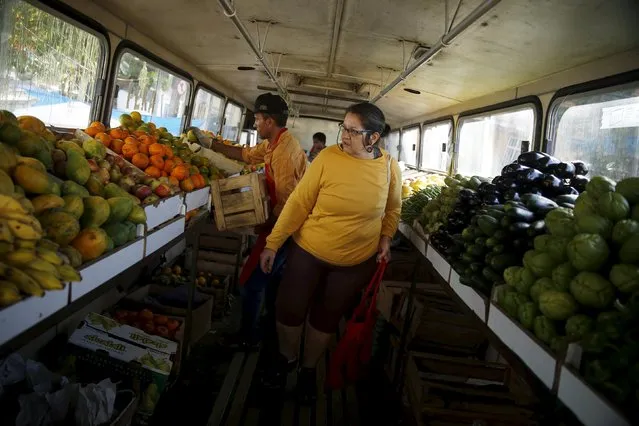
A woman looks for fruits to buy inside a bus called Sacolao in Santa Teresa neighborhood in Rio de Janeiro, Brazil, July 7, 2015. (Photo by Pilar Olivares/Reuters)

A woman looks for fruits to buy inside a bus called Sacolao in Santa Teresa neighborhood in Rio de Janeiro, Brazil, July 7, 2015. The bus, which began operating as a municipal initiative but has been taken over by a private enterprise, arrives every week in some neighborhoods to facilitate families with their grocery shopping and sells food at an affordable price, according to sellers. (Photo by Pilar Olivares/Reuters)
Details
08 Jul 2015 11:52:00
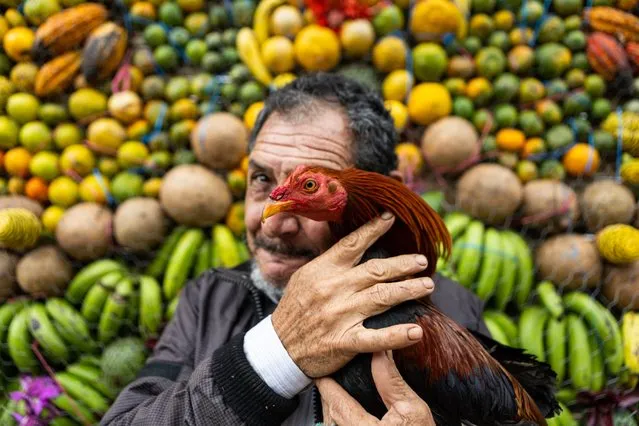
Peasants celebrate a traditional festival “Corpus Cristhi” since the time of the conquest, in Anolaima in the department of Cundinamarca, Colombia on June 29, 2022. Peasants collect all kinds of fruits and assemble great representative figures in gratitude to God for this festival. (Photo by Yair Suarez/Anadolu Agency via Getty Images)

Peasants celebrate a traditional festival “Corpus Cristhi” since the time of the conquest, in Anolaima in the department of Cundinamarca, Colombia on June 29, 2022. Peasants collect all kinds of fruits and assemble great representative figures in gratitude to God for this festival. (Photo by Yair Suarez/Anadolu Agency via Getty Images)
Details
24 Jul 2022 09:54:00
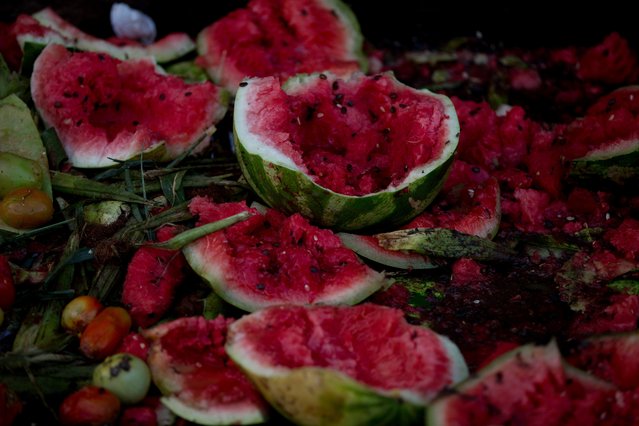
In this May 31, 2016 photo, pieces of watermelon litter the trash area of the Coche public market in Caracas, Venezuela. Staples such as corn flour and cooking oil are subsidized, costing pennies at the strongest of two official exchange rates. But fruit and vegetables have become an unaffordable luxury for many Venezuelan families. (Photo by Fernando Llano/AP Photo)

In this May 31, 2016 photo, pieces of watermelon litter the trash area of the Coche public market in Caracas, Venezuela. Staples such as corn flour and cooking oil are subsidized, costing pennies at the strongest of two official exchange rates. But fruit and vegetables have become an unaffordable luxury for many Venezuelan families. (Photo by Fernando Llano/AP Photo)
Details
08 Jun 2016 10:21:00
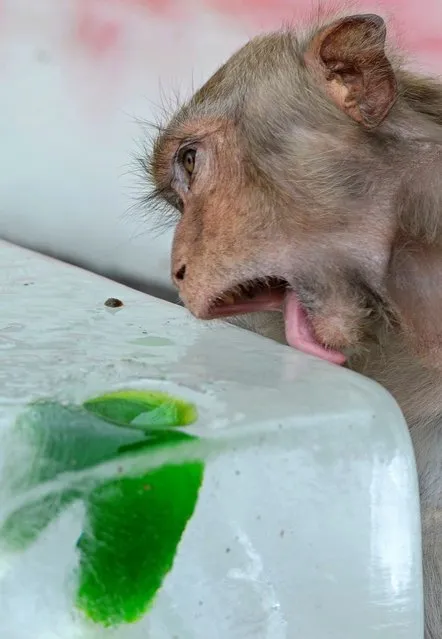
A monkey licks ice during the annual “monkey buffet” in Lopburi province, some 150 kms north of Bangkok on November 24, 2013. More than 2,000 kilos of fruits and vegetables were offered to the monkeys during the annual festival to help promote tourism in the area. (Photo by Pornchai Kittiwongsakul/AFP Photo)

A monkey licks ice during the annual “monkey buffet” in Lopburi province, some 150 kms north of Bangkok on November 24, 2013. More than 2,000 kilos of fruits and vegetables were offered to the monkeys during the annual festival to help promote tourism in the area. (Photo by Pornchai Kittiwongsakul/AFP Photo)
Details
30 Nov 2013 13:41:00
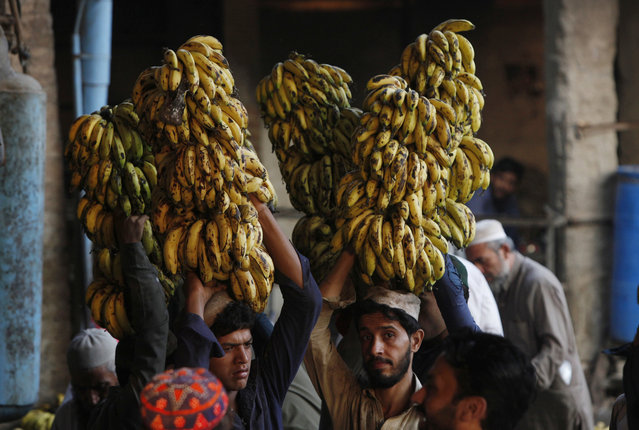
In this Wednesday, September 12, 2018, file photo, vendors carry banana on their heads at a fruit and vegetable market in Peshawar, Pakistan. Pakistan says it will seek a bailout loan from the International Monetary Fund to address a mounting balance of payments crisis, Finance Minister Asad Umar said Monday. (Photo by Muhammad Sajjad/AP Photo)

In this Wednesday, September 12, 2018, file photo, vendors carry banana on their heads at a fruit and vegetable market in Peshawar, Pakistan. Pakistan says it will seek a bailout loan from the International Monetary Fund to address a mounting balance of payments crisis, Finance Minister Asad Umar said Monday. (Photo by Muhammad Sajjad/AP Photo)
Details
21 Nov 2018 00:03:00
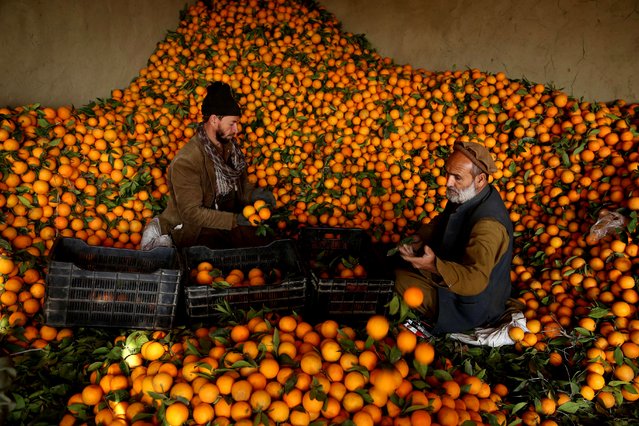
Afghan vendors sort out oranges for sale at a wholesale market in the Bati kot district in Nangarhar province, Afghanistan, 04 December 2020. The orange fruit floods markets across Afghanistan due to bumper crop in the winter season. Oranges are rich in vitamin C, which may reduce severity of the common cold. (Photo by Ghulamullah Habibi/EPA/EFE)

Afghan vendors sort out oranges for sale at a wholesale market in the Bati kot district in Nangarhar province, Afghanistan, 04 December 2020. The orange fruit floods markets across Afghanistan due to bumper crop in the winter season. Oranges are rich in vitamin C, which may reduce severity of the common cold. (Photo by Ghulamullah Habibi/EPA/EFE)
Details
10 Jan 2021 00:01:00
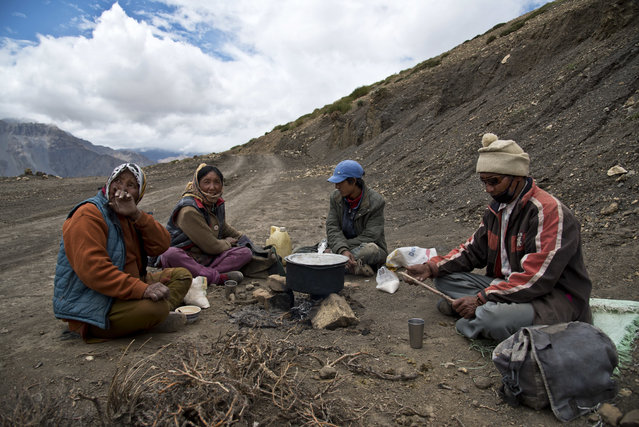
In this August 17, 2016, photo, from left to right, Chhering Chodom, 60, Tashi Yangzom, 50, Lobsang Chhering, 27, and Dorje Tandup, 58, drink milk tea on the side of the road. For centuries, the sleepy valley nestled in the Indian Himalayas remained a hidden Buddhist enclave forbidden to outsiders. Enduring the harsh year-round conditions of the high mountain desert, the people of Spiti Valley lived by a simple communal code – share the Earth's bounty, be hospitable to neighbors, and eschew greed and temptation at all turns. That's all starting to change, for better or worse. Since India began allowing its own citizens as well as outsiders to visit the valley in the early 1990s, tourism and trade have boomed. And the marks of modernization, such as solar panels, asphalt roads and concrete buildings, have begun to appear around some of the villages that dot the remote landscape at altitudes above 4,000 meters (13,000 feet). (Photo by Thomas Cytrynowicz/AP Photo)

In this August 17, 2016, photo, from left to right, Chhering Chodom, 60, Tashi Yangzom, 50, Lobsang Chhering, 27, and Dorje Tandup, 58, drink milk tea on the side of the road. For centuries, the sleepy valley nestled in the Indian Himalayas remained a hidden Buddhist enclave forbidden to outsiders. Enduring the harsh year-round conditions of the high mountain desert, the people of Spiti Valley lived by a simple communal code – share the Earth's bounty, be hospitable to neighbors, and eschew greed and temptation at all turns. That's all starting to change, for better or worse. (Photo by Thomas Cytrynowicz/AP Photo)
Details
15 Sep 2016 09:22:00
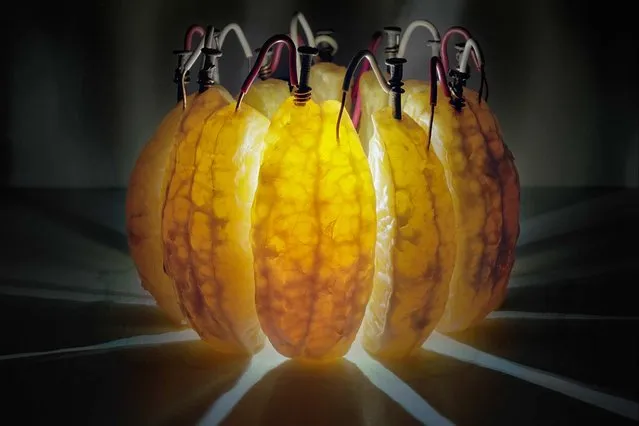
Wedges of an orange generate enough current and electrical juice – 3.5 volts – to power an LED. The fruit’s citric acid helps electrons flow from galvanized nails to copper wire in this 14-hour exposure. This image was published in September’s Visions of Earth, a trio of photos that appear in each issue of National Geographic. (Photo by Caleb Charland/National Geographic)

Wedges of an orange generate enough current and electrical juice – 3.5 volts – to power an LED. The fruit’s citric acid helps electrons flow from galvanized nails to copper wire in this 14-hour exposure. This image was published in September’s Visions of Earth, a trio of photos that appear in each issue of National Geographic. (Photo by Caleb Charland/National Geographic)
Details
06 Jan 2014 12:09:00