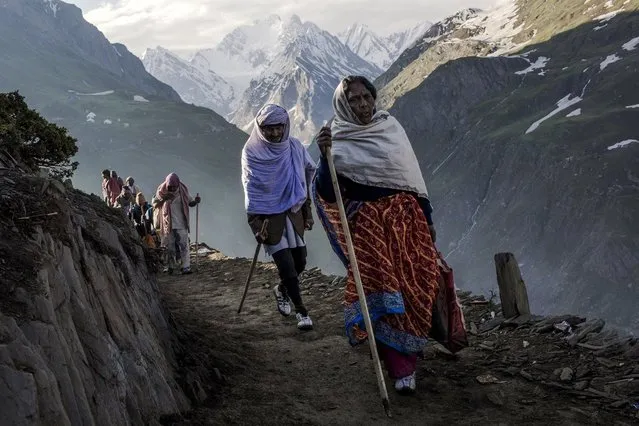
Hindu pilgrims walk along a mountain path as they make their pilgrimage to the sacred Amarnath Cave, one of the most revered Hindu shrines, near Baltal, Kashmir, India. (Photo by Daniel Berehulak)
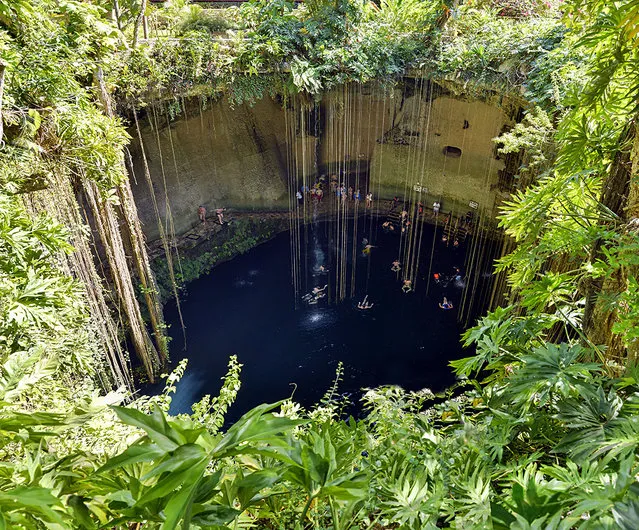
A cenote is a natural phenomenon, a sinkhole in the Earth’s surface. The Yucatan Peninsula in Mexico has an estimated 7,000 cenotes because it is primarily made up of porous limestone. For millions of years, rainfall slowly ate away at the limestone and a huge system of underground caves and caverns was formed. Many filled with water from rain or from the underground water table. When the roof of a water filled cave collapses, a cenote is born. The water found in a cenote may be fresh water, salt water, or both. Structurally it may be completely open, like a lake, almost completely closed with just a small opening at the top, or somewhere in between.
Asia Sawicka as Anastasia IV poses for a photograph prior to a rehearsal of the Circus of Horrors' latest show Voodoo, ahead of Halloween, at the Wookey Hole Caves Theatre near Wells on October 19, 2017 in Somerset, England. (Photo by Matt Cardy/Getty Images)
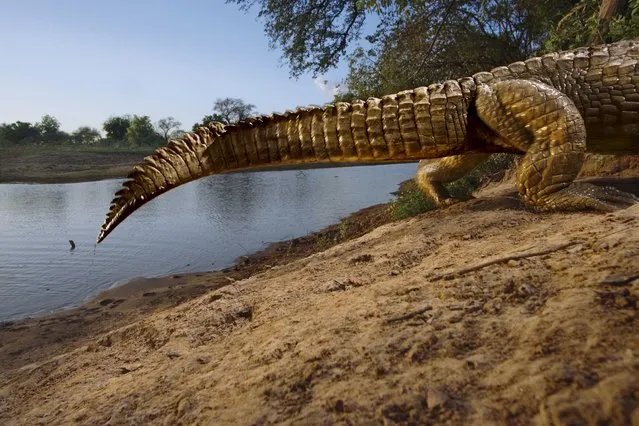
National Geographic has created “Air, Land & Sea: the 50 greatest wildlife photographs” exhibition. Here: CT4 Crocodile cave on the Salamat river. Set up with Nathan Williamson last chip rain came while we were with the nomads. (Photo by Michael Nichols/National Geographic)
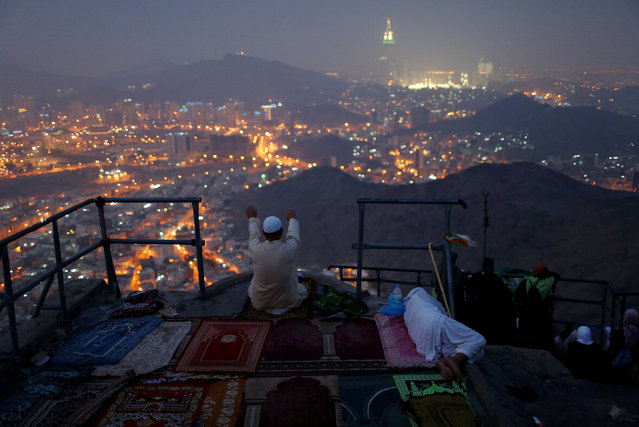
A pilgrim prays at Mount Al-Noor, where Muslims believe Prophet Mohammad received the first words of the Koran through Gabriel in the Hera cave, ahead of the annual haj pilgrimage in the holy city of Mecca, Saudi Arabia September 7, 2016. (Photo by Ahmed Jadallah/Reuters)
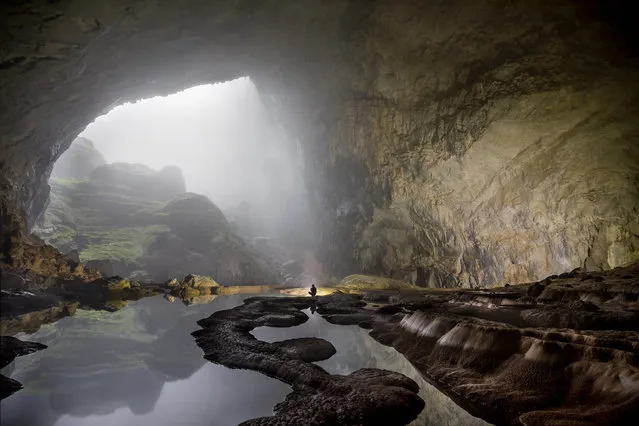
Vietnam’s Son Doong cave, the largest in the world, could hold a 40-story skyscraper inside. The pristine ecosystem has its own river and jungle. Despite its size, Son Doong wasn’t discovered until 1991. It was lost again for nearly two decades and was fully explored for the first time in 2009. (Photo by Jason Speth/HuffPost)
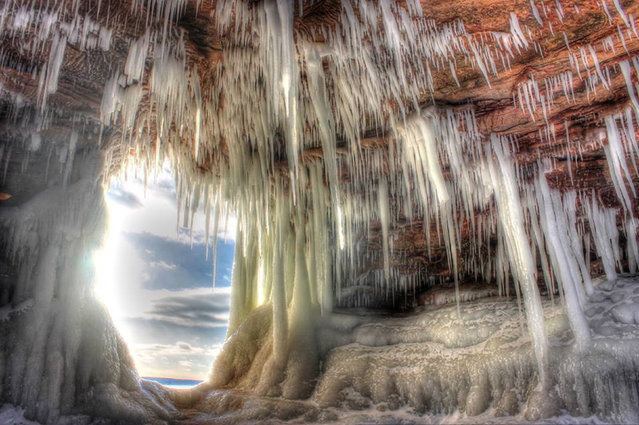
These snaps capture true winter wonderlands – as Mother Nature's icy grip takes hold of America's National Parks. From snow-capped mountains in Yosemite to an icy still Glacier Bay, the incredible images show their beauty is year round. In other breath-taking shots crisp frost lines the paths through Great Smokey Mountains and Crater Lake has had more than a dusting of snow. Here: Apostle Island National Lakeshore Park in Wisconsin. (Photo by U.S. Department of the Interior/Cater News)
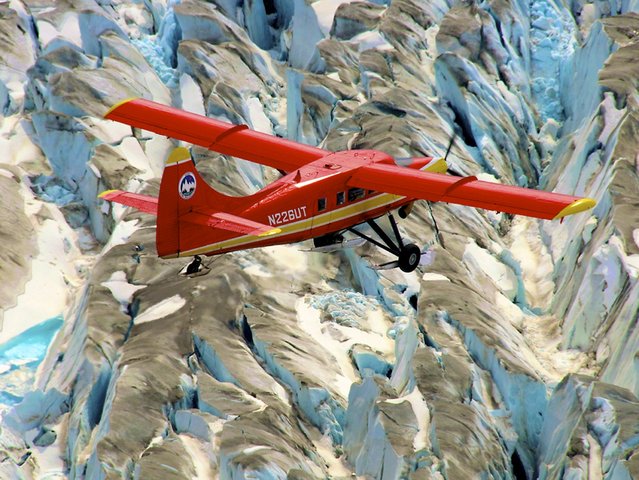
NASA's DHC-3 Otter plane flies in Operation IceBridge-Alaska surveys of mountain glaciers in Alaska in this image released on September 18, 2014. Over the past few decades, average global temperatures have been on the rise, and this warming is happening two to three times faster in the Arctic. (Photo by Chris Larsen/Reuters/NASA/University of Alaska-Fairbanks)