Loading...
Done
Spectacular images offering insight into the lives of the Huaorani people in the Ecuadorian Amazon have been revealed showing how they use traditional methods to hunt monkeys for food. The stunning pictures were taken by conservation photographer Pete Oxford from Torquay, Devon in the Ecuadorian Amazon. “The Huaorani Indians are a forest people highly in tune with their environment. Many are now totally acculturated since the 1950s by missionaries”, said Pete. “Today they face radical change to their culture to the proximity of oil exploration within their territory and the Yasuni National Park and Biosphere Reserve, they are vastly changed. Some still live very traditionally and for this shoot, through my Huaorani friend, a direct relative of those photographed he wanted to depict them as close to their original culture as possible. They still largely hunt with blow pipes and spears eating a lot of monkeys and peccaries”. The Huaorani are also known as the Waorani, Waodani or the Waos and are native Amerindians. Their lands are located between the Curaray and Napo rivers and speak the Huaorani language. Pete says that during his visit he was welcomed into the group and hopes that ancient cultures can be saved. Here: The tribe were seen celebrating after a hunter returned to camp with a wild pig. (Photo by Pete Oxford/Mediadrumworld.com)

Spectacular images offering insight into the lives of the Huaorani people in the Ecuadorian Amazon have been revealed showing how they use traditional methods to hunt monkeys for food. The stunning pictures were taken by conservation photographer Pete Oxford from Torquay, Devon in the Ecuadorian Amazon. Here: The tribe were seen celebrating after a hunter returned to camp with a wild pig. (Photo by Pete Oxford/Mediadrumworld.com)
Details
20 Jan 2017 07:58:00
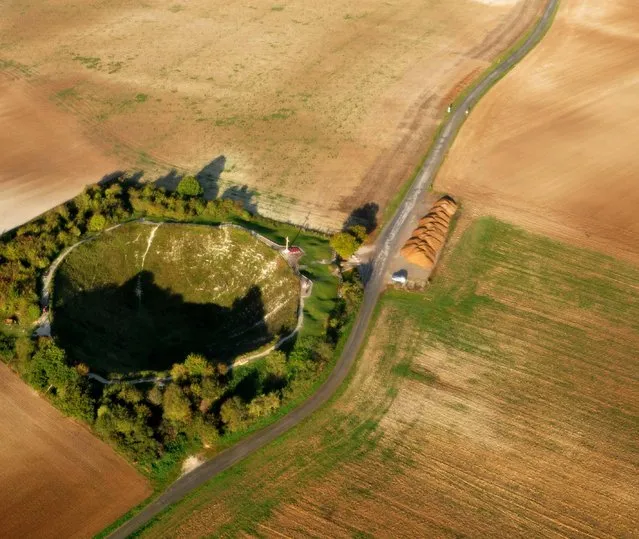
Lochnagar Crater Somme In France

It is amazing how much the humanity can change the face of the earth. Not only can it create huge craters, which look a lot like craters from meteors, they leave a big enough impact that it can be seen from space. Though this crater, caused by a massive explosion on 1 July 1916, looks large, being 90 feet deep and 300 feet across; it is nowhere big enough to be viewed for space. A common misconception is that the Great Wall of China can be seen from space. In reality, however, it is impossible. Not only is it of the same color as the earth near it, it is also not that wide. Deforestation, on the other hand, can be clearly seen from space. Also, at night, all the lights that the large cities produce are also very visible.
Details
17 Nov 2014 12:48:00
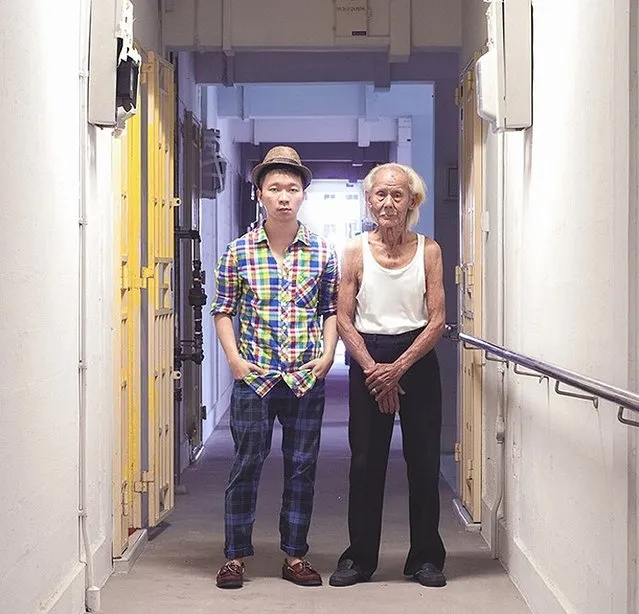
Spring - Autumn By Cue Qozop

People don’t realize how much our exterior can affect our mood. If we make ourselves smile, we might feel a little better, yet if we frown, we soon get the irresistible urge to listen to Blues and weep over the days long gone. The same goes for our clothing. Many people, especially the elderly, tend to dress in the same old rags, without ever feeling the need to change something about their appearance. However, as Cue Qozop clearly demonstrates in his Spring – Autumn photoset, clothes can completely alter the appearance and the mood of the wearer. Elderly people dressed in young people’s clothes look much younger and happier. They look as if they are full of vigor and are about to set out on an amazing adventure.
Details
09 Apr 2015 09:50:00
Finding just the right spot above the clouds at Camp 1 on Ama Dablam, Danuru Sherpa uses his iPhone to catch up with friends and family. Even at 18,500 feet (5,654 meters), climbers here can check their email and other dispatches from the world below. (Photo by Aaron Huey/National Geographic)

Finding just the right spot above the clouds at Camp 1 on Ama Dablam, Danuru Sherpa uses his iPhone to catch up with friends and family. Even at 18,500 feet (5,654 meters), climbers here can check their email and other dispatches from the world below. (Photo by Aaron Huey/National Geographic)
Details
28 Apr 2014 09:14:00
General atmosphere on Shipyard Island, the venue of the 24th Sziget (Island) Festival in Northern Budapest, Hungary, 14 August 2016. (Photo by Mohai Balázs/Rockstar Photographers)

General atmosphere on Shipyard Island, the venue of the 24th Sziget (Island) Festival in Northern Budapest, Hungary, 14 August 2016. (Photo by Mohai Balázs/Rockstar Photographers)
Details
16 Aug 2016 10:02:00
A general view of atmosphere at the annual VOLT Festival in Sopron, 208 kms west of Budapest, Hungary on June 26, 2017. (Photo by Mudra László/Rockstar Photographers)

A general view of atmosphere at the annual VOLT Festival in Sopron, 208 kms west of Budapest, Hungary on June 26, 2017. (Photo by Mudra László/Rockstar Photographers)
Details
28 Jun 2017 08:23:00
Family Tree By Zhang Huan

All the people we meet, all the things we know, and all of our experiences shape our souls, forever marking our faces. This was probably the main idea of the performance piece created by Chinese artist Zhang Huan, in which his face was painted over by three calligraphers with the names of people he knew, personal stories, and random thoughts. Truly, it amazing just how much we can find out about a person just by looking at their face. Surely, not everyone has the ability to see into the soul of the person just by looking at their face, but those that do can easily see the person’s personality, their intelligence, and sometimes even get glimpse into their past. Though it sounds like magic to people who don’t have this ability, it is completely true. Somehow, our mind can pick up on the miniscule changes of the facial structure and figure out the dominant facial expressions of that person. (Photo by Zhang Huan)
Details
23 Nov 2014 12:47:00
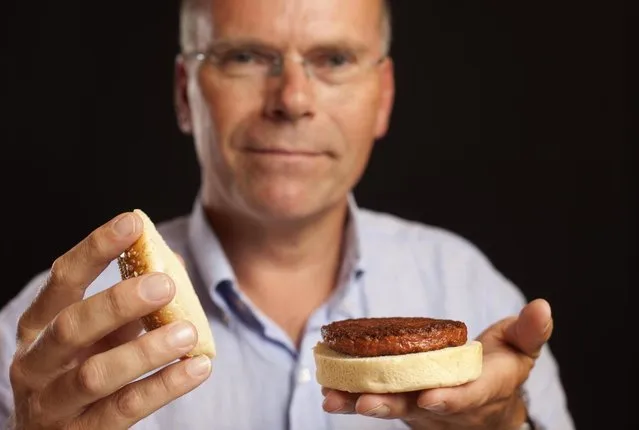
In this handout image provided by Ogilvy, a burger made from cultured beef, which has been developed by Professor Mark Post of Maastricht University in the Netherlands (pictured) is shown to the media during a press conference on August 5, 2013 in London, England. Cultured Beef could help solve the coming food crisis and combat climate change with commercial production of Cultured Beef beginning within ten to twenty years. (Photo by David Parry via Getty Images)

In this handout image provided by Ogilvy, a burger made from cultured beef, which has been developed by Professor Mark Post of Maastricht University in the Netherlands (pictured) is shown to the media during a press conference on August 5, 2013 in London, England. The in-vitro burger, cultured from cattle stem cells, the first example of what its creator says could provide an answer to global food shortages and help combat climate change, was fried in a pan and tasted by two volunteers. The burger is the result of years of research by Dutch scientist Mark Post, a vascular biologist at the University of Maastricht, who is working to show how meat grown in petri dishes might one day be a true alternative to meat from livestock.The meat in the burger has been made by knitting together around 20,000 strands of protein that has been cultured from cattle stem cells in Post's lab. (Photo by David Parry)
Details
06 Aug 2013 08:48:00