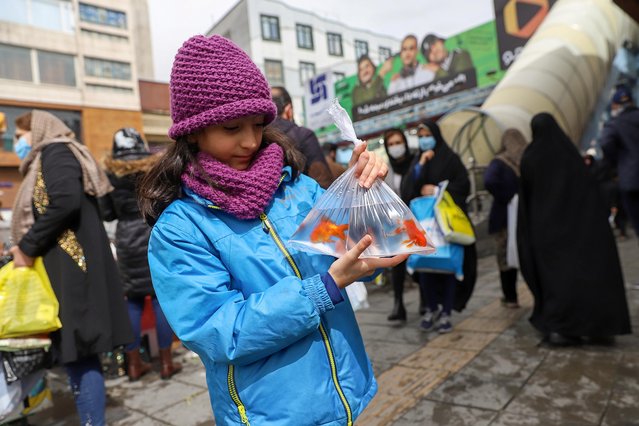
An Iranian girls a bag of goldfish ahead of Nowruz, the Iranian New Year, in Tehran, Iran on March 17, 2021. (Photo by Majid Asgaripour/WANA (West Asia News Agency) via Reuters)
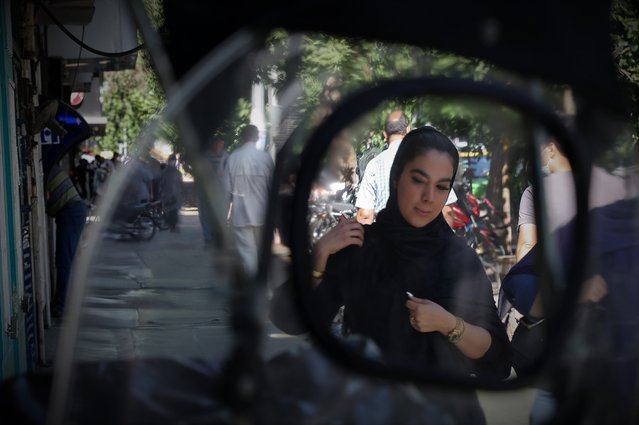
A young Iranian woman walks in Tehran on June 14, 2021, ahead of the June 18 presidential elections. Iran is gearing up for a presidential election on June 18 but many young people are more focussed on the daily struggle to survive and their dreams for the future. Jobs are scarce in a recession-hit economy battered by sanctions, a crisis exacerbated by the region's worst outbreak of the Covid pandemic. (Photo by Atta Kenare/AFP Photo)
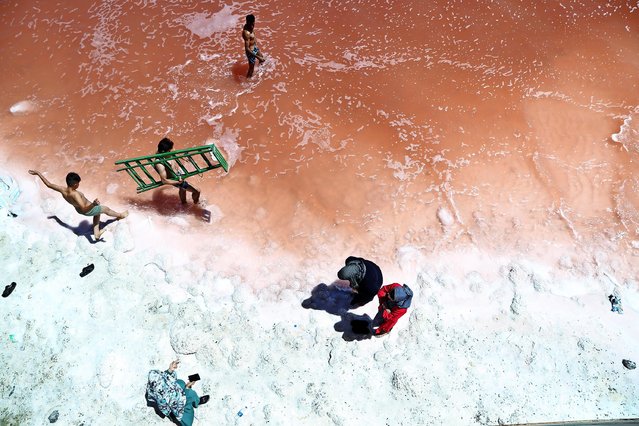
A drone photo shows that people enjoy at the Lake Urmia, one of the biggest saltwater lakes in the world located in the northwest of Iran, as recovering works continue due to drought affecting the whole country and putting the lake in danger of drying up again in Urmia, Iran on July 06, 2021. (Photo by Fatemeh Bahrami/Anadolu Agency via Getty Images)
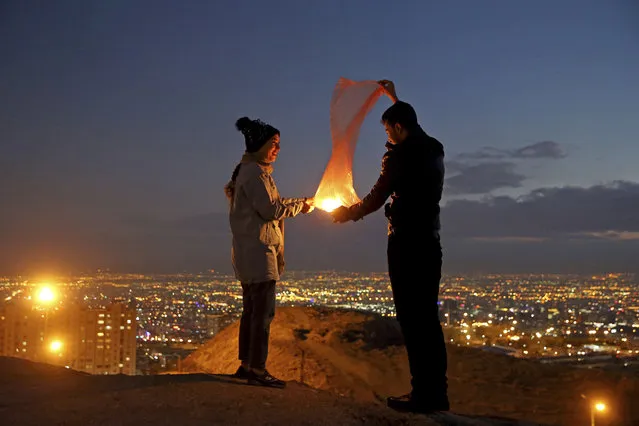
A couple lights a lantern during a celebration, known as “Chaharshanbe Souri”, or Wednesday Feast, marking the eve of the last Wednesday of the solar Persian year, Tuesday, March 19, 2019, in Tehran, Iran. Iran's many woes briefly went up in smoke on Tuesday as Iranians observed a nearly 4,000-year-old Persian tradition known as the Festival of Fire. (Photo by Ebrahim Noroozi/AP Photo)
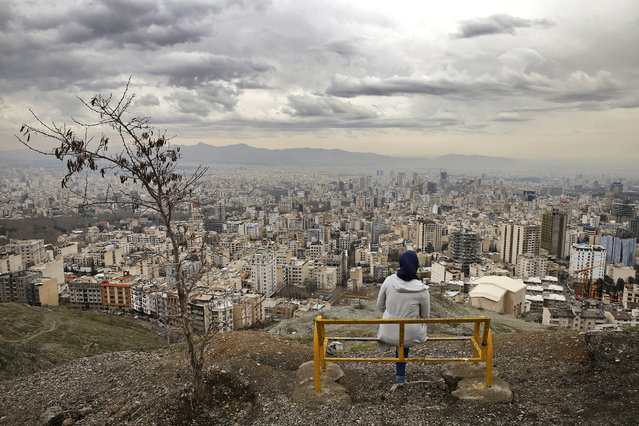
A woman spends her time outdoors to observe the ancient festival of Sizdeh Bedar, an annual public picnic day on the 13th day of the Iranian new year, at the Tochal mountainous area northern Tehran, Iran, Sunday, April, 2, 2017. Sizdeh Bedar, which comes from the Farsi words for “thirteen” and “day out”, is a legacy from Iran's pre-Islamic past that hard-liners in the Islamic Republic never managed to erase from calendars. (Photo by Ebrahim Noroozi/AP Photo)
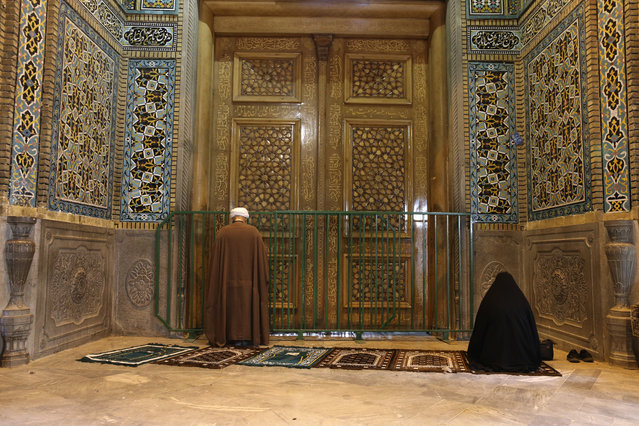
A cleric and a woman pray behind a closed door of Masoume shrine in the city of Qom, some 80 miles (125 kilometers) south of the capital Tehran, Iran, Monday, March 16, 2020. On Monday, Iran closed the Masoume shrine, a major pilgrimage site in the city of Qom, the epicenter of the country's new coronavirus outbreak. Authorities were already restricting access and barring pilgrims from kissing or touching the shrine, but it had remained open. (Photo by AP Photo)
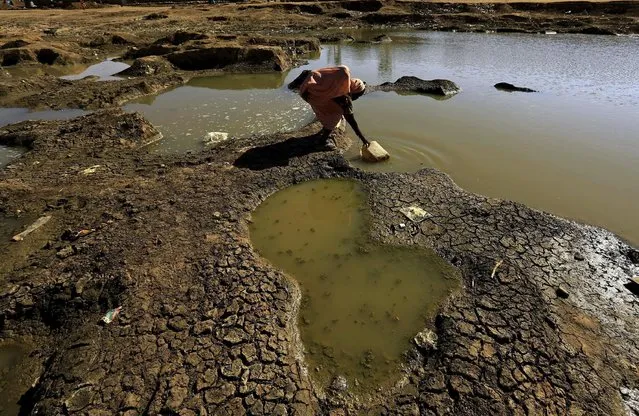
An internally displaced woman collects water from a pond to construct a mud-house at the Aboushok camp in El Fasher, North Darfur, Sudan, November 17, 2015. The conflict in Sudan's Darfur region that erupted 12 years ago shows no sign of ending. But it hasn't stopped displaced youngsters, some of whom have spent their entire lives in refugee camps, from dreaming big. Twelve children aged 12 explain their hopes and dreams for the future; ambitions include becoming a doctor, an engineer and a teacher. (Photo by Mohamed Nureldin Abdallah/Reuters)
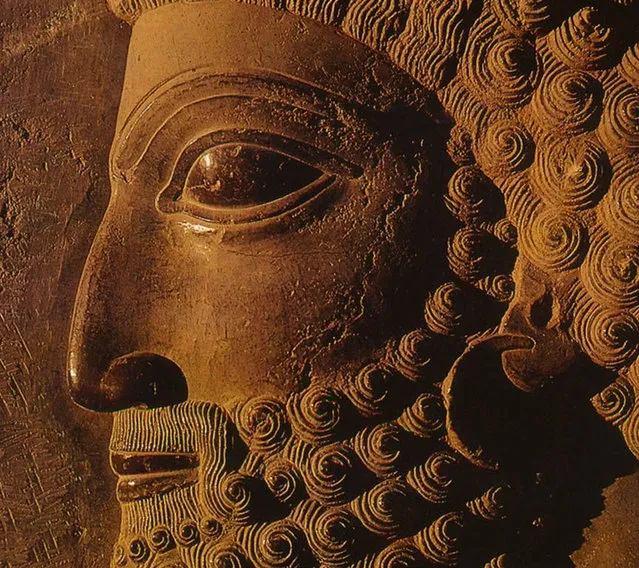
Few people haven’t heard about the ancient city of Persepolis, which lies at the foot of the Mountain of Mercy (Kuh-I-Rahmat). In ancient times, Persepolis was the capital of the Achaemenid Empire. Regretfully, it was burned by the Greeks in 330 BC after they looted the immense treasure of this city. It is said that Greeks needed 5,000 camels and 20,000 mules to carry all the treasures from Persepolis. The only thing of Persepolis that has survived the wear of time is the ginormous stone terrace 530 by 330 meters adorned by elaborate stone sculptures. It is amazing how intricately detailed some of the sculptures are, despite the fact that they were created many centuries ago.