Loading...
Done
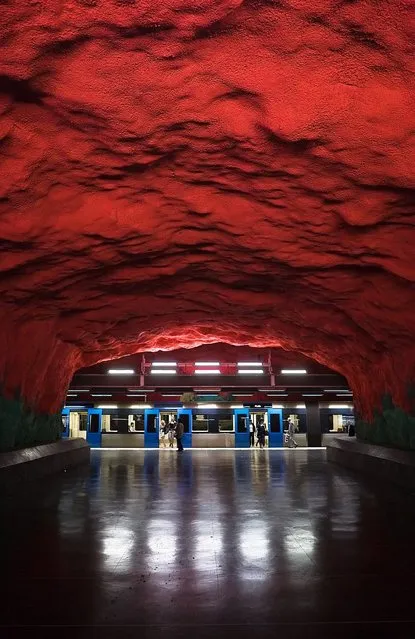
Stockholm metro

The Stockholm metro (Swedish: Stockholms tunnelbana) is a metro system in Stockholm, Sweden. The first line opened in 1950, and today the system has 100 stations in use, of which 47 are underground and 53 above ground. There are seven lines numbered from 10 to 19, in three groups identified by a color: the Green, Red and Blue lines. Each color line has two or three numbered lines on shared sections through the Stockholm City Centre.
Details
12 Sep 2012 05:10:00
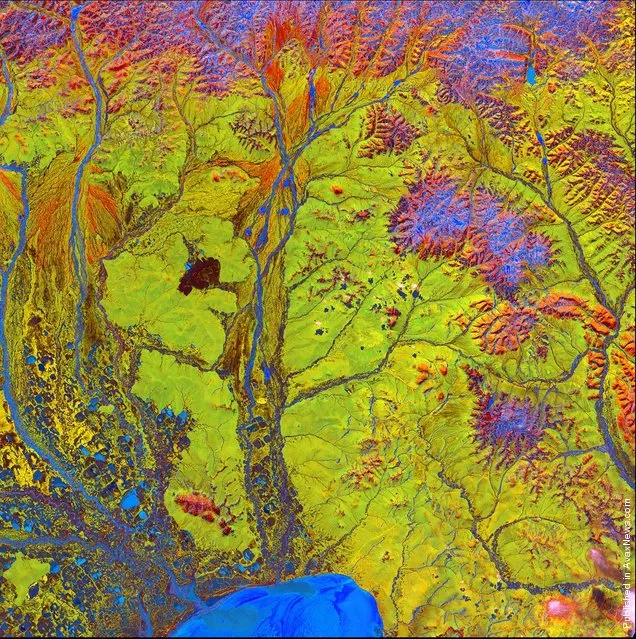
Vivid colors and bizarre shapes come together in a false-color image that could be an illustration for a fantasy story

Vivid colors and bizarre shapes come together in a false-color image that could be an illustration for a fantasy story. This labyrinth of exotic features winds its way along the edge of Russia’s Chaunskaya Bay in northeastern Siberia, seen as a vivid blue half-circle at the bottom of the image Two major rivers, the Chaun and Palyavaam, flow into the bay, which in turn opens into the Arctic Ocean. Ribbon lakes and bogs are present throughout the area, created by depressions left by receding glaciers. (Photo by USGS/NASA)
Details
14 Apr 2012 11:02:00
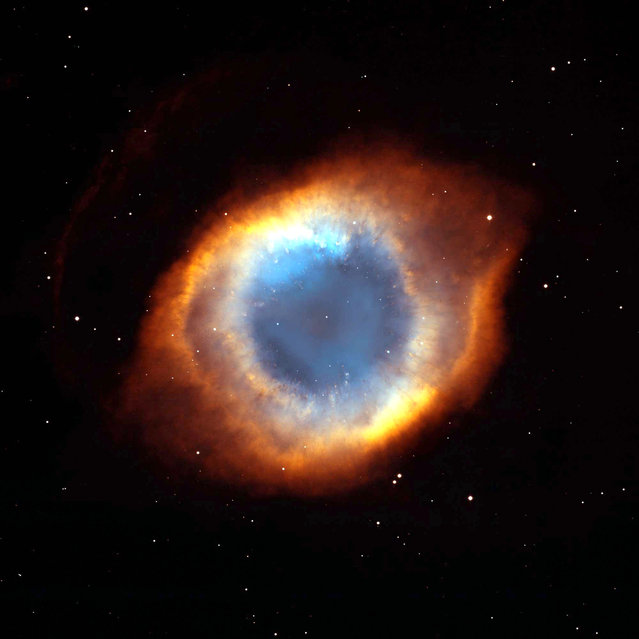
A coil-shaped Helix Nebula showing a fine web of filamentary “bicycle-spoke” features embedded in the colorful red and blue ring of gas. At 650 light-years away, the Helix is one of the nearest planetary nebulae to Earth. A planetary nebula is the glowing gas around a dying, Sun-like star. (Photo by Reuters/NASA)

A coil-shaped Helix Nebula showing a fine web of filamentary “bicycle-spoke” features embedded in the colorful red and blue ring of gas. At 650 light-years away, the Helix is one of the nearest planetary nebulae to Earth. A planetary nebula is the glowing gas around a dying, Sun-like star. (Photo by Reuters/NASA)
Details
22 Oct 2014 14:01:00
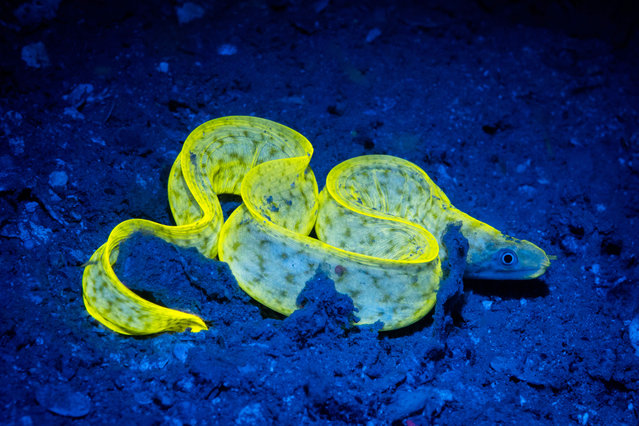
“In these photos, I was shining a blue light on the coral and various biofluorescent animals”. (Photo by Simon Pierce/Caters News Agency)

Neon sea creatures have been captured lighting up the ocean with their vibrant colors – in what looked like a scene from Avatar. Photographer Simon Pierce, 39, took the images over several months after visiting both Nosy Sakatia in Madagascar and Mafia Island in Tanzania recently. (Photo by Simon Pierce/Caters News Agency)
Details
12 Dec 2018 00:05:00
Van cats, relatively large, have a chalky white coat, sometimes with ruddy coloration on the head and hindquarters, and have blue or amber eyes or have heterochromia, are seen at “Cat Villa”, established to protect the cats in Van, Turkey on January 20, 2021. Internationally valid “health certificate” is prepared for Van cats, visited by local and foreign tourists, within a project to protect their generations and increasing their numbers. Health certificates with information such as name, breed, gender, eye color, date of birth, tail feature, color, hearing status and identity are given to people who want to adopt cats. (Photo by Mesut Varol/Anadolu Agency via Getty Images)

Van cats, relatively large, have a chalky white coat, sometimes with ruddy coloration on the head and hindquarters, and have blue or amber eyes or have heterochromia, are seen at “Cat Villa”, established to protect the cats in Van, Turkey on January 20, 2021. Internationally valid “health certificate” is prepared for Van cats, visited by local and foreign tourists, within a project to protect their generations and increasing their numbers. Health certificates with information such as name, breed, gender, eye color, date of birth, tail feature, color, hearing status and identity are given to people who want to adopt cats. (Photo by Mesut Varol/Anadolu Agency via Getty Images)
Details
29 Jan 2021 09:43:00
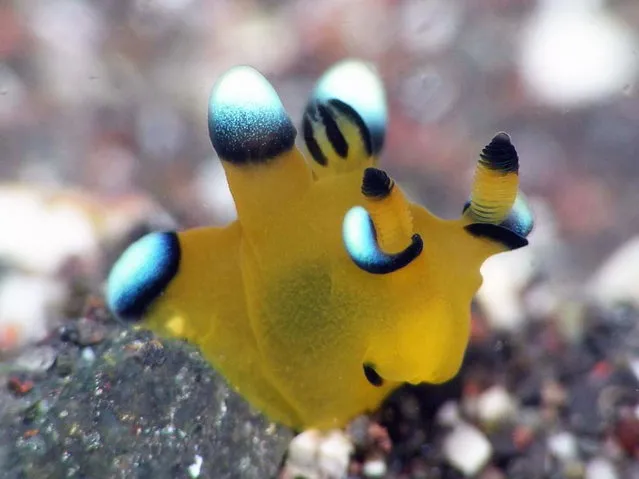
Thecacera Pacifica AKA Pikachu

If you ever wanted to meet a live Pikachu, you might have a hard time finding one. However, there is a creature on this Earth that kind of looks like one. That creature’s name is Thecacera pacifica and it is a species of a sea slug. These little critters can be found in the Indian Ocean from African coast to Indonesia and Vanuatu. Their vibrant orange and blue colors look gorgeous, making it look like some sort of anemone. Also, as you might have guessed from the striking colors of the sea slug, just like most of anemones, this creature is very toxic. Thus, keeping it as a pet isn’t an option.

Details
19 Dec 2014 12:51:00
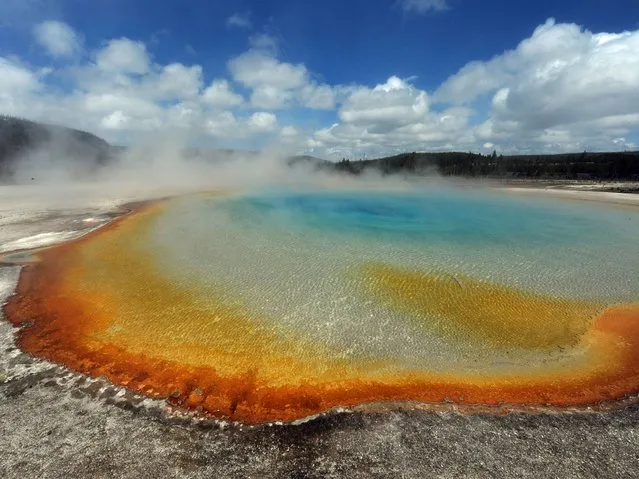
View of the “Sunset Lake” hot spring with it's unique colors caused by brown, orange and yellow algae-like bacteria called Thermophiles, that thrive in the cooling water turning the vivid aqua-blues to a murkier greenish brown, in the Yellowstone National Park, Wyoming on June 1, 2011. (Photo by Mark Ralston/AFP Photo)

View of the “Sunset Lake” hot spring with it's unique colors caused by brown, orange and yellow algae-like bacteria called Thermophiles, that thrive in the cooling water turning the vivid aqua-blues to a murkier greenish brown, in the Yellowstone National Park, Wyoming on June 1, 2011. Yellowstone National Park, was established by the U.S. Congress and signed into law by President Grant on March 1, 1872. The park is located primarily in the U.S. state of Wyoming, though it also extends into Montana and Idaho and was the first national park in the world. It is known for its wildlife and its many geothermal features, especially the Old Faithful Geyser. (Photo by Mark Ralston/AFP Photo)
Details
06 Apr 2014 08:02:00
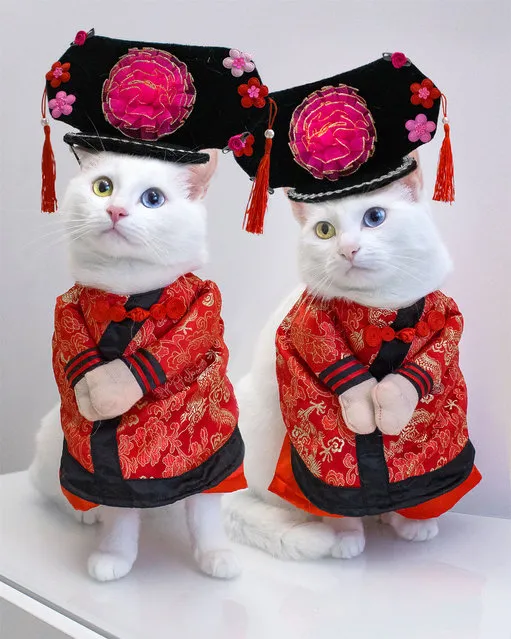
These adorable cats – which are twins – showcase their contrasting blue and green eyes. The fascinating pair, Iriss and Abyss, live with their owner Pavel Dyagilev, 34, in St. Petersburg, Russia. The cats have a condition called heterochromia iridis, which causes each eye to vary in color. Dyagilev said: “When I found an ad on social media that two kittens were seeking a new home, I never imagined that I'd end up with two. But I looked through the pictures of kittens and saw two twins always together on the photos. And my heart melted”. (Photo by @sis.twins/Caters News Agency)

These adorable cats – which are twins – showcase their contrasting blue and green eyes. The cats have a condition called heterochromia iridis, which causes each eye to vary in color. (Photo by @sis.twins/Caters News Agency)
Details
14 Aug 2019 00:03:00