Loading...
Done
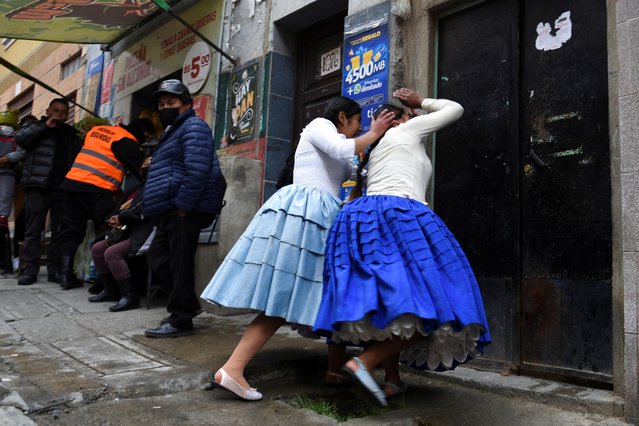
Cholita wrestlers stage a performance on the street during the Electropreste celebration, which combines traditional and modern customs, in La Paz, Bolivia on March 12, 2022. (Photo by Claudia Morales/Reuters)

Cholita wrestlers stage a performance on the street during the Electropreste celebration, which combines traditional and modern customs, in La Paz, Bolivia on March 12, 2022. (Photo by Claudia Morales/Reuters)
Details
17 Mar 2022 05:47:00
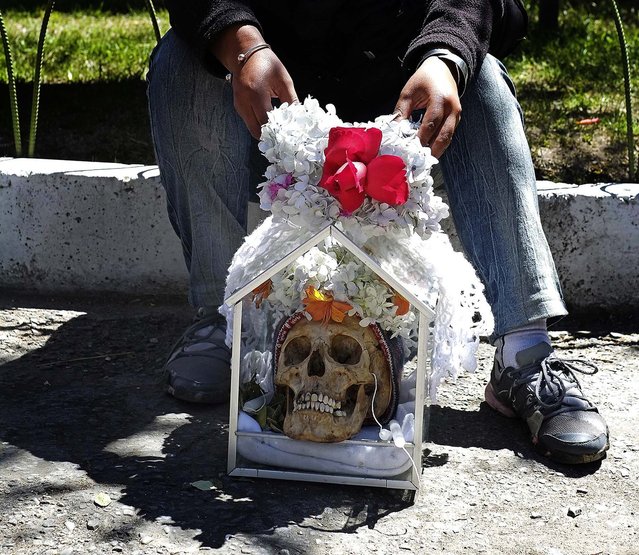
A woman holds a skull during a “Dia de los natitas” (Day of the Skull) ceremony at the Cementerio General of La Paz. (Photo by David Mercado/Reuters)

A woman holds a skull during a “Dia de los natitas” (Day of the Skull) ceremony at the Cementerio General of La Paz. (Photo by David Mercado/Reuters)
Details
10 Nov 2013 06:59:00
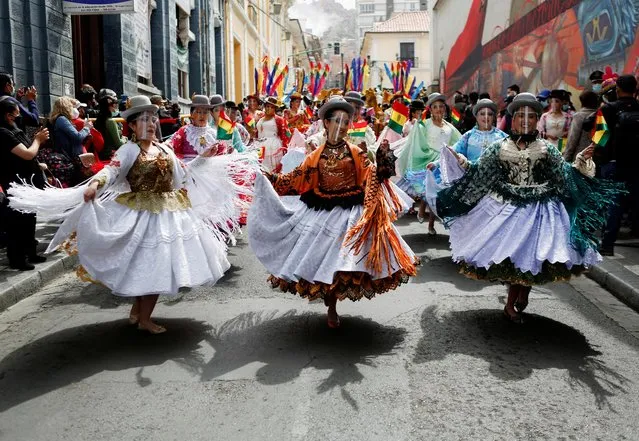
Dancers perform during the Morenada dance national day in La Paz, Bolivia, September 7, 2021. (Photo by Manuel Claure/Reuters)

Morenada dancers dance at the Plaza de Armas during the celebrations of the Morenada National Day in La Paz, Bolivia on September 7, 2021. (Photo by Manuel Claure/Reuters)
Details
09 Sep 2021 09:07:00
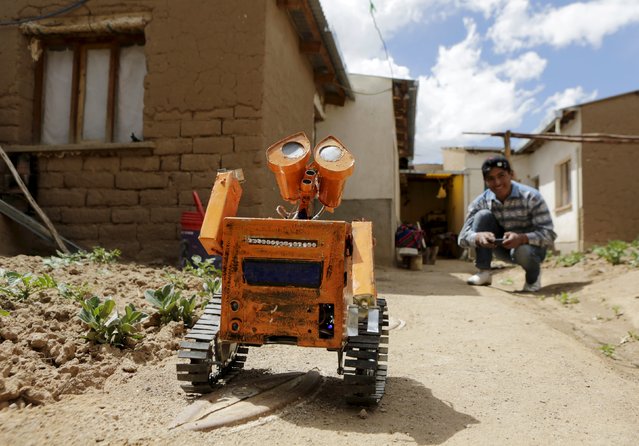
A replica of the Wall-E character is remotely controlled with a mobile phone by Bolivian student Esteban Quispe, 17, in Patacamaya, south of La Paz, December 10, 2015. (Photo by David Mercado/Reuters)

A replica of the Wall-E character is remotely controlled with a mobile phone by Bolivian student Esteban Quispe, 17, in Patacamaya, south of La Paz, December 10, 2015. Quispe built the Wall-E robot using materials he obtained from a rubbish dump in the town located in the Andean highland region. He hopes to mechanize agriculture in Patacamaya by making use of robots that operate on solar energy, Quispe told Reuters. (Photo by David Mercado/Reuters)
Details
13 Dec 2015 08:05:00
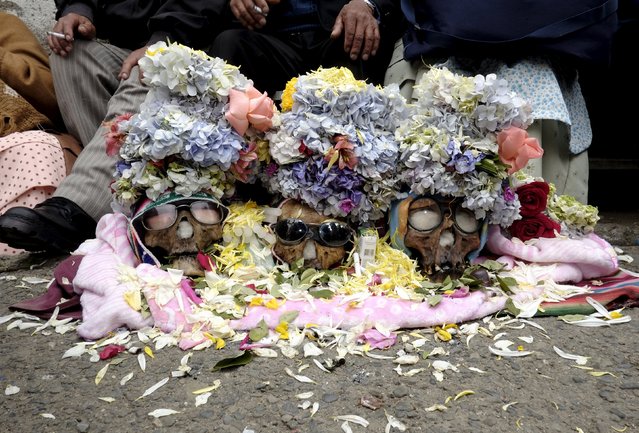
Skulls placed on the floor are seen during a ceremony held for the "Dia de las natitas" (Day of the Skull) celebrations at the General Cemetery of La Paz, November 8, 2015. (Photo by David Mercado/Reuters)

Skulls placed on the floor are seen during a ceremony held for the "Dia de las natitas" (Day of the Skull) celebrations at the General Cemetery of La Paz, November 8, 2015. Bolivians, who keep close relatives skulls at home as a macabre talisman, flock to the cemetery chapel once a year to have the craniums blessed and to bring themselves good luck in the future. (Photo by David Mercado/Reuters)
Details
12 Nov 2015 08:01:00
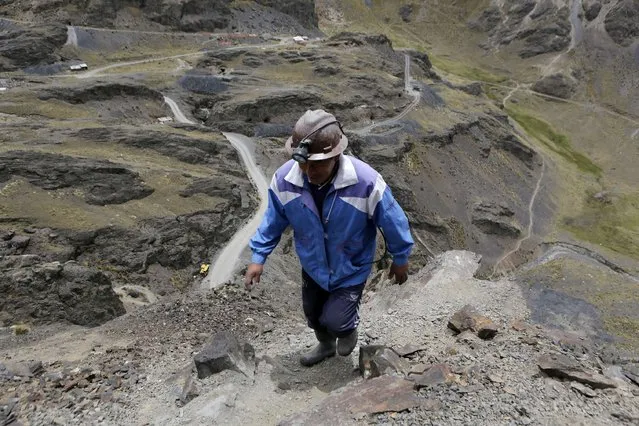
A mine worker is seen outside “The Progreso” gold mine near La Paz, November 13, 2014. According to local media, the president of the Central Bank of Bolivia (BCB) Marcelo Zabalaga said on Thursday that the falling price of oil and minerals in the international market will not affect the national economy. (Photo by David Mercado/Reuters)

A mine worker is seen outside “The Progreso” gold mine near La Paz, November 13, 2014. According to local media, the president of the Central Bank of Bolivia (BCB) Marcelo Zabalaga said on Thursday that the falling price of oil and minerals in the international market will not affect the national economy. (Photo by David Mercado/Reuters)
Details
16 Nov 2014 12:04:00
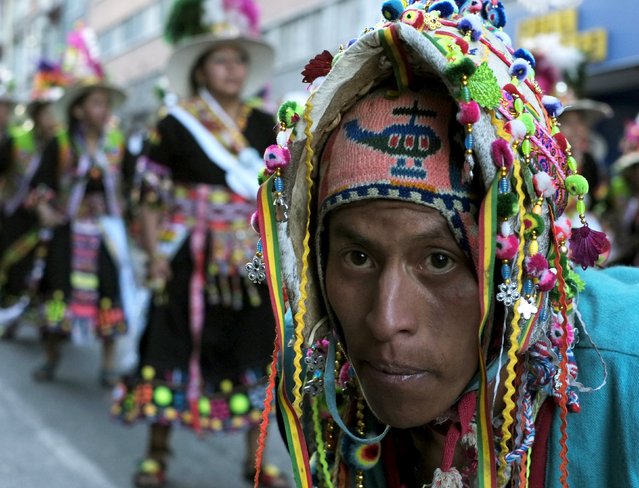
Thinku dancers perform during the "Senor del Gran Poder" (Lord of Great Power) parade in La Paz, May 30, 2015. According to local media, thousands of dancers participated in this annual pagan religious celebration. REUTERS/David Mercado

Thinku dancers perform during the "Senor del Gran Poder" (Lord of Great Power) parade in La Paz, May 30, 2015. According to local media, thousands of dancers participated in this annual pagan religious celebration. REUTERS/David Mercado
Details
06 Jun 2015 12:04:00
Boats of fishermen are seen on the dried Poopo lakebed in the Oruro Department, south of La Paz, Bolivia, December 17, 2015. (Photo by David Mercado/Reuters)

Boats of fishermen are seen on the dried Poopo lakebed in the Oruro Department, south of La Paz, Bolivia, December 17, 2015. Lake Poopo in Bolivia, the Andean nation's formerly second largest after the famed Titicaca, has dried up entirely. With the water now gone, animals have died off in the millions, according to studies. And the local families, having lost much of their sustenance, have been forced to migrate. (Photo by David Mercado/Reuters)
Details
20 Dec 2015 08:04:00