Loading...
Done
A woman looks at traditional Ukrainian Easter eggs “Pysanka”, installed as part of the upcoming celebrations of Easter, in central Kiev, Ukraine, April 29, 2016. A pysanka is a Ukrainian Easter egg, decorated with traditional Ukrainian folk designs using a wax-resist (batik) method. The word pysanka comes from the verb pysaty, “to write”, as the designs are not painted on, but written with beeswax. Many other eastern European ethnic groups decorate eggs using wax resist for Easter. These include the Belarusians, Bulgarians, Croats, Czechs, Hungarians, Lithuanians, Poles, Romanians, Serbs, Slovaks, Slovenes and Sorbs. (Photo by Valentyn Ogirenko/Reuters)

A woman looks at traditional Ukrainian Easter eggs “Pysanka”, installed as part of the upcoming celebrations of Easter, in central Kiev, Ukraine, April 29, 2016. A pysanka is a Ukrainian Easter egg, decorated with traditional Ukrainian folk designs using a wax-resist (batik) method. The word pysanka comes from the verb pysaty, “to write”, as the designs are not painted on, but written with beeswax. Many other eastern European ethnic groups decorate eggs using wax resist for Easter. These include the Belarusians, Bulgarians, Croats, Czechs, Hungarians, Lithuanians, Poles, Romanians, Serbs, Slovaks, Slovenes and Sorbs. (Photo by Valentyn Ogirenko/Reuters)
Details
30 Apr 2016 09:00:00
Sing

«Sing»

The story of 20 children born or living with illness or health conditions is being told by Toronto photographer and artist Shawn Van Daele, by transforming their drawings into magical photographs.
Details
26 May 2012 06:55:00
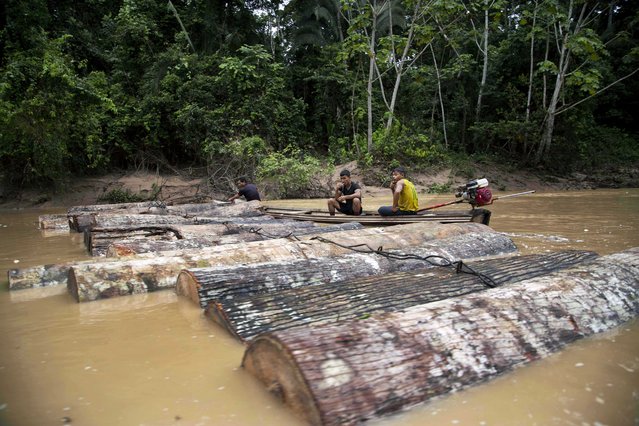
In this March 17, 2015 photo, Ashaninka Indian men, identified by locals as illegal loggers, tie tree trunks together to move them along the Putaya River near the hamlet of Saweto, Peru. Illegal logging persists unabated in this remote Amazon community where four indigenous leaders who resisted it were slain in September. The Putaya River is the waterway that transports felled trees, cut both legally and illegally, to the city of Pucallpa. (Photo by Martin Mejia/AP Photo)

In this March 17, 2015 photo, Ashaninka Indian men, identified by locals as illegal loggers, tie tree trunks together to move them along the Putaya River near the hamlet of Saweto, Peru. Illegal logging persists unabated in this remote Amazon community where four indigenous leaders who resisted it were slain in September. The Putaya River is the waterway that transports felled trees, cut both legally and illegally, to the city of Pucallpa. (Photo by Martin Mejia/AP Photo)
Details
27 Mar 2015 12:40:00
Oil Paintings By Paul David Bond

Paul Bond's art lives in the spaces between dreaming and reality. Drawing from the Latin American genre of Magic Realism where symbolic, surreal and fantastic elements blend with realistic atmospheres, they remove the veil on a world where everything is possible.
Details
31 May 2013 15:58:00
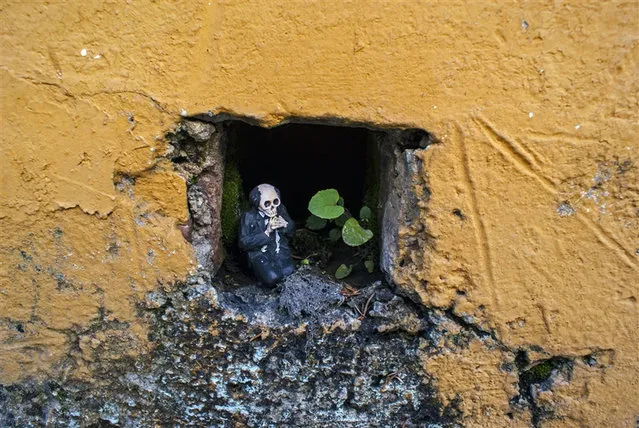
Cement Eclipses By Isaac Cordal

Artist Isaac Cordal - “With the simple act of miniaturization and thoughtful placement, Isaac Cordal magically expands the imagination of pedestrians finding his sculptures on the street.
Details
26 Jul 2014 19:21:00


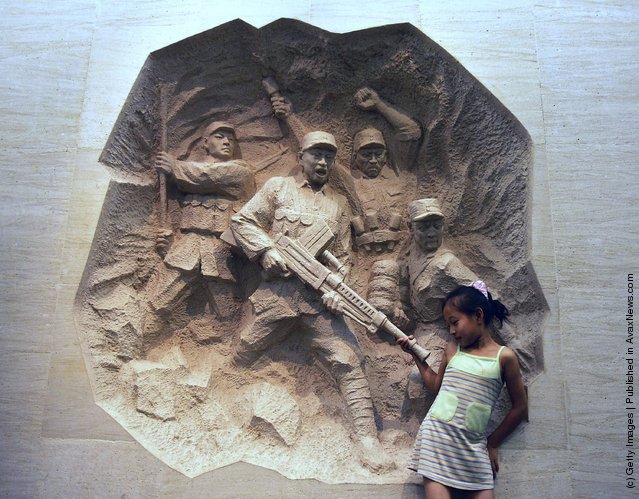
A Chinese girl touches the gun of a relievo featuring Chinese soldiers fighting with Japanese troops during World War II at an exhibition at the Anti-Japan War Museum to mark the 60th Anniversary of the Victory of the Chinese People's War of Resistance Against Japan on August 18, 2005 in Beijing, China. (Photo by Cancan Chu/Getty Images)
Details
30 Jul 2011 13:51:00
Animal Chair By Maximo Riera

Spanish artist Maximo Riera has produced a miniature series of his animal chair collection. The models are created entirely using nylon and a type of 3D printing called SLS (selective laser sintering).The process enables the small objects to achieve the best possible quality, resistance and lightest weight. based on the large-scale designs that combined animals and furniture into one item, the unconventional and peculiar compositions are still apparent in these latest versions.
Details
24 Jul 2014 06:44:00
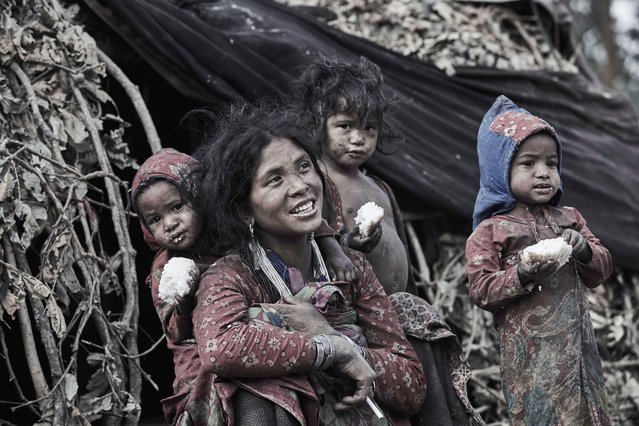
Only 156 people remained in the tribe when Jan visited in Accham District, Nepal, January 2016. (Photo by Jan Moller Hansen/Barcroft Images)

Only 156 people remained in the tribe when Jan visited in Accham District, Nepal, January 2016. Hidden deep in the Himalayan forest is one of the world’s last enduring nomadic tribes who are resisting attempts to move them into permanent settlements. (Photo by Jan Moller Hansen/Barcroft Images)
Details
14 Jan 2017 12:35:00