Loading...
Done
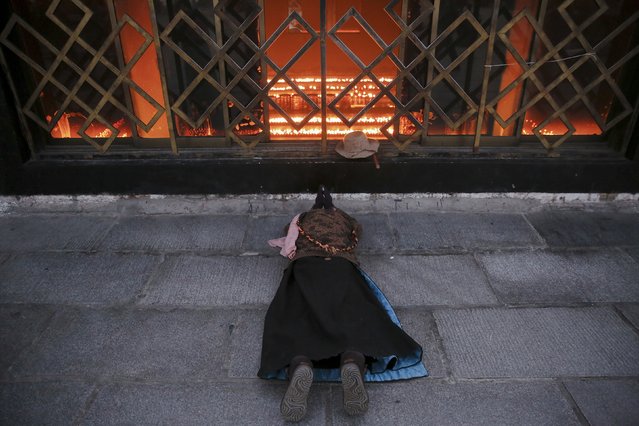
A Tibetan pilgrim prostrates herself at the Jokhang Temple in central Lhasa, Tibet Autonomous Region, China early November 20, 2015. (Photo by Damir Sagolj/Reuters)

A Tibetan pilgrim prostrates herself at the Jokhang Temple in central Lhasa, Tibet Autonomous Region, China early November 20, 2015. Every day thousands of Tibetans visit and pray at Jokhang Temple, considered one of the most sacred places of worship. (Photo by Damir Sagolj/Reuters)
Details
22 Nov 2015 08:03:00
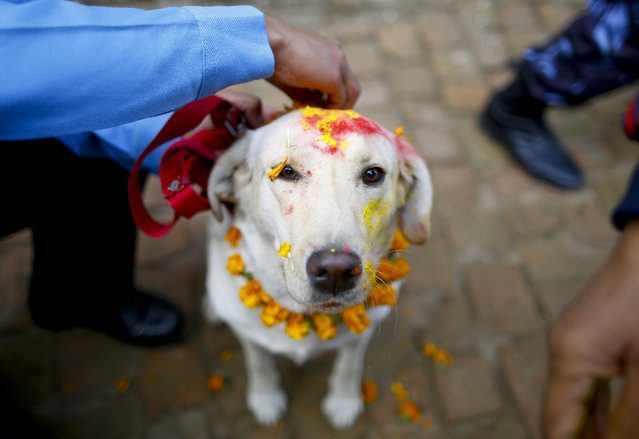
A police officer sprinkles colored powder onto a police dog at Nepal's Central Police Dog Training School during a dog worship day as part of the Diwali festival, also known as Tihar Festival, in Kathmandu, Nepal, 10 November 2015. The Tihar festival is the second major festival for Nepalese Hindus and this year is held from 10 November 2015. (Photo by Narendra Shrestha/EPA)

A police officer sprinkles colored powder onto a police dog at Nepal's Central Police Dog Training School during a dog worship day as part of the Diwali festival, also known as Tihar Festival, in Kathmandu, Nepal, 10 November 2015. The Tihar festival is the second major festival for Nepalese Hindus and this year is held from 10 November 2015. (Photo by Narendra Shrestha/EPA)
Details
13 Nov 2015 08:04:00
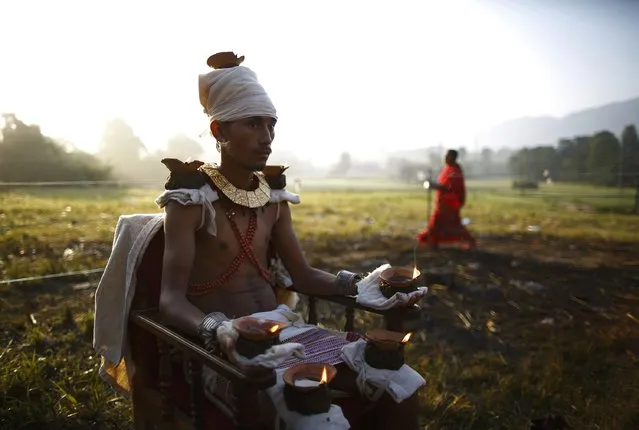
A devotee sits with lighted oil lamps while offering prayers during the “Dashain”, Hinduism's biggest religious festival in Bhaktapur October 3, 2014. Hindus in Nepal celebrate victory over evil during the festival by flying kites, feasting, playing swings, sacrificing animals and worshipping the Goddess Durga as well as other gods and goddess as part of celebrations held throughout the country. (Photo by Navesh Chitrakar/Reuters)

A devotee sits with lighted oil lamps while offering prayers during the “Dashain”, Hinduism's biggest religious festival in Bhaktapur October 3, 2014. Hindus in Nepal celebrate victory over evil during the festival by flying kites, feasting, playing swings, sacrificing animals and worshipping the Goddess Durga as well as other gods and goddess as part of celebrations held throughout the country. (Photo by Navesh Chitrakar/Reuters)
Details
03 Oct 2014 11:30:00
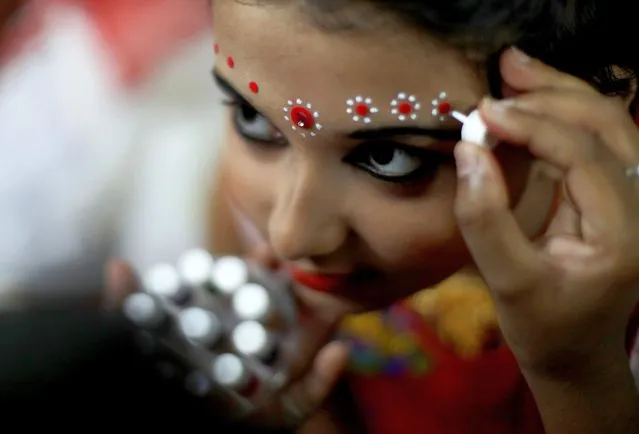
An Indian girl, Aritri Bannerjee, gets dressed as the Goddess Durga, during the Kumari Puja as part of the Durga Puja festival at Shidaspur village, far north of Kolkata, eastern India, 22 October 2023. During the Kumari Puja, devotees worship a girl aged between six and twelve, symbolizing the Kanya Kumari (virgin) form of the Goddess Durga Devi. Hindu devotees believe that Kanya is a living embodiment of the goddess Durga. (Photo by Piyal Adhikary/EPA/EFE)

An Indian girl, Aritri Bannerjee, gets dressed as the Goddess Durga, during the Kumari Puja as part of the Durga Puja festival at Shidaspur village, far north of Kolkata, eastern India, 22 October 2023. During the Kumari Puja, devotees worship a girl aged between six and twelve, symbolizing the Kanya Kumari (virgin) form of the Goddess Durga Devi. Hindu devotees believe that Kanya is a living embodiment of the goddess Durga. (Photo by Piyal Adhikary/EPA/EFE)
Details
02 Nov 2023 05:36:00
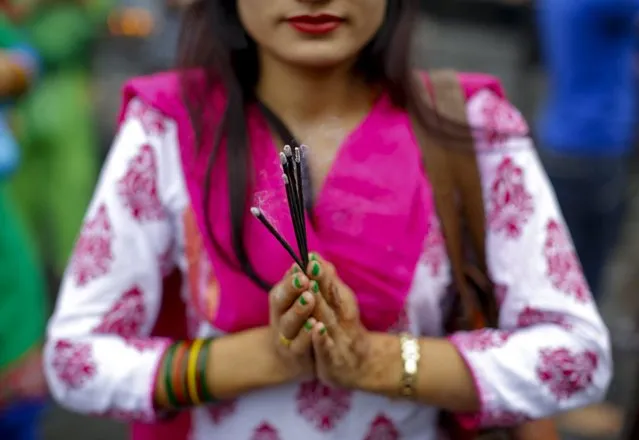
Nepalese Hindu women pray to worship Lord Shiva during the first day of the Sarwan Brata festival, the month of fasting, at the premises of Pashupati Temple in Kathmandu, Nepal, 18 July 2016. Thousands of married and single Nepalese Hindu women will gather in temples for each Monday of the Sawan month (spanning from 16 July to 16 August) to pray for a long and prosperous life of their husbands or for a chance to find a good one. (Photo by Narendra Shrestha/EPA)

Nepalese Hindu women pray to worship Lord Shiva during the first day of the Sarwan Brata festival, the month of fasting, at the premises of Pashupati Temple in Kathmandu, Nepal, 18 July 2016. Thousands of married and single Nepalese Hindu women will gather in temples for each Monday of the Sawan month (spanning from 16 July to 16 August) to pray for a long and prosperous life of their husbands or for a chance to find a good one. (Photo by Narendra Shrestha/EPA)
Details
19 Jul 2016 12:59:00
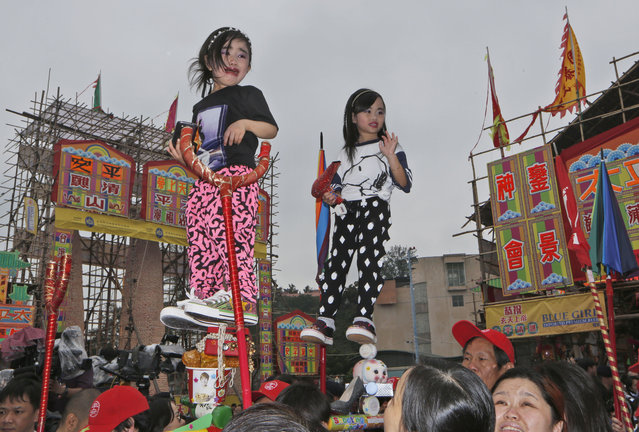
A young performer cries as she parades during the Bun Festival on Cheung Chau island in Hong Kong Tuesday, May 6, 2014. Bun Festival, the Taoist God of the Sea, is worshipped and evil spirits are believed to be scared away by loud gongs and drums during the procession. The celebration includes bun scrambling, parades, opera performances, and children dressed in colorful costumes. (Photo by Kin Cheung/AP Photo)

A young performer cries as she parades during the Bun Festival on Cheung Chau island in Hong Kong Tuesday, May 6, 2014. Bun Festival, the Taoist God of the Sea, is worshipped and evil spirits are believed to be scared away by loud gongs and drums during the procession. The celebration includes bun scrambling, parades, opera performances, and children dressed in colorful costumes. (Photo by Kin Cheung/AP Photo)
Details
08 May 2014 07:31:00
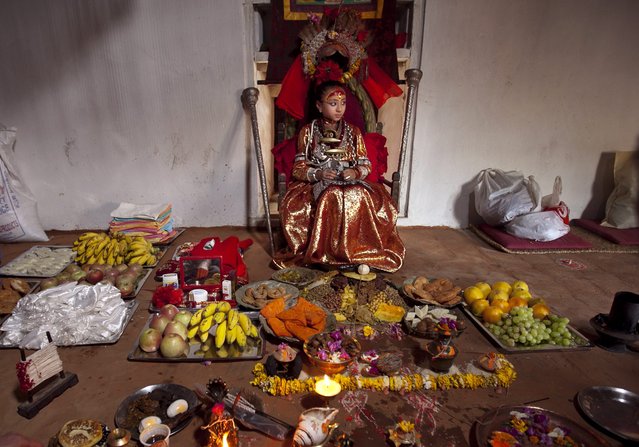
Kumari Samita Bajracharya sits in front of devotees offers during a special puja at Kumari Ghar in Patan, Nepal, 09 April 2011. It is believed that worshipping Kumari and receiving tika from her reduces illness and avoid problems. Kumari, or Kumari Devi, is a “living goddess”. The word literally means virgin in Nepali. The Living Goddesses are young pre-pubescent girls that are considered to be incarnations of the Hindu Goddess of Power, Kali. The Kumari retires when she reaches puberty. (Photo by Narendra Shrestha/EPA)

Kumari Samita Bajracharya sits in front of devotees offers during a special puja at Kumari Ghar in Patan, Nepal, 09 April 2011. It is believed that worshipping Kumari and receiving tika from her reduces illness and avoid problems. Kumari, or Kumari Devi, is a “living goddess”. The word literally means virgin in Nepali. The Living Goddesses are young pre-pubescent girls that are considered to be incarnations of the Hindu Goddess of Power, Kali. The Kumari retires when she reaches puberty. (Photo by Narendra Shrestha/EPA)
Details
18 Jun 2014 12:31:00
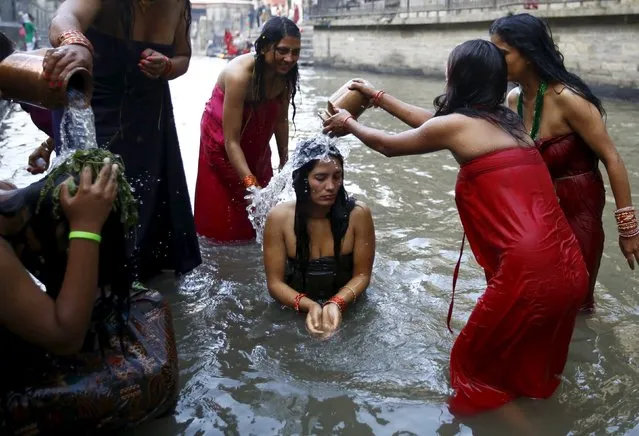
Nepalese women performs ritual as they take a holy bath in the Bagmati River, during the Rishi Panchami festival, in Kathmandu, Nepal September 18, 2015. Rishi Panchami is observed on the last day of Teej when women worship Sapta Rishi (Seven Saints) to ask for forgiveness for sins committed during their menstrual periods throughout the year. (Photo by Navesh Chitrakar/Reuters)

Nepalese women performs ritual as they take a holy bath in the Bagmati River, during the Rishi Panchami festival, in Kathmandu, Nepal September 18, 2015. Rishi Panchami is observed on the last day of Teej when women worship Sapta Rishi (Seven Saints) to ask for forgiveness for sins committed during their menstrual periods throughout the year. The Hindu religion considers menstruation as a representation of impurity and women are prohibited from taking part in religious practices during their monthly menstruations. (Photo by Navesh Chitrakar/Reuters)
Details
21 Sep 2015 12:23:00