Loading...
Done
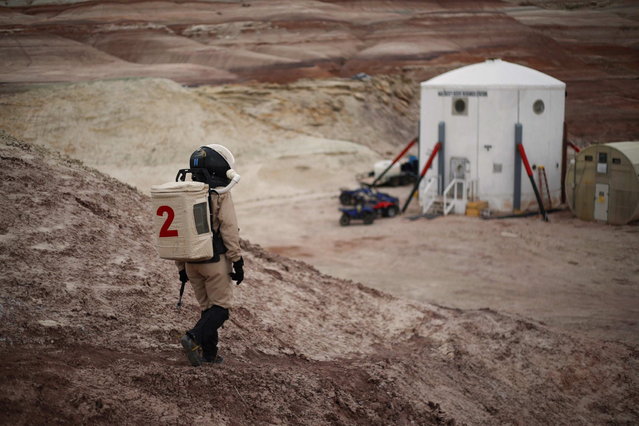
Csilla Orgel, a geologist of Crew 125 EuroMoonMars B mission, makes her way back to the Mars Desert Research Station (MDRS) in the Utah desert March 3, 2013. (Photo by Jim Urquhart/Reuters)

NASA says it could be another 20 years before humans touch down on Mars, but in a sense, the Mars Society has been exploring the red planet for more than a decade – in Utah. Photo: Csilla Orgel, a geologist of Crew 125 EuroMoonMars B mission, makes her way back to the Mars Desert Research Station (MDRS) in the Utah desert March 3, 2013. The MDRS aims to investigate the feasibility of a human exploration of Mars and uses the Utah desert's Mars-like terrain to simulate working conditions on the red planet. Scientists, students and enthusiasts work together developing field tactics and studying the terrain. All outdoor exploration is done wearing simulated spacesuits and carrying air supply packs and crews live together in a small communication base with limited amounts of electricity, food, oxygen and water. Everything needed to survive must be produced, fixed and replaced on site. (Photo by Jim Urquhart/Reuters)
Details
14 Mar 2013 12:11:00
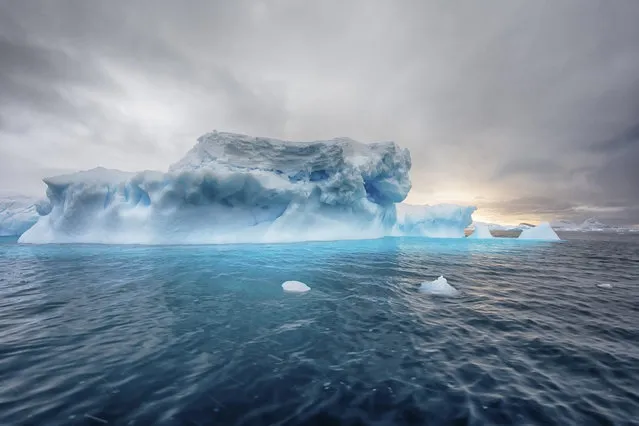
A serene turquoise glow glimmers from underneath these powerful icebergs. Stood in the middle of Antarctica, the giant icebergs appear to be from an unearthly world. These stunning photographs were captured by American photographer Michael Leggero. “My images show pure nature, as that is how I describe Antarctica, simply pure nature”, says the 43 year old, of Carthage, New York. “It is the only place on our planet that humans have not left a presence behind”. (Photo by Michael Leggero/Hotspotmedia/Visual Press Agency)

A serene turquoise glow glimmers from underneath these powerful icebergs. Stood in the middle of Antarctica, the giant icebergs appear to be from an unearthly world. These stunning photographs were captured by American photographer Michael Leggero. “My images show pure nature, as that is how I describe Antarctica, simply pure nature”, says the 43 year old, of Carthage, New York. “It is the only place on our planet that humans have not left a presence behind”. (Photo by Michael Leggero/Hotspotmedia/Visual Press Agency)
Details
07 Aug 2014 10:32:00
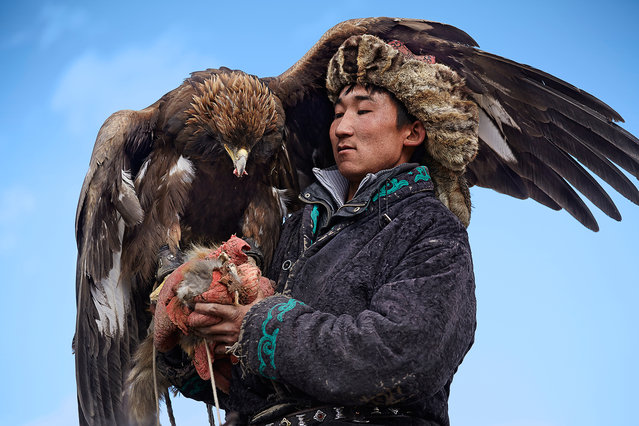
In one of the planet’s most desolate and harsh terrains, the Altai Mountains which run from Siberia in Russia down to Mongolia’s Gobi Desert, hunting with eagles is currently only practiced by a handful of Kyrgyz and Kazakhs. This form of falconry, the practice of hunting with the aid of birds of prey, can be traced back as far as 4,000 years in Central Asia. (Photo by Tariq Zaidi/The Washington Post)

In one of the planet’s most desolate and harsh terrains, the Altai Mountains which run from Siberia in Russia down to Mongolia’s Gobi Desert, hunting with eagles is currently only practiced by a handful of Kyrgyz and Kazakhs. This form of falconry, the practice of hunting with the aid of birds of prey, can be traced back as far as 4,000 years in Central Asia. Here: after a successful hunt, a proud hunter rewards his eagle by feeding it the lungs of the prey, which is considered the most highly prized part of the animal. (Photo by Tariq Zaidi/The Washington Post)
Details
22 Aug 2015 12:46:00
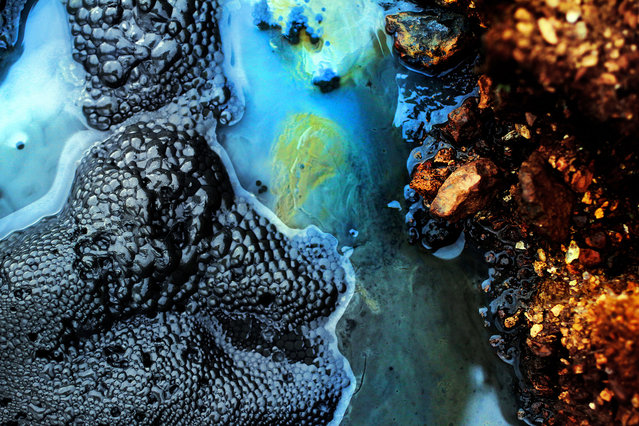
These incredible pictures look like a bird's-eye view of a faraway alien planet – but they're actually hot springs. The amazing snaps are up-close shots of Iceland's hot springs, and the point-blank pictures produce a breathtaking array of colors and effects. Here: The amazing snaps are up-close shots of Icelandic hot springs. (Photo by Johann Vilhjalmsson/Caters News)

These incredible pictures look like a bird's-eye view of a faraway alien planet – but they're actually hot springs. The amazing snaps are up-close shots of Iceland's hot springs, and the point-blank pictures produce a breathtaking array of colors and effects. Here: The amazing snaps are up-close shots of Icelandic hot springs. (Photo by Johann Vilhjalmsson/Caters News)
Details
18 Jan 2016 08:04:00
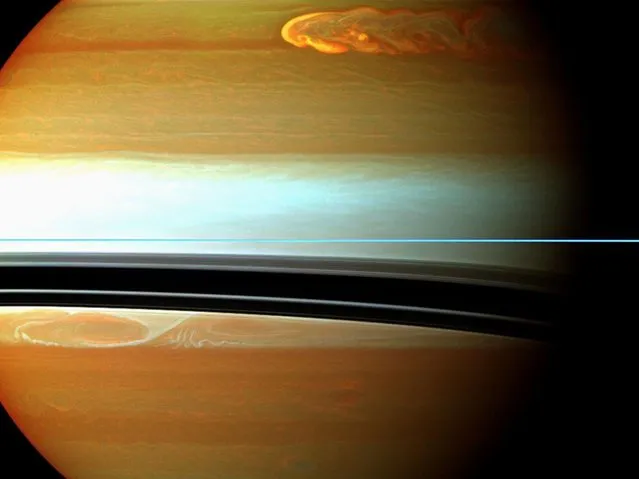
The huge storm which generated the lightning strike on Saturn can be seen in the top right of this image

An incredible view of daytime lightning on Saturn during one of the biggest storms the ringed planet has ever seen has been captured by a NASA spacecraft.

Photo: The huge storm which generated the lightning strike on Saturn can be seen in the top right of this image. (Photo by NASA)
Details
22 Jul 2012 08:43:00
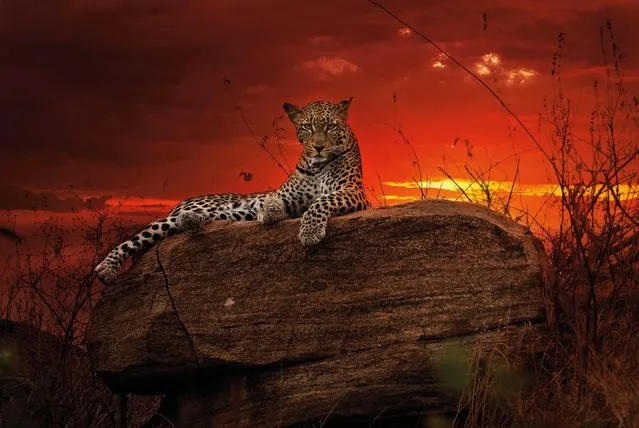
“Wild Africa”. (Photo by Alex Bernasconi)

Award-winning photographer Alex Bernasconi has captured thousands of images – from hiding hippos to wandering zebras – in his travels across Africa. His amazing work features in a new edition of his book Wild Africa. These amazing pictures create a snapshot of the life of some of the planet’s most spectacular animals and natural habitats. Photo: “Wild Africa”. (Photo by Alex Bernasconi)
Details
15 Sep 2013 10:12:00
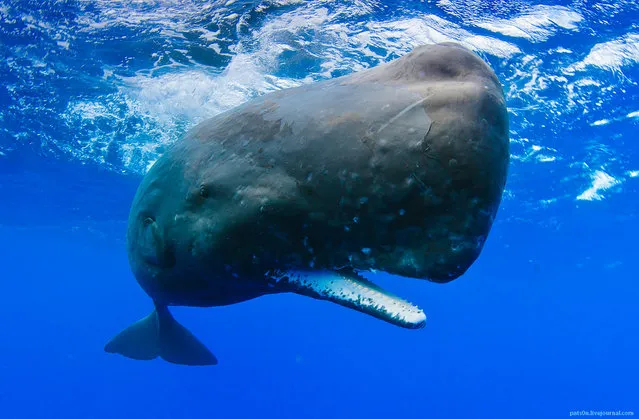
“Sperm whale opening it's huge mouth, Ogasawara Islands, Japan. Sperm whales are the biggest carnivorous animals on the planet. Each teeth in the mouth of adult specimen weights more than 1 kilogram. Interestingly enough that modern marine biologists believe that these teeth despite being fearsome play little role in capturing and eating giant squid – with their main function being mainly ritual aggression between males!”. (Alexander Safonov)

“Sperm whale opening it's huge mouth, Ogasawara Islands, Japan. Sperm whales are the biggest carnivorous animals on the planet. Each teeth in the mouth of adult specimen weights more than 1 kilogram. Interestingly enough that modern marine biologists believe that these teeth despite being fearsome play little role in capturing and eating giant squid – with their main function being mainly ritual aggression between males!”. (Photo by Alexander Safonov)
Details
30 Nov 2012 11:22:00
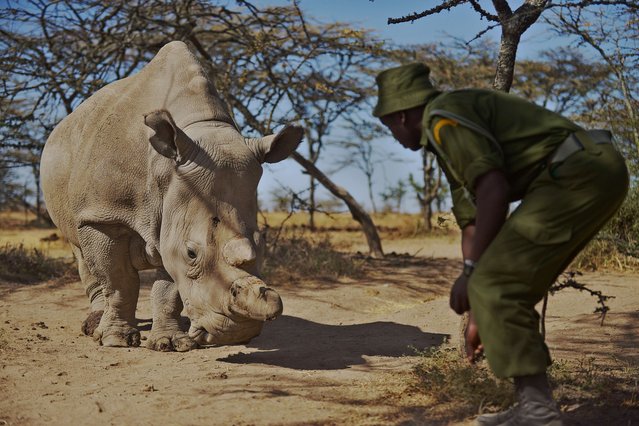
A park ranger stands next to a nothern white female rhinoceros named Najin at Ol Pejeta Conservancy, some 290 kms north of the Kenyan capital, Nairobi, on January 27, 2015. Najin is one of only five members of the sub-species left on the planet, three of which reside at Ol Pejeta Conservancy. (Photo by Tony Karumba/AFP Photo)

A park ranger stands next to a nothern white female rhinoceros named Najin at Ol Pejeta Conservancy, some 290 kms north of the Kenyan capital, Nairobi, on January 27, 2015. Najin is one of only five members of the sub-species left on the planet, three of which reside at Ol Pejeta Conservancy. Conservationists and scientists met in Kenya this week to come up with a last ditch plan to save the northern white rhinoceros from extinction. (Photo by Tony Karumba/AFP Photo)
Details
31 Jan 2015 14:07:00