Loading...
Done
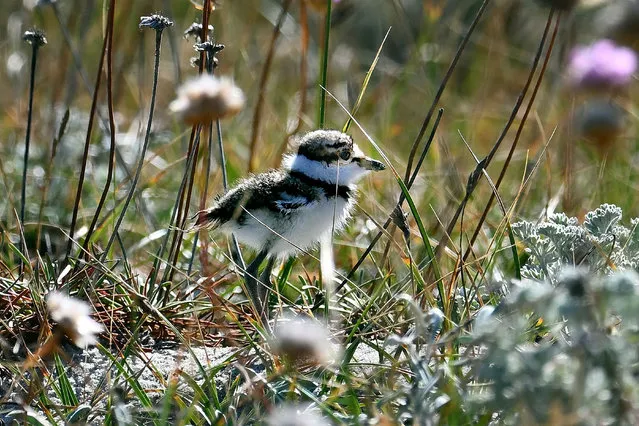
A killdeer (Charadrius vociferus) chick on sand dunes in Pacific Grove, California, US on June 21, 2023. The killdeer gets its name from its shrill, loud call. (Photo by Rory Merry/ZUMA Press Wire/Rex Features/Shutterstock)

A killdeer (Charadrius vociferus) chick on sand dunes in Pacific Grove, California, US on June 21, 2023. The killdeer gets its name from its shrill, loud call. (Photo by Rory Merry/ZUMA Press Wire/Rex Features/Shutterstock)
Details
02 Jul 2023 03:03:00
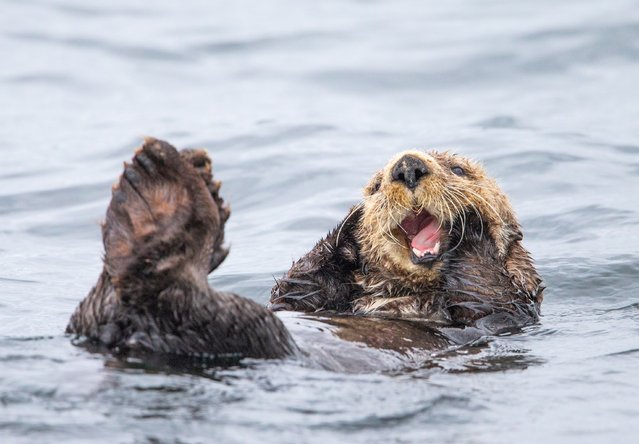
A sea otter in the Great Bear Rainforest, off the Pacific coast of British Columbia, Canada in the second decade of December 2024, appeared to be enjoying a relaxing swim as it preened its fur, the densest of any mammal. (Photo by Max Waugh/Solent News & Photo Agency)

A sea otter in the Great Bear Rainforest, off the Pacific coast of British Columbia, Canada in the second decade of December 2024, appeared to be enjoying a relaxing swim as it preened its fur, the densest of any mammal. (Photo by Max Waugh/Solent News & Photo Agency)
Details
29 Dec 2024 01:48:00
Picture of a float taking part in the “White Day” parade during the Carnival of Blacks and Whites in Pasto, Colombia on January 6, 2024. The Blacks and Whites carnival has its origins in a mix of Andean, Amazonian and Pacific cultural expressions, and it celebrates the ethnic diversity in the region and was proclaimed by UNESCO as intangible cultural heritage in 2009. (Photo by Joaquín Sarmiento/AFP Photo)

Picture of a float taking part in the “White Day” parade during the Carnival of Blacks and Whites in Pasto, Colombia on January 6, 2024. The Blacks and Whites carnival has its origins in a mix of Andean, Amazonian and Pacific cultural expressions, and it celebrates the ethnic diversity in the region and was proclaimed by UNESCO as intangible cultural heritage in 2009. (Photo by Joaquín Sarmiento/AFP Photo)
Details
17 Mar 2025 03:56:00
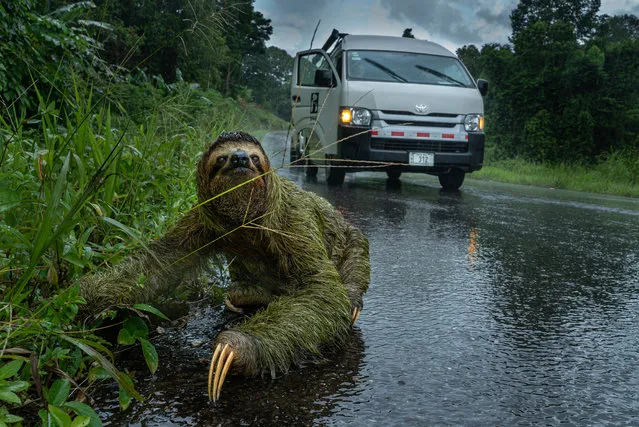
People and Nature category winner: Why did the sloth cross the road? by Andrew Whitworth (Osa Conservation and University of Glasgow), taken in Osa Peninsula, Costa Rica. “I was driving out from the Osa Peninsula, located on the southern Pacific coast of Costa Rica on a dark, stormy day. This female three-toed sloth (Bradypus variegatus) had luckily just about made it across the road, and the drivers of the Toyota on this occasion had spotted her in good time”. (Photo by Andrew Whitworth/2019 British Ecological Society Photography Competition)

People and Nature category winner: Why did the sloth cross the road? by Andrew Whitworth (Osa Conservation and University of Glasgow), taken in Osa Peninsula, Costa Rica. “I was driving out from the Osa Peninsula, located on the southern Pacific coast of Costa Rica on a dark, stormy day. This female three-toed sloth (Bradypus variegatus) had luckily just about made it across the road, and the drivers of the Toyota on this occasion had spotted her in good time”. (Photo by Andrew Whitworth/2019 British Ecological Society Photography Competition)
Details
30 Nov 2019 00:05:00
Caroline Wozniacki of Denmark serves in her match against Kaia Kanepi of Estonia

Caroline Wozniacki of Denmark serves in her match against Kaia Kanepi of Estonia during day four of the Toray Pan Pacific Open at Ariake Colosseum on September 28, 2011 in Tokyo, Japan. (Photo by Koji Watanabe/Getty Images)
Details
22 Nov 2011 14:17:00
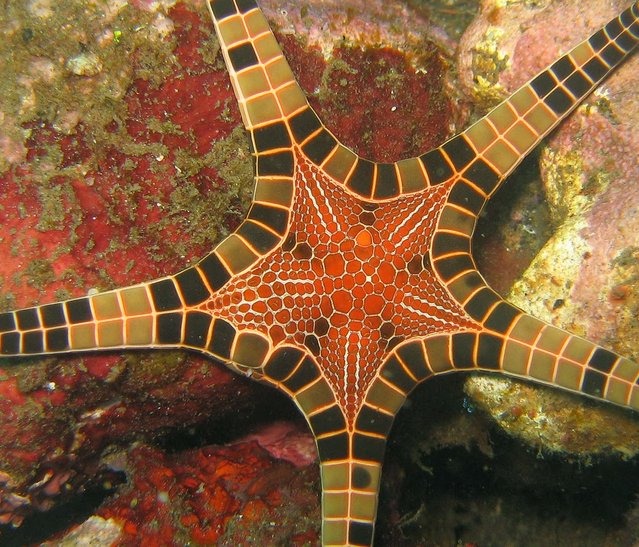
Conaster Iongimanus AKA The Icon Star Or Double Star

Iconaster longimanus, the icon star or double star, is a species of starfish in the family Goniasteridae. It is found in the west and central Indo-Pacific Ocean. The genus name comes from the Greek eikon, meaning portrait or image and possibly referring to the way the marginal plates frame the disc, and aster, meaning star. The specific name comes from the Latin longus manus and refers to the long, slender arms.
Details
14 Jul 2014 12:50:00
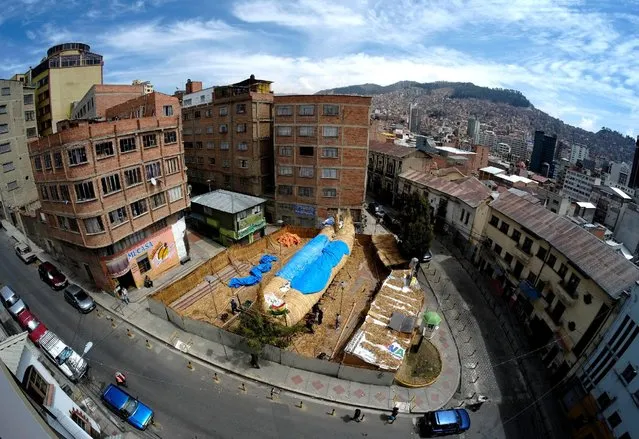
Aerial view of the “Viracocha III”, a boat made only from the totora reed, as it is being prepared to cross the Pacific from Chile to Australia on an expected six-month journey, La Paz, Bolivia, October 19, 2016. An expedition in a boat made only of reeds crafted by indigenous Bolivians is getting ready to cross the Pacific from South America to Australia, in a fresh attempt to prove that ancient mariners were capable of making the journey. Phil Buck, a 51-year-old explorer from the United States, already has led two similar expeditions and will captain the “Viracocha III” set to depart from northern Chile in February on an expected six-month journey. (Photo by David Mercado/Reuters)

Aerial view of the “Viracocha III”, a boat made only from the totora reed, as it is being prepared to cross the Pacific from Chile to Australia on an expected six-month journey, La Paz, Bolivia, October 19, 2016. An expedition in a boat made only of reeds crafted by indigenous Bolivians is getting ready to cross the Pacific from South America to Australia, in a fresh attempt to prove that ancient mariners were capable of making the journey. (Photo by David Mercado/Reuters)
Details
20 Oct 2016 10:53:00
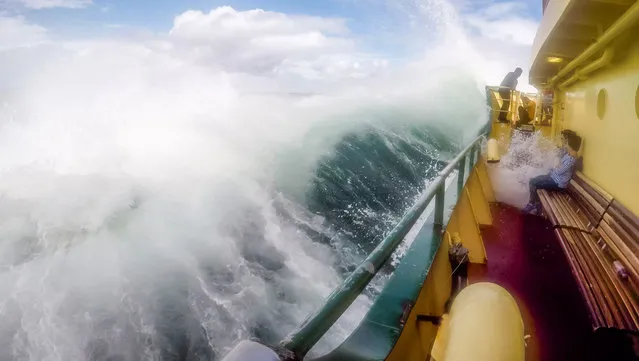
Wild weather drenches tourists, Sydney, Australia on March 7, 2017. A series of photographs as tourists take a soaking on Sydney's iconic Manly Ferry sailing big swells near Sydney's North Head. The Weather Bureau warns of large and powerful surf conditions expected to be hazardous for coastal activities such as rock fishing, swimming and surfing. (Photo by Hugh Peterswald/Pacific Press via ZUMA Wire/Rex Features/Shutterstock)

Wild weather drenches tourists, Sydney, Australia on March 7, 2017. A series of photographs as tourists take a soaking on Sydney's iconic Manly Ferry sailing big swells near Sydney's North Head. The Weather Bureau warns of large and powerful surf conditions expected to be hazardous for coastal activities such as rock fishing, swimming and surfing. (Photo by Hugh Peterswald/Pacific Press via ZUMA Wire/Rex Features/Shutterstock)
Details
08 Mar 2017 09:47:00