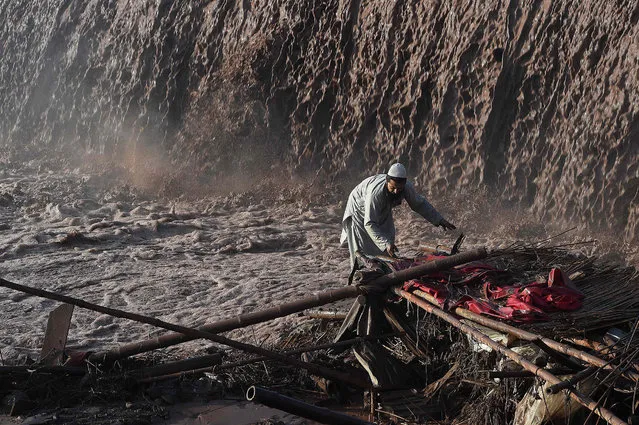
A Pakistani vendor tries to salvage materials after flood water destroyed his shop following heavy rain on the outskirts of Peshawar on April 4, 2016. (Photo by A. Majeed/AFP Photo)
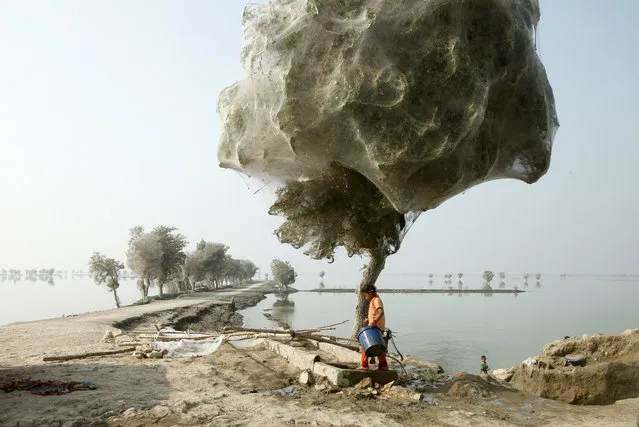
An unexpected side-effect of the flooding in parts of Pakistan has been that millions of spiders climbed up into the trees to escape the rising flood waters. Because of the scale of the flooding and the fact that the water has taken so long to recede, many trees have become cocooned in spiders’ webs.
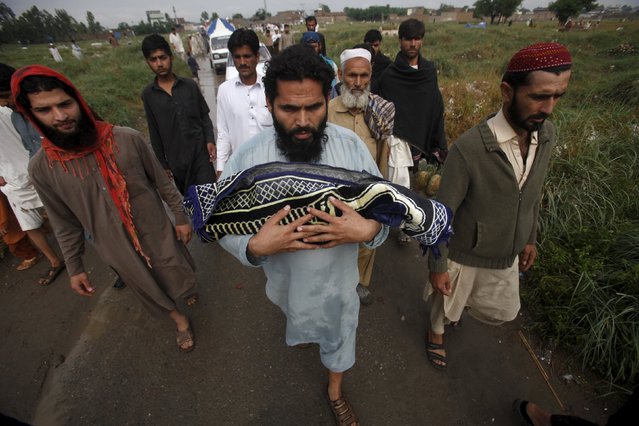
A man carries the body of his son for burial after he was killed when a rooftop of his house collapsed due to heavy rain in the outskirts of Peshawar, Pakistan April 27, 2015. A severe storm in northwest Pakistan, dubbed a “mini-cyclone”, has killed 44 people and injured more than 200, officials said, raising their previous death toll. (Photo by Fayaz Aziz/Reuters)
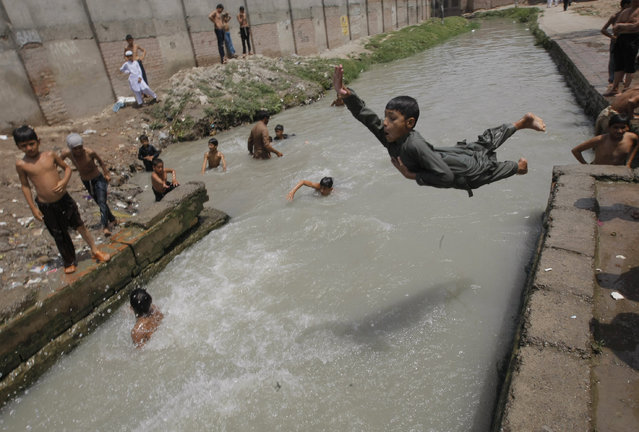
Pakistani children cool themselves off in a stream in Peshawar, Pakistan, Monday, June 29, 2015, during Muslim's fasting month of Ramadan. (Photo by Mohammad Sajjad/AP Photo)
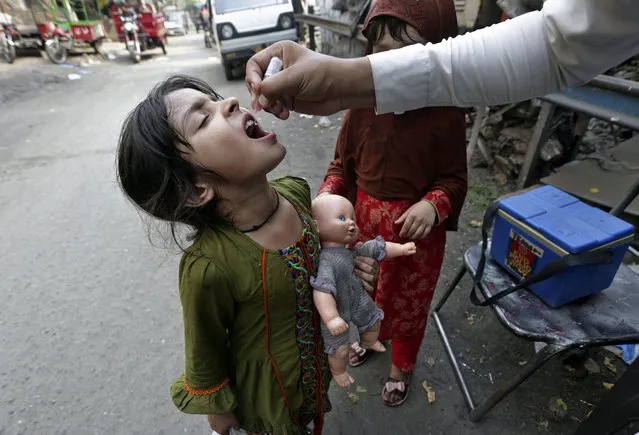
A health worker gives a polio vaccine to a girl on a street in Lahore, Pakistan, Monday, June 27, 2022. Pakistan launched a new anti-polio drive on Monday, with the goal to vaccinate a million children across Pakistan. (Photo by K.M. Chaudary/AP Photo)
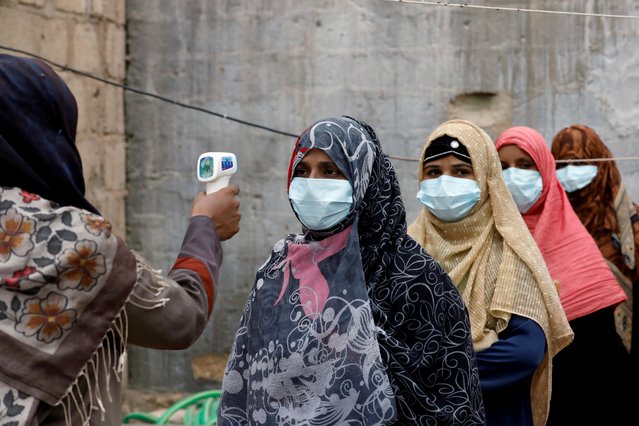
Vaccinators wear protective masks as they get their temperature checked, during an anti-polio campaign, in a low-income neighborhood as the spread of the coronavirus disease (COVID-19) continues, in Karachi, Pakistan on July 20, 2020. (Photo by Akhtar Soomro/Reuters)