Loading...
Done
Ghost City China Ordos

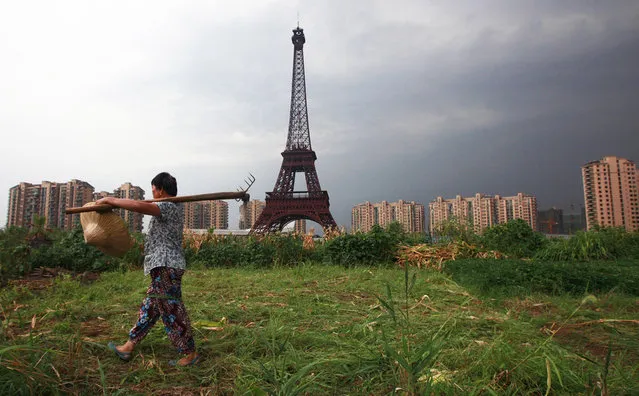
Built for over a million people, the city of Ordos was designed to be the crowning glory of Inner Mongolia. Doomed to incompletion however, this futuristic metropolis now rises empty out of the deserts of northern China. Only 2% of its buildings were ever filled; the rest has largely been left to decay, abandoned mid-construction, earning Ordos the title of China's Ghost City.
Details
06 Dec 2015 12:57:00
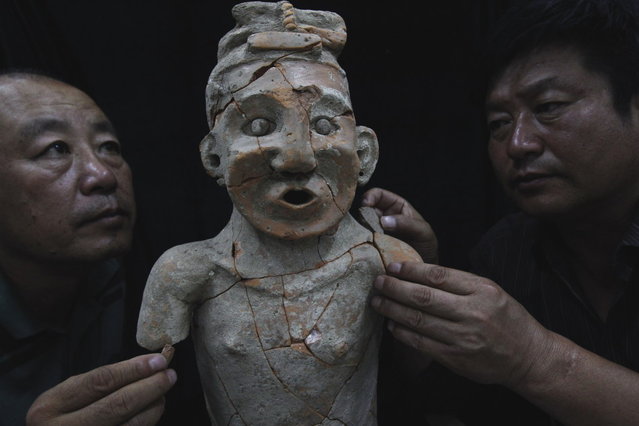
Archaeologists repair a pottery statue found in Aohan Banner, North China's Inner Mongolia autonomous region, July 3, 2012. (Photo by Xinhua)

On July 7, Chinese archaeologists from the Academy of Social Sciences announced that they have reconstituted a 5,300-year-old Mongolion pottery statue found at a relic site in North China, according to Xinhua news agency.
Details
08 Mar 2015 12:13:00
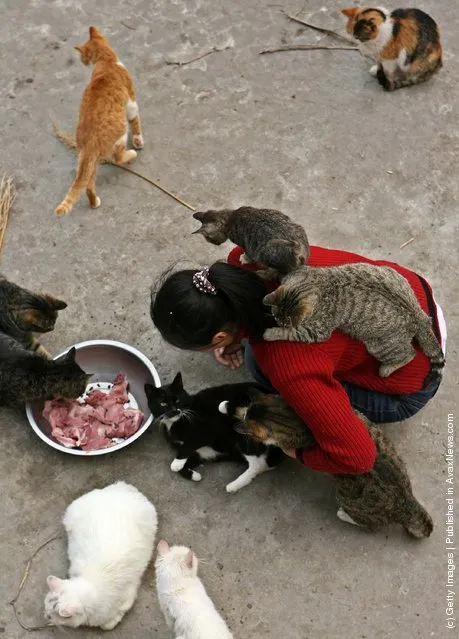
Animal Lover Duo Zirong's Family And Their Adopted Cats

Chinese woman Duo Zirong feeds stray cats at her home February 14, 2006 in Shanghai, China. Duo Zirong, a Daur ethnic minority group woman from Inner Mongolia and reported as the “Cat Woman”, has housed about 300 cats with her Shanghainese husband Liu Junluo and mother-in-law. (Photo by China Photos/Getty Images)
Details
09 Oct 2011 08:57:00
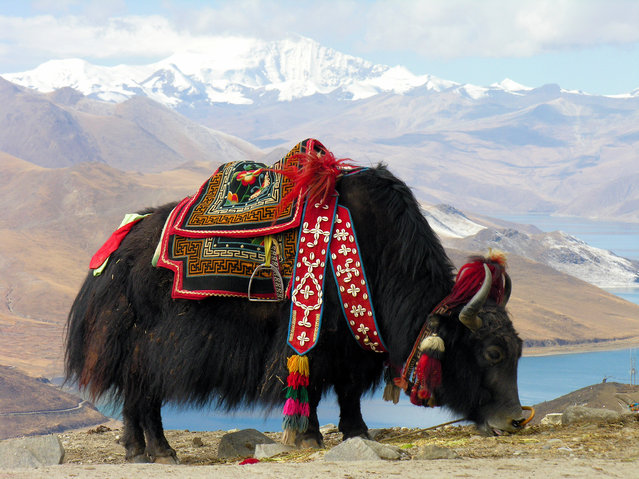
Yak near Yamdrok lake, Tibet. It is a long-haired bovinae found throughout the Himalayan region of south Central Asia, the Tibetan Plateau and as far north as Mongolia and Russia. The Tibetan economy is dominated by subsistence agriculture. Due to limited arable land, the primary occupation of the Tibetan Plateau is raising livestock, such as sheep, cattle, goats, camels, yaks, dzo, and horses. The Tibetan yak is an integral part of Tibetan life. (Photo by Dennis Jarvis)

Yak near Yamdrok lake, Tibet. It is a long-haired bovinae found throughout the Himalayan region of south Central Asia, the Tibetan Plateau and as far north as Mongolia and Russia. The Tibetan economy is dominated by subsistence agriculture. Due to limited arable land, the primary occupation of the Tibetan Plateau is raising livestock, such as sheep, cattle, goats, camels, yaks, dzo, and horses. The Tibetan yak is an integral part of Tibetan life. (Photo by Dennis Jarvis)
Details
10 Jun 2015 10:48:00
Chinese Kazakh eagle hunters sit on horseback as they travel to a local competition on January 29, 2015 in the mountains of Qinghe County, Xinjiang, northwestern China. The festival, organised by the local hunting community, is part of an effort to promote and grow traditional hunting practices for new generations in the mountainous region of western China that borders Kazakhstan, Russia and Mongolia. (Photo by Kevin Frayer/Getty Images)

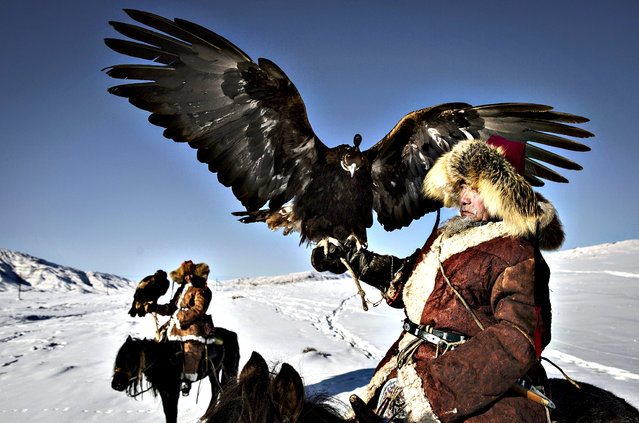
Chinese Kazakh eagle hunters sit on horseback as they travel to a local competition on January 29, 2015 in the mountains of Qinghe County, Xinjiang, northwestern China. The festival, organised by the local hunting community, is part of an effort to promote and grow traditional hunting practices for new generations in the mountainous region of western China that borders Kazakhstan, Russia and Mongolia. The training and handling of the large birds of prey follows a strict set of ancient rules that Kazakh eagle hunters are preserving for future generations. (Photo by Kevin Frayer/Getty Images)
Details
07 Feb 2015 14:11:00
WWII veterans attend a ceremony to place tobacco pouches of soil from WWII mass graves of Red Army soldiers abroad, in the custody of the Central Armed Forces Museum in Moscow, Russia on March 6, 2020. The grave soil has been brought from Abkhazia, Germany, Kyrgyzstan, US, Ukraine, France, Estonia, Mongolia, Bulgaria, UK, Uzbekistan and South Ossetia. (Photo by Alexander Shcherbak/TASS)

WWII veterans attend a ceremony to place tobacco pouches of soil from WWII mass graves of Red Army soldiers abroad, in the custody of the Central Armed Forces Museum in Moscow, Russia on March 6, 2020. The grave soil has been brought from Abkhazia, Germany, Kyrgyzstan, US, Ukraine, France, Estonia, Mongolia, Bulgaria, UK, Uzbekistan and South Ossetia. (Photo by Alexander Shcherbak/TASS)
Details
02 Apr 2020 00:01:00
Heesco, Windsor. Born and raised in Mongolia and now living and working in Melbourne, Heesco is well known for his skill in rendering photo-realistic portraits. They speak to the viewer in a way that the subtext is enjoyable to decipher. Just what is the Blue Lady’s message? The sunglasses might mask the confronting gaze but her body language fills in the gaps. Heesco’s characters often wear traditional jewellery and clothing that remind us of his Mongolian cultural heritage. (Photo by Lou Chamberlin/The Guardian)

Heesco, Windsor. Born and raised in Mongolia and now living and working in Melbourne, Heesco is well known for his skill in rendering photo-realistic portraits. They speak to the viewer in a way that the subtext is enjoyable to decipher. Just what is the Blue Lady’s message? The sunglasses might mask the confronting gaze but her body language fills in the gaps. Heesco’s characters often wear traditional jewellery and clothing that remind us of his Mongolian cultural heritage. (Photo by Lou Chamberlin/The Guardian)
Details
26 Dec 2017 08:28:00
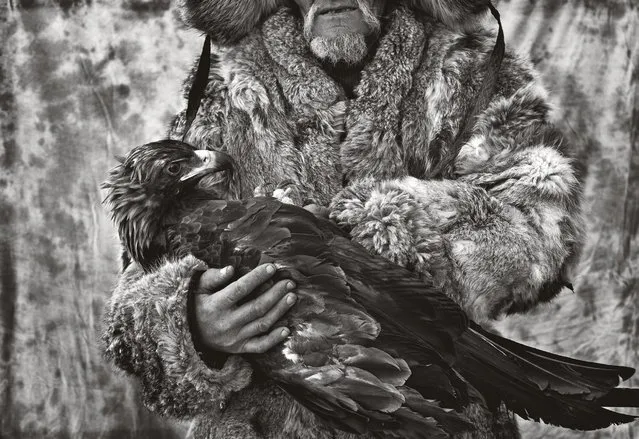
A Kazakh hunter has taken an eaglet from the nest, given it pride of place in their home and trained it. All hunters describe the eagle as part of their family. (Photo by Palani Mohan)

Kazakh nomads have been grazing their livestock in Mongolia for hundreds of years. Fascinated by the bond between hunter and eagle, photographer Palani Mohan has spent the last few years documenting the burkitshi. Mohan's photos of the landscape, isolation of the hunt, and most of all the trusting relationship between man and bird, convey the importance that the eagle plays in their lives. (Photo by Palani Mohan)
Details
11 Jan 2016 08:03:00