Loading...
Done
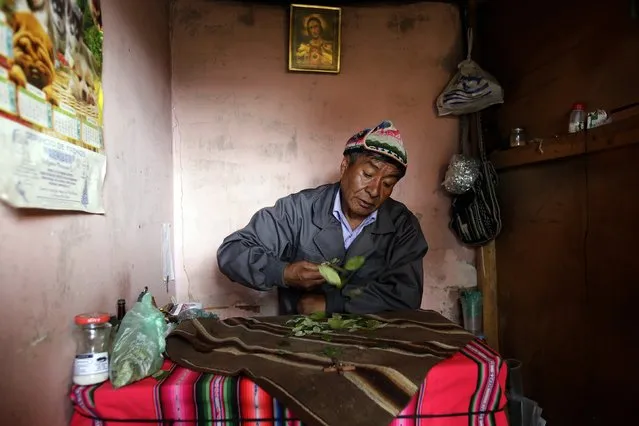
Aymara witchdoctor Ricardo Quispe, also called “Lord of the Lake”, throws coca leaves during a ritual to predict the future, at the witches market of El Alto, on the outskirts of La Paz, December 31, 2014. Dozens of witch doctors tend to a warren of stalls in El Alto, making offerings to give thanks, to promise luck at work or in love, or to call up spirits and banish curses at the end of the year. (Photo by David Mercado/Reuters)

Aymara witchdoctor Ricardo Quispe, also called “Lord of the Lake”, throws coca leaves during a ritual to predict the future, at the witches market of El Alto, on the outskirts of La Paz, December 31, 2014. Dozens of witch doctors tend to a warren of stalls in El Alto, making offerings to give thanks, to promise luck at work or in love, or to call up spirits and banish curses at the end of the year. (Photo by David Mercado/Reuters)
Details
01 Jan 2015 14:05:00
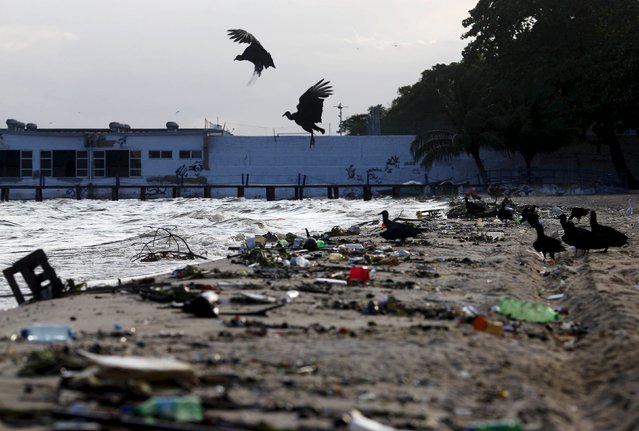
Vultures gather to eat waste in Bica beach, on the banks of the Guanabara Bay, with the Sugar Loaf mountain in background, 500 days ahead the Rio 2016 Olympic Games in Rio de Janeiro March 24, 2015. (Photo by Ricardo Moraes/Reuters)

Vultures gather to eat waste in Bica beach, on the banks of the Guanabara Bay, with the Sugar Loaf mountain in background, 500 days ahead the Rio 2016 Olympic Games in Rio de Janeiro March 24, 2015. As part of its Olympic bid, Rio promised to clean up 80 percent of the bay for the games. But local government officials have already admitted that a cleanup by 2016 is not achievable. Despite millions of dollars of investment over the years, the bay still stinks of sewage. Sailors who visited the city for test events complained of a floating sofa and a dead dog in the water. (Photo by Ricardo Moraes/Reuters)
Details
26 Mar 2015 12:16:00
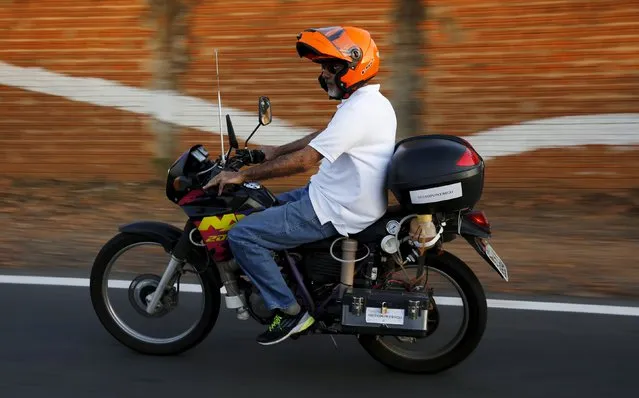
Ricardo Azevedo rides his Honda NX 200 motorbike, which he converted to be powered by water, in Salto, northwest of Sao Paulo, Brazil, August 6, 2015. The Sao Paulo civil servant built the motorbike which can cover up to 500 kilometres (311 miles) fueled by just one liter of water. Dubbed "Moto Power H2O", the bike is powered by a process of electrolysis by which the water molecule is broken down into its constituent elements. (Photo by Nacho Doce/Reuters)

Ricardo Azevedo rides his Honda NX 200 motorbike, which he converted to be powered by water, in Salto, northwest of Sao Paulo, Brazil, August 6, 2015. The Sao Paulo civil servant built the motorbike, which can cover up to 500 kilometres (311 miles) fuelled by just one litre of water. Dubbed “Moto Power H2O” the bike is powered by the process of electrolysis, which breaks the water molecule down into its constituent elements. (Photo by Nacho Doce/Reuters)
Details
13 Aug 2015 12:00:00
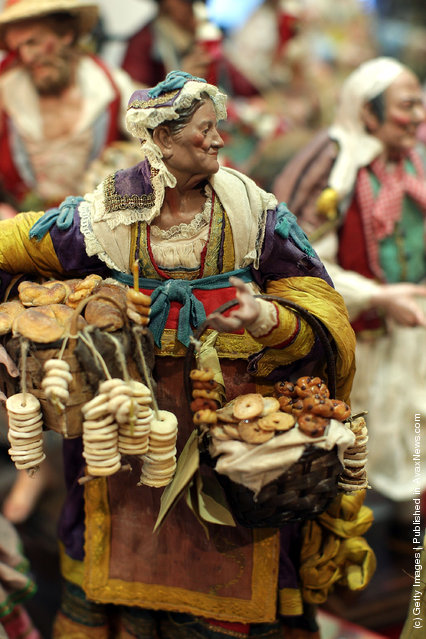
Neapolitan Christmas Nativity figurines on display at 'Maestri Ferrigno', which opened in 1836, at Via San Gregorio Armeno

Neapolitan Christmas Nativity figurines on display at “Maestri Ferrigno”, which opened in 1836, at Via San Gregorio Armeno on December 14, 2011 in Naples, Italy. Via San Gregorio Armeno, Christmas Alley as it is known, is considered by many to be the world capital of the Nativity and home to the artisans and merchants who specialize in the art and the craft of the Neapolitan Presepe. Over the Christmas period, more than half a million tourists come to see the shops. (Photo by Franco Origlia/Getty Images)
Details
17 Dec 2011 12:17:00
Black women in Brazil sit at the intersection of racism and misogyny, and have in recent years been at the forefront of a movement that challenges issues ranging from sexual and domestic violence to police brutality and stereotyping. Kolor Collective considers itself to be a part of this movement and questions expectations imposed on black women with satirical and subversive images, as seen here. (Photo by Kolor Art Collective/The Guardian)

Photographer Pol Kurucz’s vivid collection of photos explores issues faced by black Brazilian women, from political misrepresentation to unrealistic beauty standards. Kolor Collective is a Rio de Janeiro-based creative group that challenges the struggle faced by black women in Brazil through theatrical and provocative art. It was founded in 2015 by Franco-Hungarian photographer Pol Kurucz, who often touches on his own experiences of discrimination to call out sensitive social problems. (Photo by Kolor Art Collective/The Guardian)
Details
28 Dec 2016 07:24:00
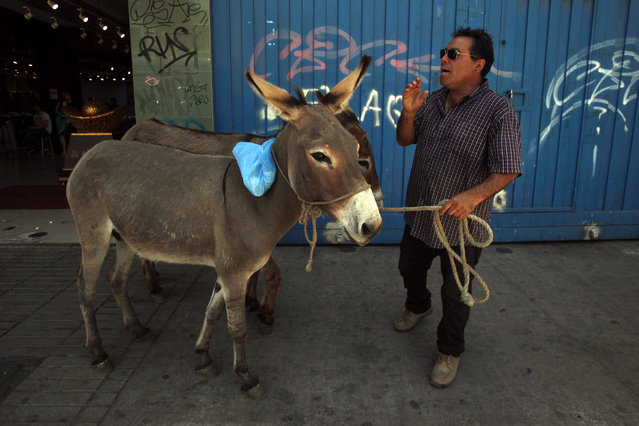
In this December 13, 2014 photo, Ricardo Alegria holds his donkeys by a leash as he yells to sell their milk in the streets of Santiago, Chile. Alegria, along with his brother Marco, has been selling fresh donkey milk for the past 25 years, and says it's recommended as a vitamin boost. Shot glass size cups of the drink sell for about $2 dollars. Half a liter, which is the most he says his donkeys can give in one day, sells for about $20 dollars. (Photo by Luis Hidalgo/AP Photo)

In this December 13, 2014 photo, Ricardo Alegria holds his donkeys by a leash as he yells to sell their milk in the streets of Santiago, Chile. Alegria, along with his brother Marco, has been selling fresh donkey milk for the past 25 years, and says it's recommended as a vitamin boost. Shot glass size cups of the drink sell for about $2 dollars. Half a liter, which is the most he says his donkeys can give in one day, sells for about $20 dollars. (Photo by Luis Hidalgo/AP Photo)
Details
26 Dec 2014 15:01:00
Larissa Neto, a muse of the Unidos da Tijuca Samba School, poses as she wears a carnival dress in Sao Goncalo near Rio de Janeiro, Brazil, February 3, 2016. (Photo by Ricardo Moraes/Reuters)

Larissa Neto, a muse of the Unidos da Tijuca Samba School, poses as she wears a carnival dress in Sao Goncalo near Rio de Janeiro, Brazil, February 3, 2016. Rio de Janeiro's carnival parades are known the world over for the glitz and glamour, high-tech allegorical floats and shimmering bodies, which battle it out each year for the championship title. Each school is fronted by the Queen of the Drums, who dances alongside the raging percussion, and her court of sparkling, sculpted dancers known as “muses”. (Photo by Ricardo Moraes/Reuters)
Details
05 Feb 2016 10:52:00
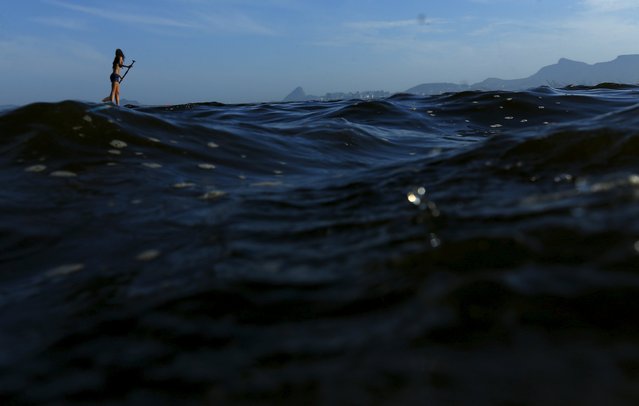
A girl paddles on her stand-up board on the waters of Guanabara bay at Bica beach in Rio de Janeiro Brazil, January 10, 2016. (Photo by Ricardo Moraes/Reuters)

A girl paddles on her stand-up board on the waters of Guanabara bay at Bica beach in Rio de Janeiro Brazil, January 10, 2016. Few features capture the beauty, or the problems, of one of the world's most dramatic urban landscapes like Guanabara Bay - the finger-like inlet that forms the shoreline and harbor for Rio de Janeiro. The bay, which carves into southeast Brazil from the Atlantic Ocean, literally gave Rio its name when Portuguese mariners mistook it for a “rio”, or “river”. Four centuries later, the bay is preparing to welcome another sort of seafarer – Olympic sailors, who will navigate the bay when the 2016 Rio Olympics kick off in August. (Photo by Ricardo Moraes/Reuters)
Details
28 Apr 2016 12:13:00