Loading...
Done
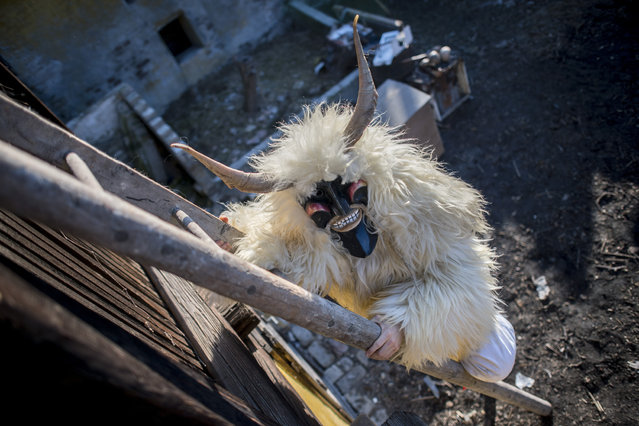
A man wears a busho mask and a costume made of sheep pelt while climbing up a ladder outside a barn in Mohacs, Hungary, 20 February 2020, on the first day of carnival. The traditional Busho carnival, which marks the end of winter, dates back to the 16th century. According to local legend, members of an ethnic South Slavic group living in Mohacs at the time dressed up in similar costumes and wore wooden masks to scare away Ottoman invaders, who mistook them for demons. (Photo by Tamas Soki/EPA/EFE)

A man wears a busho mask and a costume made of sheep pelt while climbing up a ladder outside a barn in Mohacs, Hungary, 20 February 2020, on the first day of carnival. The traditional Busho carnival, which marks the end of winter, dates back to the 16th century. According to local legend, members of an ethnic South Slavic group living in Mohacs at the time dressed up in similar costumes and wore wooden masks to scare away Ottoman invaders, who mistook them for demons. (Photo by Tamas Soki/EPA/EFE)
Details
23 Feb 2020 00:07:00
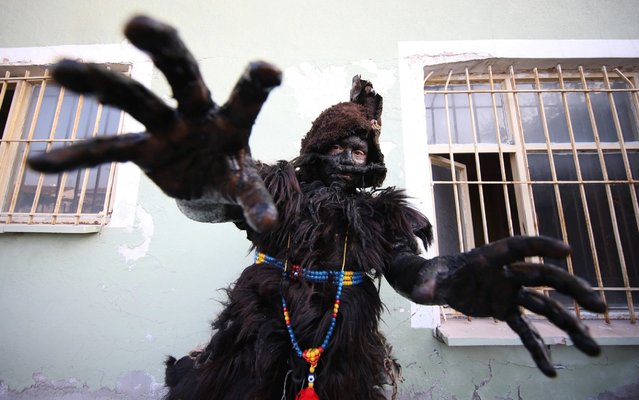
A leather worker with his frightening types of clothes prepares after painted themselves using chimney soot as they participate in a programme within the September 6 celebrations, in Balikesir, Turkey on September 06, 2019. According to the story, “Tulutabaklar” were painting themselves with ash and wearing goatskin or sheep skin to frighten the Greek soldiers occupying Balikesir during the National Struggle period. Every year on September 6, Tulutabaklar perform this ritual as part of the celebration of liberation of the city for 96 years. (Photo by Ali Atmaca/Anadolu Agency via Getty Images)

A leather worker with his frightening types of clothes prepares after painted themselves using chimney soot as they participate in a programme within the September 6 celebrations, in Balikesir, Turkey on September 06, 2019. According to the story, “Tulutabaklar” were painting themselves with ash and wearing goatskin or sheep skin to frighten the Greek soldiers occupying Balikesir during the National Struggle period. Every year on September 6, Tulutabaklar perform this ritual as part of the celebration of liberation of the city for 96 years. (Photo by Ali Atmaca/Anadolu Agency via Getty Images)
Details
09 Sep 2019 00:05:00
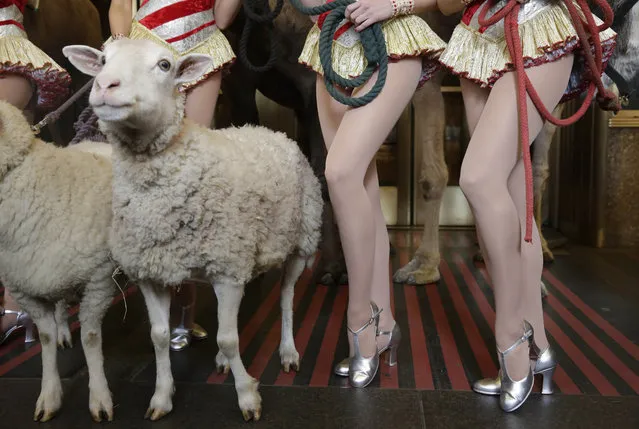
The legs of camel and sheep for the “Living Nativity” scene, and Rockettes, of the “Radio City Christmas Special”, are juxtaposed as they pose for photos outside New York's Radio City Music Hall, Tuesday, October 28, 2014. The show is scheduled to open Friday, November 7, 2014 and continue through Wednesday, December 31, 2014. The “Living Nativity” has been part of the Christmas Spectacular since its inception in 1933. (Photo by Richard Drew/AP Photo)

The legs of camel and sheep for the “Living Nativity” scene, and Rockettes, of the “Radio City Christmas Special”, are juxtaposed as they pose for photos outside New York's Radio City Music Hall, Tuesday, October 28, 2014. The show is scheduled to open Friday, November 7, 2014 and continue through Wednesday, December 31, 2014. The “Living Nativity” has been part of the Christmas Spectacular since its inception in 1933. (Photo by Richard Drew/AP Photo)
Details
01 Nov 2014 14:53:00
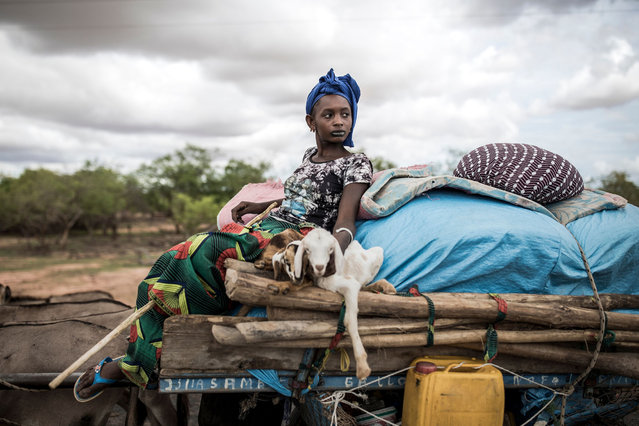
A Fulani Pastoralist carries two baby sheep on her donkey cart as her family move on northwards in Barkedji, Senegal on July 21, 2020. Thousands of Pastoralist families will start the movement north in the next weeks. With the first rains comes fresh grass and water for the Fulani herders' livestock, it also marks the point where most of the Pastoralist will move northwards until the dry season. (Photo by John Wessels/AFP Photo)

A Fulani Pastoralist carries two baby sheep on her donkey cart as her family move on northwards in Barkedji, Senegal on July 21, 2020. Thousands of Pastoralist families will start the movement north in the next weeks. With the first rains comes fresh grass and water for the Fulani herders' livestock, it also marks the point where most of the Pastoralist will move northwards until the dry season. (Photo by John Wessels/AFP Photo)
Details
04 Aug 2020 00:05:00
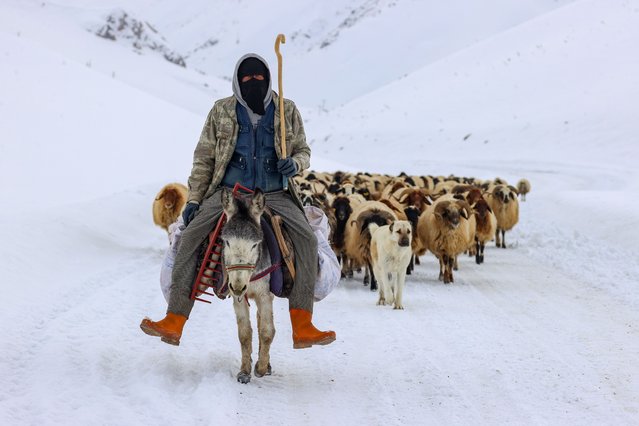
A shepherd rides a donkey as he leads sheep during winter in Van, Turkiye on February 19, 2022. Despite the terrible winter weather and the hard geology of the region, breeders in Van's Gurpnar district, where livestock is the most important source of revenue, do not disregard the care of their animals. Livestock farmers in the Cepkenli and Topcudegirmeni neighborhoods have the similar difficulties as those in rural areas, where the snow depth reaches one meter. (Photo by Ozkan Bilgin/Anadolu Agency via Getty Images)

A shepherd rides a donkey as he leads sheep during winter in Van, Turkiye on February 19, 2022. Despite the terrible winter weather and the hard geology of the region, breeders in Van's Gurpnar district, where livestock is the most important source of revenue, do not disregard the care of their animals. Livestock farmers in the Cepkenli and Topcudegirmeni neighborhoods have the similar difficulties as those in rural areas, where the snow depth reaches one meter. (Photo by Ozkan Bilgin/Anadolu Agency via Getty Images)
Details
04 Mar 2022 06:01:00
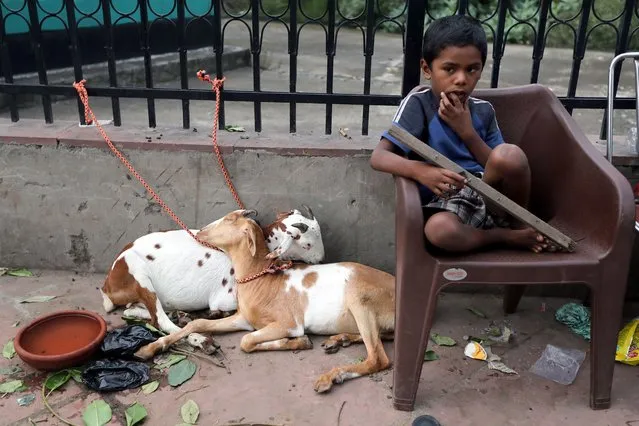
A boy sits next to sacrificial goats resting during Eid al-Adha in New Delhi, India, 29 June 2023. Muslims around the world celebrate Eid al-Adha or feast of sacrifice, by slaughtering sheep, goats and cows to commemorate Prophet Abraham's willingness to sacrifice his son Ismail at God's command. (Photo by Harish Tyagi/EPA)

A boy sits next to sacrificial goats resting during Eid al-Adha in New Delhi, India, 29 June 2023. Muslims around the world celebrate Eid al-Adha or feast of sacrifice, by slaughtering sheep, goats and cows to commemorate Prophet Abraham's willingness to sacrifice his son Ismail at God's command. (Photo by Harish Tyagi/EPA)
Details
07 Jul 2023 02:48:00
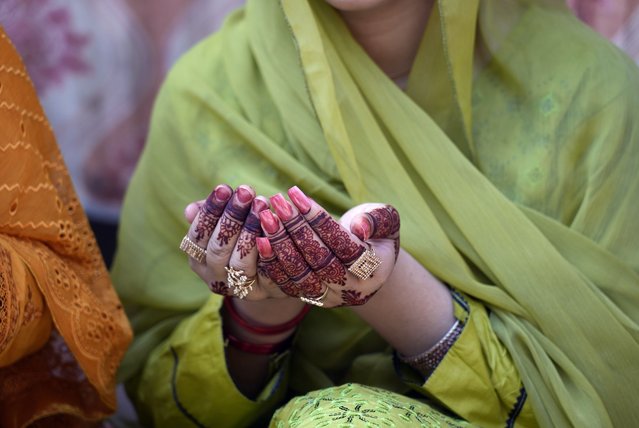
A woman has her hands painted with traditional henna as she attends Eid al-Adha prayers at historical Badshahi mosque in Lahore, Pakistan, Monday, June 17, 2024. Eid al-Adha or Feast of Sacrifice, the most important Islamic holiday, marks the willingness of the Prophet Ibrahim, Abraham to Christians and Jews, to sacrifice his son. During the holiday, which in most places lasts three days, Muslims slaughter goat, sheep or cattle, distribute part of the meat to the poor. (Photo by K.M. Chaudary/AP Photo)

A woman has her hands painted with traditional henna as she attends Eid al-Adha prayers at historical Badshahi mosque in Lahore, Pakistan, Monday, June 17, 2024. Eid al-Adha or Feast of Sacrifice, the most important Islamic holiday, marks the willingness of the Prophet Ibrahim, Abraham to Christians and Jews, to sacrifice his son. During the holiday, which in most places lasts three days, Muslims slaughter goat, sheep or cattle, distribute part of the meat to the poor. (Photo by K.M. Chaudary/AP Photo)
Details
06 Sep 2024 04:02:00


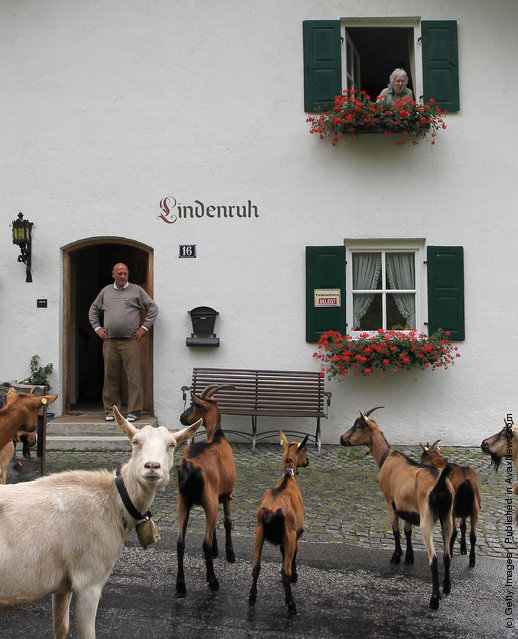
MITTENWALD, GERMANY - SEPTEMBER 04: A man and a woman watch goats during a goat drive down the Alps on September 4, 2010 in Mittenwald, Germany. Every year cows, sheep and goats are driven down the mountains in September after they spent about four months on the grazing lands in the Bavarian mountains. (Photo by Alexandra Beier/Getty Images)
Details
16 Nov 2011 18:22:00