Leslie Cliff and his wife Violet, English figure skating pair. Olympic games of Garmisch-Partenkirchen (Germany), 1936. (Photo by Roger Viollet Collection/Getty Images)
Young dancers from the Style Dance Academy perform during a Mother's Day block party in Caracas, Venezuela, Sunday, May 19, 2019. Although Mother's Day was officially celebrated the previous weekend, people in the Petare area organized the neighborhood party to celebrate the mothers of their community. (Photo by Rodrigo Abd/AP Photo)
A devotee looks at the camera as she offers prayers to the setting sun during the “Chhath” festival at Bagmati River in Kathmandu, Nepal on October 26, 2017. (Photo by Navesh Chitrakar/Reuters)
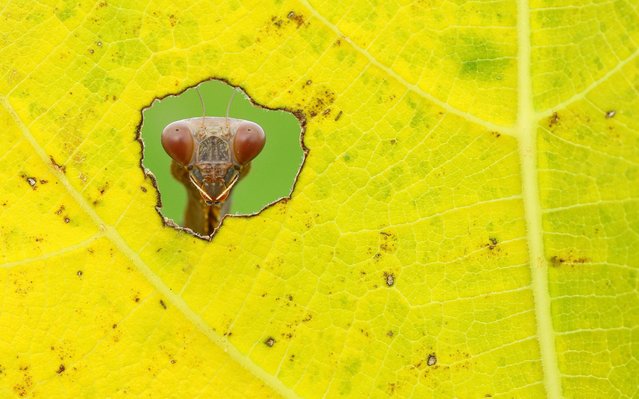
“Window of Autumn” by Hasan Baglar taken in Nicosia, Cyprus, which has come first in the All About Plants Section for the RHS Photographic Competition 2019. (Photo by Hasan Baglar/RHS/PA Wire Press Association)
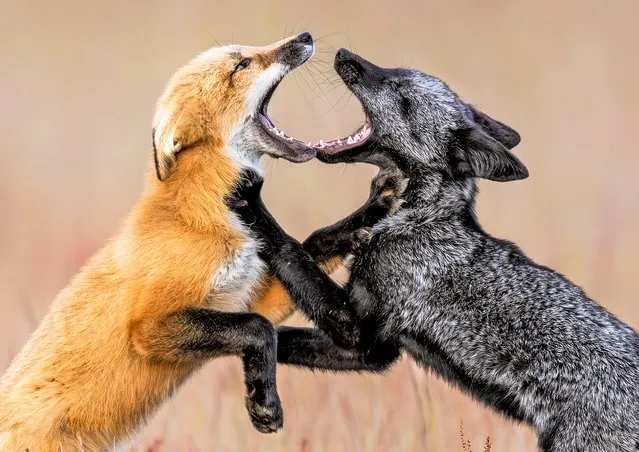
The rabbit population of San Juan Island, brought in to feed lighthouse keepers, got so big that in the 1930s foxes were introduced to kill them. Although they are red foxes, their coats can be orange, silver, black or multi-coloured. Picture date: September 2023. (Photo by Jun Zuo/Solent News)
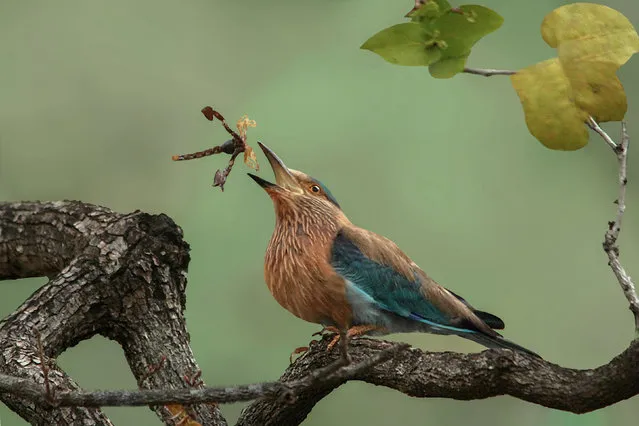
Honourable mention, Behaviour category. Toss the scorpion – Indian roller playing with its kill by Susmita Datta. The image was taken during an early morning safari drive at Tadoba Andhari Tiger Reserve in India. (Photo by Susmita Datta/PA Wire/Royal Society Publishing Photography Competition 2017)
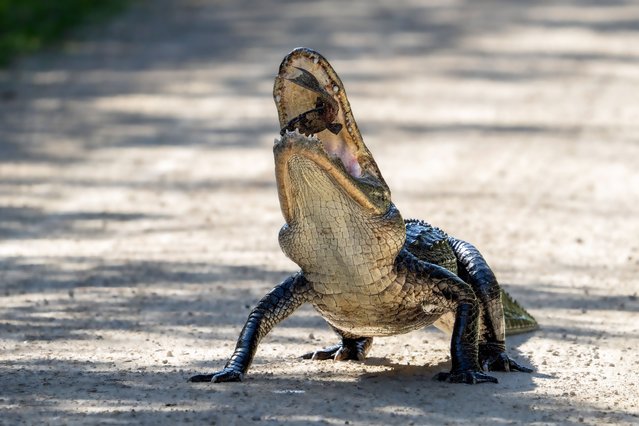
An alligator devours a fish carcass he stole from a raven in Big Cypress National Preserve in Florida on November 24, 2022. The Big Cypress Swamp is a freshwater swampland located near the Everglades National Park. (Photo by Ronen Tivony/SOPA Images/Rex Features/Shutterstock)
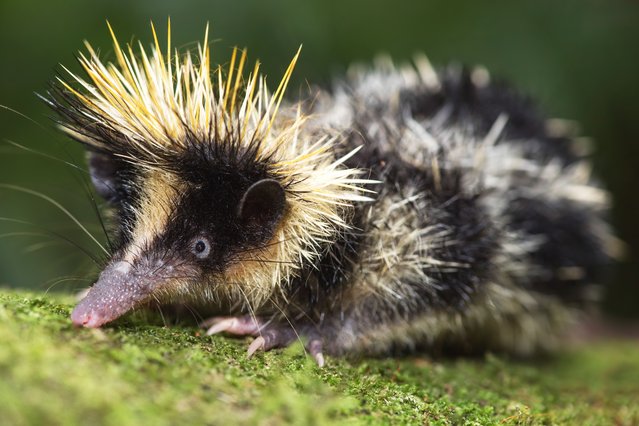
This spiky tenrec was spotted in Madagascar’s Mantadia National Park in the last decade of September 2025. Mostly nocturnal and rarely seen, it puffs out its spines when threatened. Spiky tenrecs are excellent swimmers — unlike most spiny mammals, some species of tenrec can forage in streams and rivers, using their spines for protection while hunting aquatic insects and small prey. (Photo by Dale Morris/Solent News & Photo Agency)