Loading...
Done
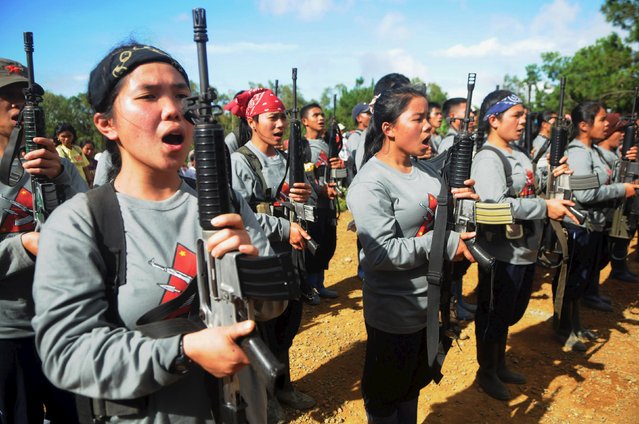
Members of the New People's Army (NPA) female guerrillas perform a cultural show during the release of a Philippines army soldier in Sugbongcogon town, Misamis Oriental, southern Philippines, November 20, 2015. NPA spokesperson Allan Juanito warned that they will seize more soldiers to exchange them with the government as "Prisoners of war". (Photo by Froilan Gallardo/Reuters)

Members of the New People's Army (NPA) female guerrillas perform a cultural show during the release of a Philippines army soldier in Sugbongcogon town, Misamis Oriental, southern Philippines, November 20, 2015. NPA spokesperson Allan Juanito warned that they will seize more soldiers to exchange them with the government as "Prisoners of war". (Photo by Froilan Gallardo/Reuters)
Details
21 Nov 2015 08:07:00
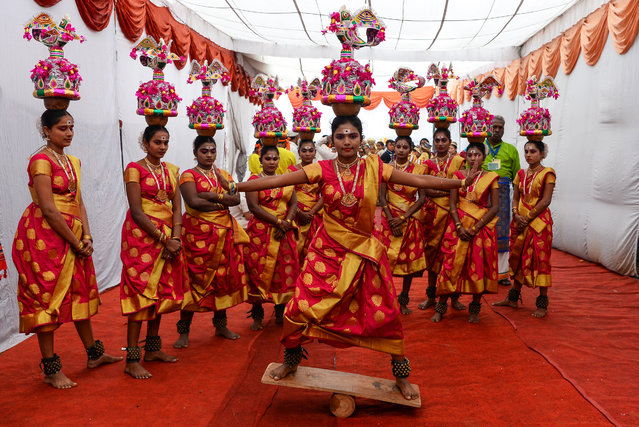
Traditional dancers from southern state Tamil Nadu prepare themselves as they wait to perform during a press preview of displays being featured for the upcoming Republic Day parade in New Delhi on January 22, 2019. The Republic Day is an annual showcase of India's military hardware and cultural diversity. India celebrates its 70th Republic Day on January 26. (Photo by Sajjad Hussain/AFP Photo)

Traditional dancers from southern state Tamil Nadu prepare themselves as they wait to perform during a press preview of displays being featured for the upcoming Republic Day parade in New Delhi on January 22, 2019. The Republic Day is an annual showcase of India's military hardware and cultural diversity. India celebrates its 70th Republic Day on January 26. (Photo by Sajjad Hussain/AFP Photo)
Details
24 Jan 2019 03:01:00
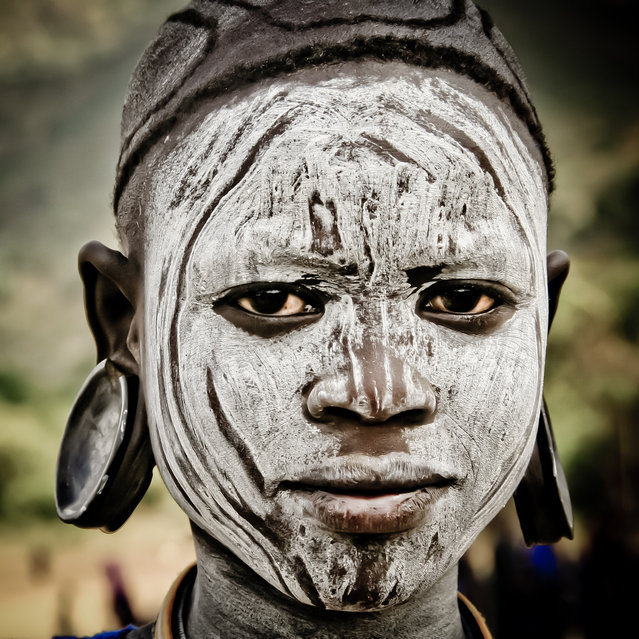
Omo River People, Ethiopia

“The Omo River is an important river of southern Ethiopia. Its course is entirely contained within the boundaries of Ethiopia, and empties into Lake Turkana on the border with Kenya. The lower valley of the Omo is currently believed by some to have been a crossroads for thousands of years as various cultures and ethnic groups migrated around the region. To this day, the people of the Lower Valley of the Omo, including the Mursi, Suri, Nyangatom, Dizi and Me'en, are studied for their diversity”. – Wikipedia (Photo by Hamerscat)

SEE ALSO: «Ethiopia By Brent Stirton»

Details
04 Oct 2012 09:05:00
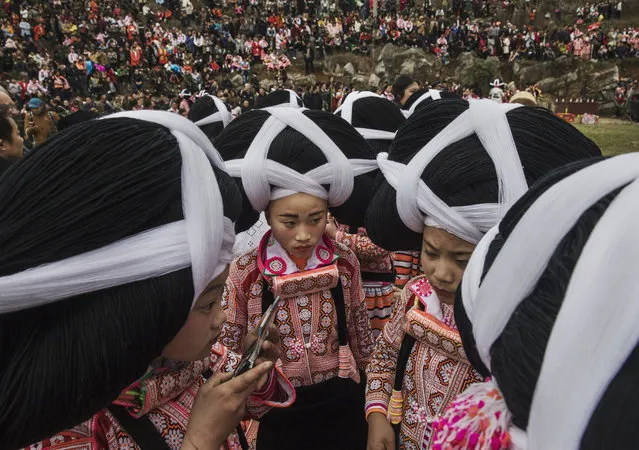
Girls of the Long Horn Miao ethnic minority group wear headdresses as they prepare gather for Tiaohua or Flower Festival as part of the Lunar New Year on February 6, 2017 in Longga village, Guizhou province, southern China. The Long Horn Miao are recognized for their declining practice of wrapping a blend of linen, wool, and the hair of their ancestors around animal horns or a wooden clip to make headdresses. Many young women say they now wear the headdresses only for special occasions and festivals, as the ornaments, which are attached by the horns to their real hair, have proved impractical for modern daily life in a fast changing world. China officially recognizes 56 different ethnic minorities, and statistics show over 7 million Chinese identifying themselves as Miao. But the small Long Horn Miao community counts only around 5000 people living in 12 villages, whose age-old traditions, language, and culture are fading. It is increasingly difficult in a modernizing China, as young people are drawn from remote rural villages to opportunities in bigger cities amongst wide-scale urbanization. Farming and labour remain the mainstays of life for the Long Horn Miao, leaving the area relatively poor in comparison with many parts of China. The government has invested significant amounts into local infrastructure and the tourism industry to try to bolster the local economy. (Photo by Kevin Frayer/Getty Images)

Girls of the Long Horn Miao ethnic minority group wear headdresses as they prepare gather for Tiaohua or Flower Festival as part of the Lunar New Year on February 6, 2017 in Longga village, Guizhou province, southern China. (Photo by Kevin Frayer/Getty Images)
Details
13 Feb 2017 00:01:00
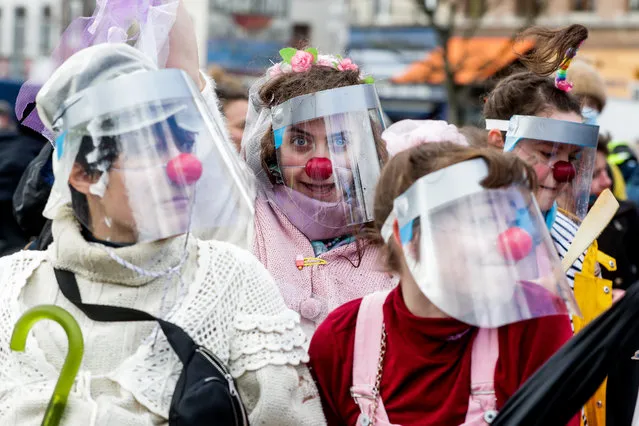
Participants of the “Still Standing for Culture” action of the cultural sector rally in Les Marolles neighborhood of Brussels, Belgium, 13 March 2021. Workers of the cultural sector along with second-hand dealers of the Jeu de Balle place gathered in Les Marolles to denounce the lack of financial support and call for solutions to the impact of the coronavirus crisis on culture professionals and the sector as a whole one year after the Covid-19 pandemic lockdowns started. (Photo by Stephanie Lecocq/EPA/EFE)

Participants of the “Still Standing for Culture” action of the cultural sector rally in Les Marolles neighborhood of Brussels, Belgium, 13 March 2021. Workers of the cultural sector along with second-hand dealers of the Jeu de Balle place gathered in Les Marolles to denounce the lack of financial support and call for solutions to the impact of the coronavirus crisis on culture professionals and the sector as a whole one year after the Covid-19 pandemic lockdowns started. (Photo by Stephanie Lecocq/EPA/EFE)
Details
14 Mar 2021 09:19:00
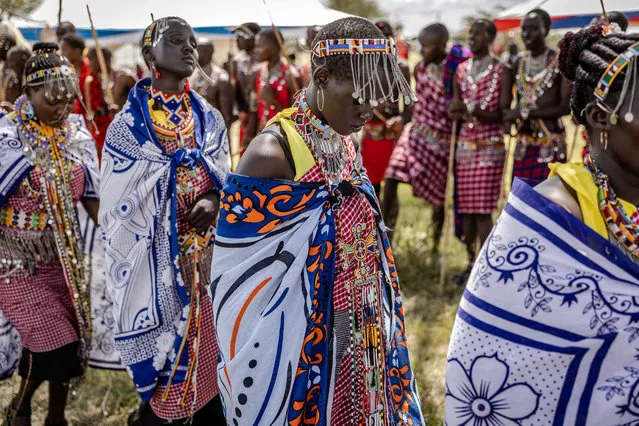
A group of Maasai women march while dancing traditional songs during a Maasai cultural festival in Sekenani, on June 10, 2023. The Maasai people are a Nilotic ethnic group inhabiting Kenya and northern Tanzania. The Maasai cultural festival is a popular gathering and celebration of the Maasai cultural heritage and aims to showcase the community's traditional activities and fashion. (Photo by Luis Tato/AFP Photo)

A group of Maasai women march while dancing traditional songs during a Maasai cultural festival in Sekenani, on June 10, 2023. The Maasai people are a Nilotic ethnic group inhabiting Kenya and northern Tanzania. The Maasai cultural festival is a popular gathering and celebration of the Maasai cultural heritage and aims to showcase the community's traditional activities and fashion. (Photo by Luis Tato/AFP Photo)
Details
20 Jun 2023 03:57:00
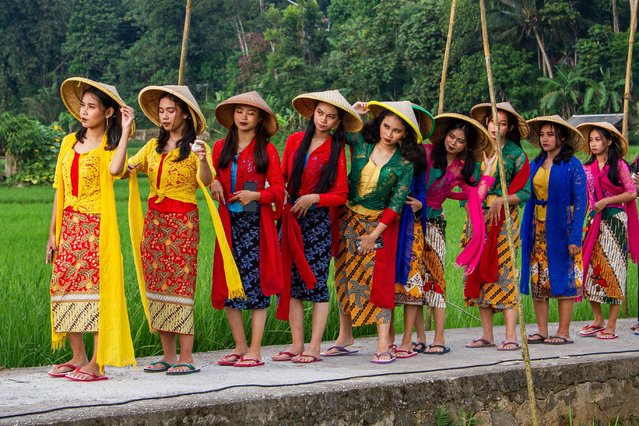
Dancers walk on rice fields during the Rice Field Festival in Baginda Village. The Rice Field Festival, organized by the Baginda Village Youth Organization, was held to maintain the local culture and art of Sundanese culture on May 5, 2024. (Photo by Algi Febri Sugita/ZUMA Press Wire/Alamy Live News)

Dancers walk on rice fields during the Rice Field Festival in Baginda Village. The Rice Field Festival, organized by the Baginda Village Youth Organization, was held to maintain the local culture and art of Sundanese culture on May 5, 2024. (Photo by Algi Febri Sugita/ZUMA Press Wire/Alamy Live News)
Details
05 Jun 2024 02:42:00
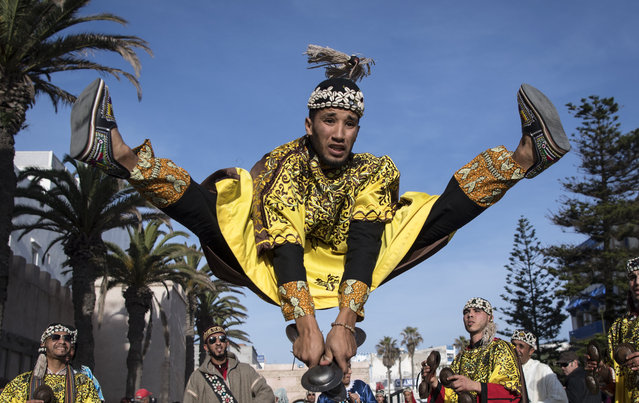
A Gnawa traditional group performs in the city of Essaouira on December 14, 2019, to celebrate the decision of adding the Gnawa culture to UNESCO's list of Intangible Cultural Heritage of Humanity. Gnawa culture, a centuries-old Moroccan practice rooted in music, African rituals and Sufi traditions, was added to UNESCO's list of Intangible Cultural Heritage of Humanity earlier in the week. Gnawa refers to a “set of musical productions, fraternal practices and therapeutic rituals where the secular mixes with the sacred”, according to the nomination submitted by Morocco. Often dressed in colourful outfits, Gnawa musicians play the guenbri, a type of lute with three strings, accompanied by steel castanets called krakebs. (Photo by Fadel Senna/AFP Photo)

A Gnawa traditional group performs in the city of Essaouira on December 14, 2019, to celebrate the decision of adding the Gnawa culture to UNESCO's list of Intangible Cultural Heritage of Humanity. Gnawa culture, a centuries-old Moroccan practice rooted in music, African rituals and Sufi traditions, was added to UNESCO's list of Intangible Cultural Heritage of Humanity earlier in the week. Gnawa refers to a “set of musical productions, fraternal practices and therapeutic rituals where the secular mixes with the sacred”, according to the nomination submitted by Morocco. Often dressed in colourful outfits, Gnawa musicians play the guenbri, a type of lute with three strings, accompanied by steel castanets called krakebs. (Photo by Fadel Senna/AFP Photo)
Details
18 Dec 2019 00:05:00