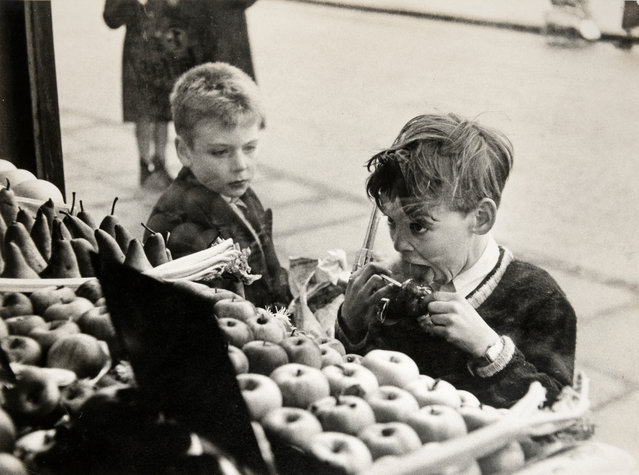
The Photographers 2015 runs from 25 November to 23 December at Osborne Samuel and Beetles+Huxley, London. Here: Untitled, 1950, by Bert Hardy. (Photo by Bert Hardy/Beetles+Huxley & Osborne Samuel)
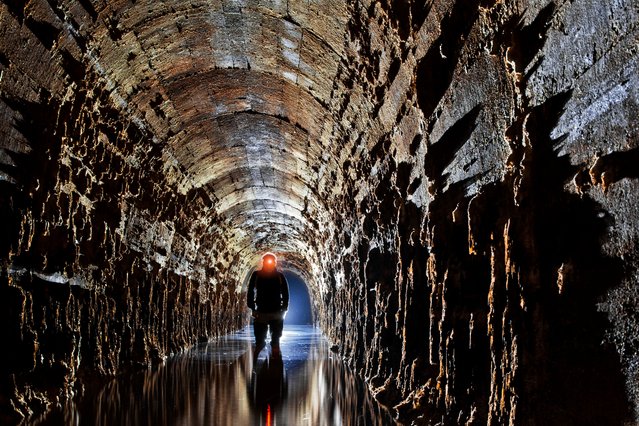
Stunning silhouettes under European cities reveal the size and splendor of the continent’s urban foundations. Photographer and content-manager Anna Arinova, 28, from Moscow, captured the awe-inspiring labyrinths in Russia and Germany. Here: Regenwurmlager, Poland. The Regenwurmlager is an extensive underground fortification area constructed by Germany in 1920s-1940s, now in western Poland, near the city of Międzyrzecz. (Photo by Anna Arinova/Caters News)
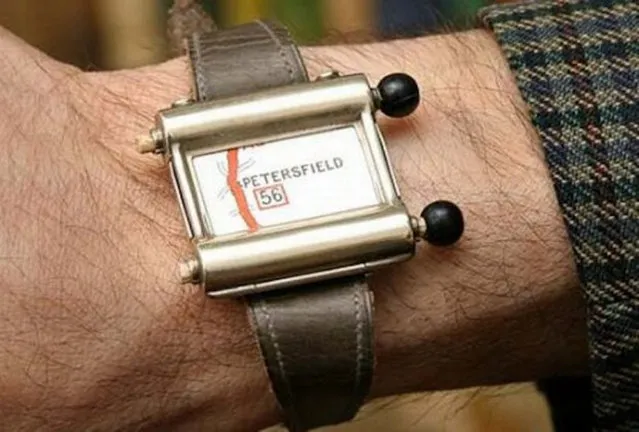
Invented in 1920′s this could be world’s first navigation system. No satellites or digital screens were used in the making of this portable navigation system. Called Plus Fours Routefinder, this little invention was designed to be worn on your wrist, and the “maps” were printed on little wooden rollers which you would turn manually as you drove along.
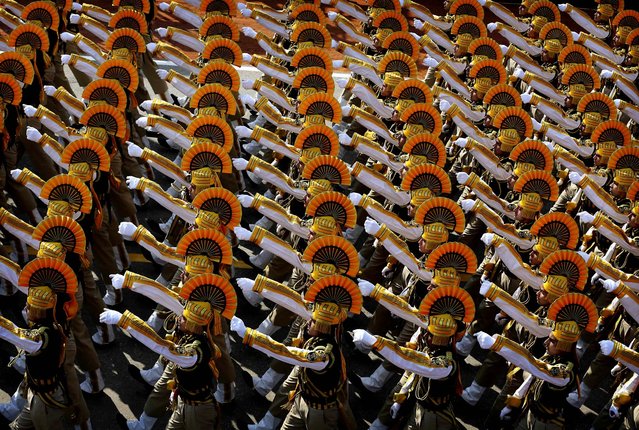
Indian paramilitary forces march during the annual Republic Day parade on Rajpath in New Delh, January 26, 2013. Republic Day commemorates the 1950 adoption of India's constitution. (Photo by Kevin Frayer/Associated Press)
Female North Korean soldiers parade to mark the 60th anniversary of the signing of a truce in the 1950-1953 Korean War at Kim Il-sung Square, in Pyongyang. (Photo by Jason Lee/Reuters)
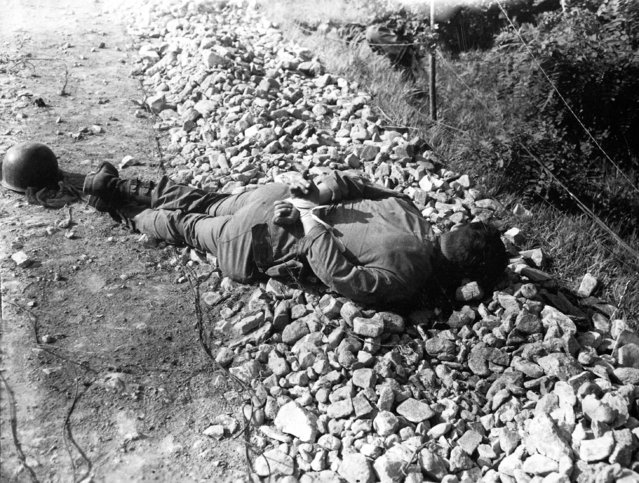
The body of one of several U.S. soldiers who were executed after being captured by North Korean troops just south of Seoul in early July 1950. (Photo by AP Photo)
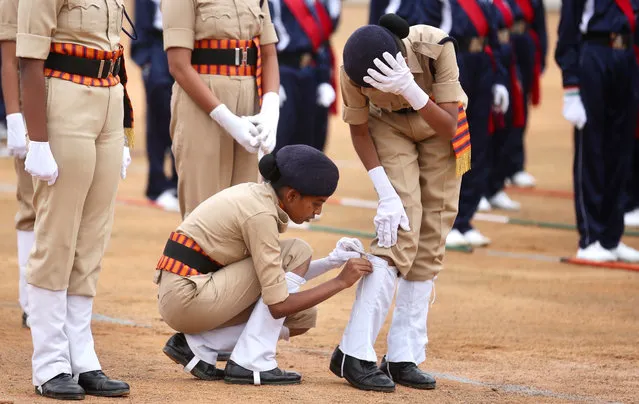
Indian security personnel adjust a uniform during full-dress rehearsal ahead of the 74th Republic day celebrations in Bangalore, India, 24 January 2023. The Republic Day of India marks the adoption of the constitution of India and the transition of the country to a Republic on 26 January 1950. (Photo by Jagadeesh N.V./EPA/EFE)
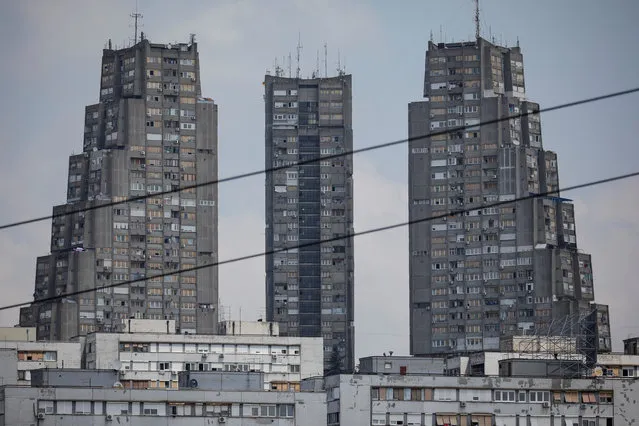
The Eastern City Gate apartment buildings complex stands in the Konjarnik neighbourhood in Belgrade, Serbia, July 30, 2019. Brutalism, an architectural style popular in the 1950s and 1960s, based on crude, block-like forms cast from concrete was popular throughout the eastern bloc. (Photo by Marko Djurica/Reuters)