Loading...
Done
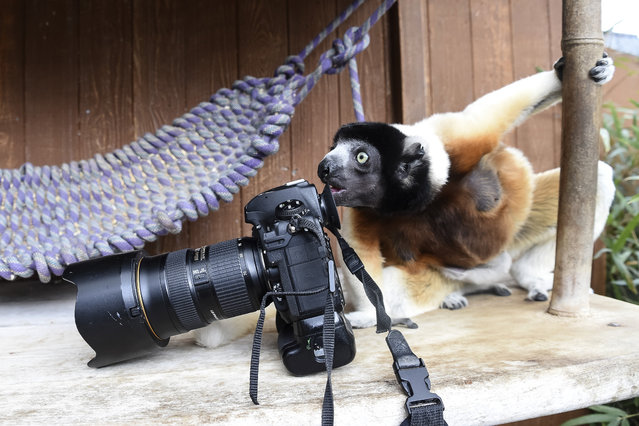
Poppy, a female Crowned sifaka, inspects a photographer's camera in the enclosure at the zoo of Mulhouse, eastern France, on March 5, 2019. The Crowned sifaka is a critically endangered species from Madagascar. (Photo by Sebastien Bozon/AFP Photo)

Poppy, a female Crowned sifaka, inspects a photographer's camera in the enclosure at the zoo of Mulhouse, eastern France, on March 5, 2019. The Crowned sifaka is a critically endangered species from Madagascar. (Photo by Sebastien Bozon/AFP Photo)
Details
10 Mar 2019 00:03:00
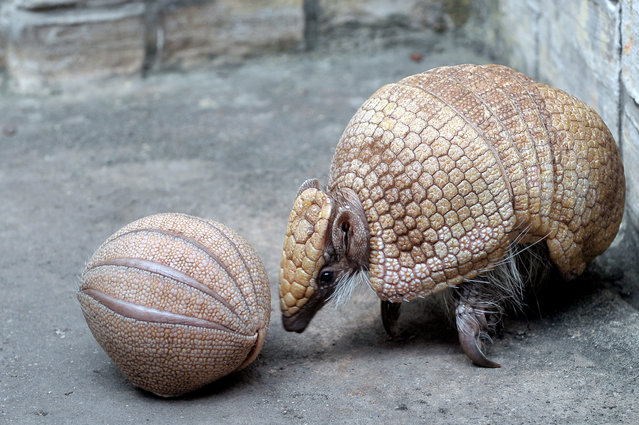
A four-week old southern three-banded armadillo (Tolypeutes matacus) is rolled up into a ball next to its mother in the tropical house of Budapest Zoo in Budapest, Hungary on May 3, 2019. The South American insect-eating mammal and its close relative, the Brasilian three-banded armadillo (Tolypeutes tricinctus) are the only two species of armadillos capable of rolling into a complete ball to defend themselves when feeling threatened. (Photo by Attila Kovács/EPA/EFE)

A four-week old southern three-banded armadillo (Tolypeutes matacus) is rolled up into a ball next to its mother in the tropical house of Budapest Zoo in Budapest, Hungary on May 3, 2019. The South American insect-eating mammal and its close relative, the Brasilian three-banded armadillo (Tolypeutes tricinctus) are the only two species of armadillos capable of rolling into a complete ball to defend themselves when feeling threatened. (Photo by Attila Kovács/EPA/EFE)
Details
05 May 2019 00:03:00
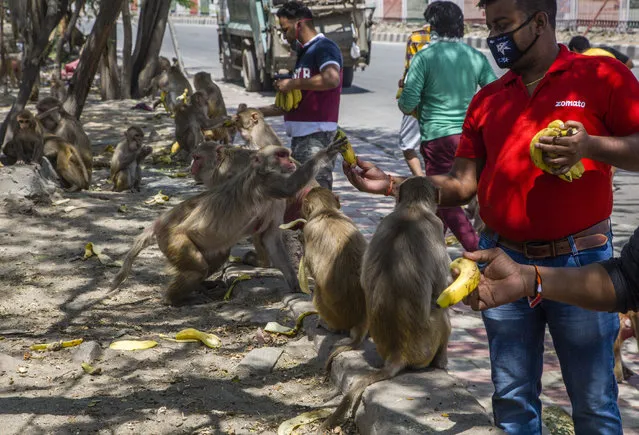
Men give bananas to monkeys gathered on the side of the road as India remains under an unprecedented lockdown over the highly contagious coronavirus (COVID-19) on April 08, 2020 in New Delhi, India. Wild animals, including monkeys, are roaming human settlements in India as people are staying indoors due to the 21-day lockdown. With India's 1.3 billion population and tens of millions of cars off the roads, wildlife is moving towards areas inhabited by humans. Wild animals in many countries have been seen roaming streets. A study says some 60 percent of the new diseases found around the globe every year are zoonotic, meaning they originate in animals and are passed on to humans. COVID-19 is a zoonotic disease that is suspected to have come from the wet markets of Wuhan, China. (Photo by Yawar Nazir/Getty Images)

Men give bananas to monkeys gathered on the side of the road as India remains under an unprecedented lockdown over the highly contagious coronavirus (COVID-19) on April 08, 2020 in New Delhi, India. Wild animals, including monkeys, are roaming human settlements in India as people are staying indoors due to the 21-day lockdown. (Photo by Yawar Nazir/Getty Images)
Details
12 Apr 2020 00:05:00
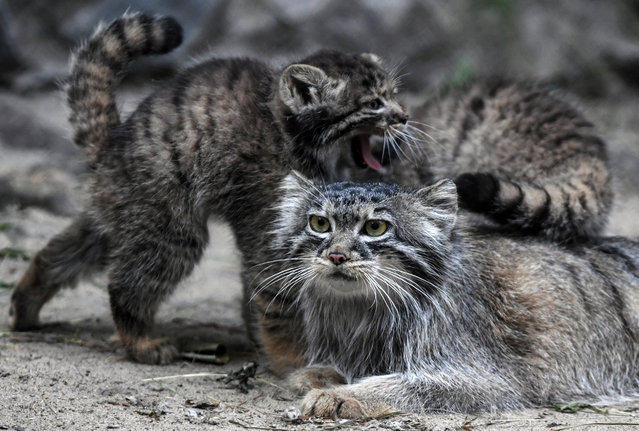
Pallas' s cat kittens with theit mother in an enclosure at the Novosibirsk Zoo, Novosibirsk, Russia on July 11, 2018. Pallas' s cat, also known as manul, is a small wild cat native to montane steppes of the Central Asia and listed as an endangered species. (Photo by Kirill Kukhmar/TASS)

Pallas' s cat kittens with theit mother in an enclosure at the Novosibirsk Zoo, Novosibirsk, Russia on July 11, 2018. Pallas' s cat, also known as manul, is a small wild cat native to montane steppes of the Central Asia and listed as an endangered species. (Photo by Kirill Kukhmar/TASS)
Details
15 Jul 2018 00:03:00
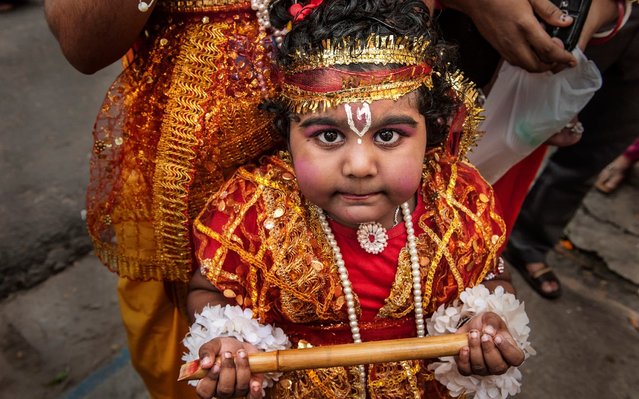
A toddler dressed as Hindu Lord Krishna takes part in Krishna Janmashtami celebrations at a temple in Kolkata, India, on August 23, 2019. Krishna Janmashtami is an annual Hindu festival that celebrates the birth of Lord Krishna, the eighth avatar of Vishnu. (Photo by Tumpa Mondal/Xinhua News Agency)

A toddler dressed as Hindu Lord Krishna takes part in Krishna Janmashtami celebrations at a temple in Kolkata, India, on August 23, 2019. Krishna Janmashtami is an annual Hindu festival that celebrates the birth of Lord Krishna, the eighth avatar of Vishnu. (Photo by Tumpa Mondal/Xinhua News Agency)
Details
31 Oct 2019 00:01:00
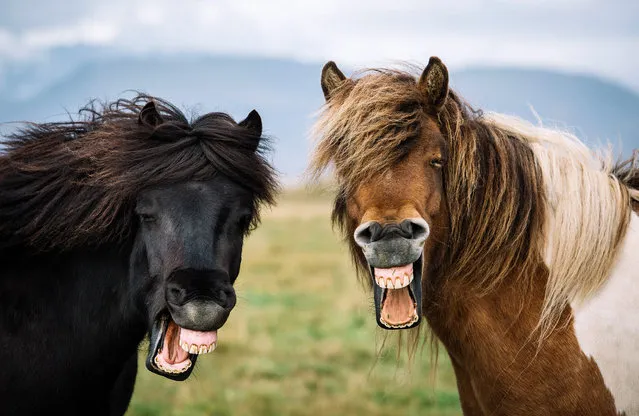
Two horses appear to burst into laughter before a sweet embrace. The horses both turn their head to look at the camera and flash their teeth, treating the lucky photographer to a rare shot. Moments later the pair show their affectionate side by coming together and “hugging”. Photographer Nir Amos, 34, said he was “amazed” to capture the horses “laughing” in a field near Skógar, in the south east of Iceland on July 31, 2018. (Photo by Nir Amos/Solent News & Photo Agency)

Two horses appear to burst into laughter before a sweet embrace. The horses both turn their head to look at the camera and flash their teeth, treating the lucky photographer to a rare shot. Moments later the pair show their affectionate side by coming together and “hugging”. Photographer Nir Amos, 34, said he was “amazed” to capture the horses “laughing” in a field near Skógar, in the south east of Iceland on July 31, 2018. (Photo by Nir Amos/Solent News & Photo Agency)
Details
05 Aug 2018 00:03:00
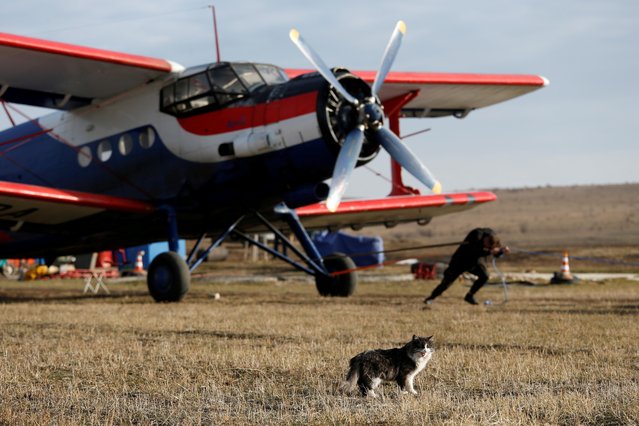
Trialist Pavel Prikhodko attempts to pull an An-2 plane as a cat walks nearby during a charity event near the village of Tatarka in Stavropol Region, Russia on December 27, 2020. (Photo by Eduard Korniyenko/Reuters)

Trialist Pavel Prikhodko attempts to pull an An-2 plane as a cat walks nearby during a charity event near the village of Tatarka in Stavropol Region, Russia on December 27, 2020. (Photo by Eduard Korniyenko/Reuters)
Details
31 Dec 2020 00:03:00
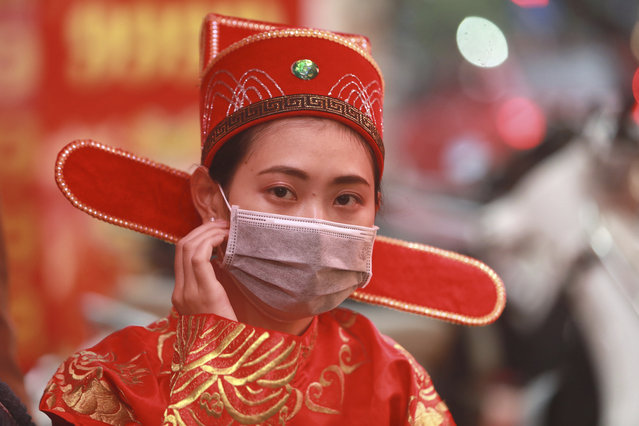
A woman in costume of the Prosperity and Wealth God wears a protective face mask at a gold shop in Hanoi, Vietnam, Monday, February 3, 2020. It is a tradition for many Vietnamese to buy gold on the tenth day of the lunar new year – the day of Prosperity and Wealth God, for good luck. (Photo by Hau Dinh/AP Photo)

A woman in costume of the Prosperity and Wealth God wears a protective face mask at a gold shop in Hanoi, Vietnam, Monday, February 3, 2020. It is a tradition for many Vietnamese to buy gold on the tenth day of the lunar new year – the day of Prosperity and Wealth God, for good luck. (Photo by Hau Dinh/AP Photo)
Details
14 May 2020 00:01:00