Loading...
Done
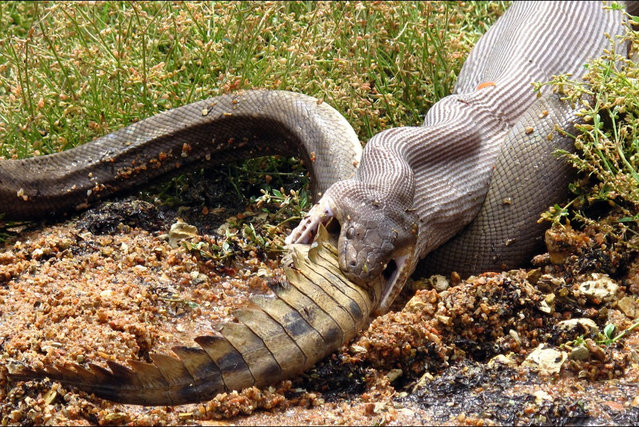
Python Meets A Crocodile See What Happened Next

What happens in the wild is sometimes hard to imagine. Sometimes other animals can be others prey. In this case, here is a python and a crocodile who come across each other in Australia. This is a bit graphic, so beware.
Details
28 Mar 2014 09:56:00
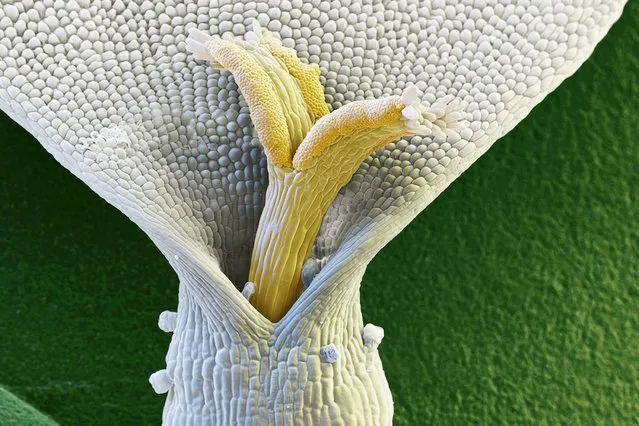
The floret of a Chamomile flower up close and personal. (Photo by Oliver Meckes/Barcroft Media)

These images have been created using a colour scanning electron microscope (SEM) by the award-winning Eye of Science, comprised of snapper Oliver Meckes and biologist Nicole Ottawa. For a decade the pair, based in Reutlingen in the south of Germany, worked with an old SEM they saved from the scrapheap, but for the last five years they have used a £250,000 FEI Quanta Series Field Emission SEM. Oliver said: “Flowers are beautiful in 'normal' view, but when you look closer, some parts get very bizarre and unexpected structures appear – flowers within flowers, worlds within worlds”. Photo: The floret of a Chamomile flower up close and personal. (Photo by Oliver Meckes/Barcroft Media)

Details
26 May 2014 13:51:00


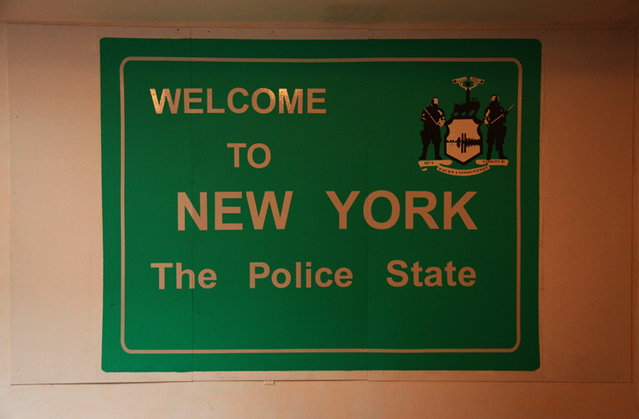
Gilf! does a stripped back road sign satire as part of the installation that she curated for BOS 2012 official opening party. (photo © Jaime Rojo)
Details
11 Jun 2012 06:23:00
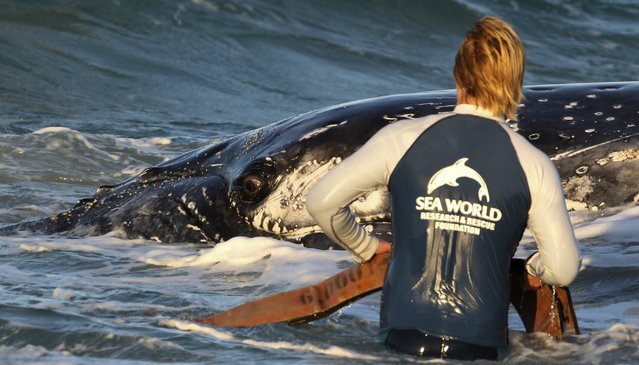
A marine rescue worker from Sea World works in a joint attempt with his colleagues to help a juvenile humpback whale stranded at Palm Beach on the Gold Coast, in Queensland July 9, 2014. (Photo by Jason O'Brien/Reuters)

A marine rescue worker from Sea World works in a joint attempt with his colleagues to help a juvenile humpback whale stranded at Palm Beach on the Gold Coast, in Queensland July 9, 2014. (Photo by Jason O'Brien/Reuters)
Details
11 Jul 2014 12:01:00
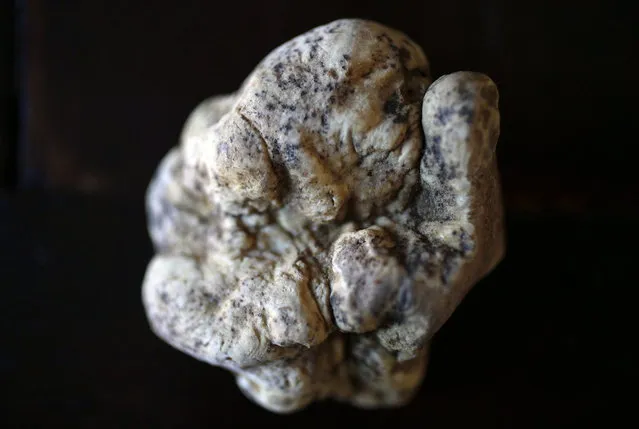
A truffle is seen on a table in Alba, north-western Italy November 11, 2013. Located in the heart of the Langhe – the hilly southern area of Italy's northwestern Piedmont region – Alba is the country's capital of white truffles, a variety of the prized fungus which grows underground. Truffles are found two to eight inches (5-20cm) below the ground near the roots of trees. (Photo by Stefano Rellandini/Reuters)

A truffle is seen on a table in Alba, north-western Italy November 11, 2013. Located in the heart of the Langhe – the hilly southern area of Italy's northwestern Piedmont region – Alba is the country's capital of white truffles, a variety of the prized fungus which grows underground. Truffles are found two to eight inches (5-20cm) below the ground near the roots of trees. They give off an odour which lasts for a limited period of time and can be detected with the assistance of well-trained dogs and experienced hunters. Output of white truffles, which are not cultivated and only grow naturally in forests, has fallen in Italy over the past few years, largely because climate change has brought a damaging mix of drought and torrential rains. (Photo by Stefano Rellandini/Reuters)
Details
31 Dec 2013 11:22:00
What the World Eats By Peter Menzel And Faith D'Aluisio Part 1

A stunning photographic collection featuring portraits of people from 30 countries and the food they eat in one day. In this fascinating study of people and their diets, 80 profiles are organized by the total number of calories each person puts away in a day. Featuring a Japanese sumo wrestler, a Massai herdswoman, world-renowned Spanish chef Ferran Adria, an American competitive eater, and more, these compulsively readable personal stories also include demographic particulars, including age, activity level, height, and weight. Essays from Harvard primatologist Richard Wrangham, journalist Michael Pollan, and others discuss the implications of our modern diets for our health and for the planet. This compelling blend of photography and investigative reportage expands our understanding of the complex relationships among individuals, culture, and food.
Details
23 Apr 2014 14:34:00
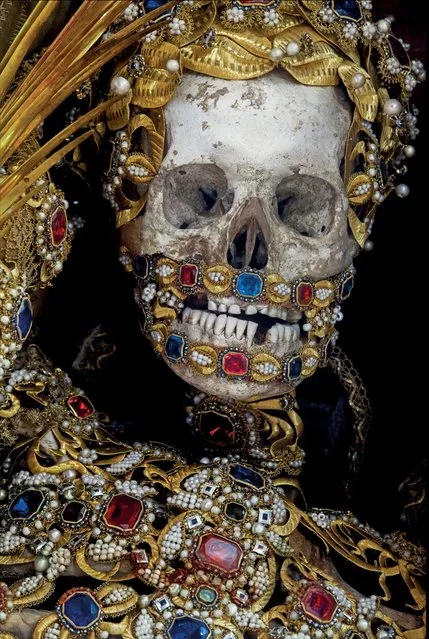
Albertus in the church of St George in Burgrain, Germany. Incredibly, some of the skeletons, which took up to five years to decorate, were even found hidden away in lock-ups and containers. (Photo by Paul Koudounaris/BNPS)

A relic hunter dubbed “Indiana Bones” has lifted the lid on a macabre collection of 400-year-old jewel-encrusted skeletons unearthed in churches across Europe. Art historian Paul Koudounaris has hunted down and photographed dozens of gruesome skeletons in some of the world's most secretive religious establishments. Photo: Albertus in the church of St George in Burgrain, Germany. Incredibly, some of the skeletons, which took up to five years to decorate, were even found hidden away in lock-ups and containers. (Photo by Paul Koudounaris/BNPS)
Details
08 Sep 2013 07:20:00


You Won't Believe What Doctors Found In This Man's Ear
Details
08 Oct 2014 19:16:00