Loading...
Done
Globe-trotting photographer couple Peter Sedlacik and Zuzu Galova have found a fun way to document their travels around the world. Wherever they are, they face each other, frame up a great composition, and take a picture of each other… taking a picture of each other. Thus was born the photo series/project “Lens Between Us”. (Photo by Peter Sedlacik/Zuzu Galova)

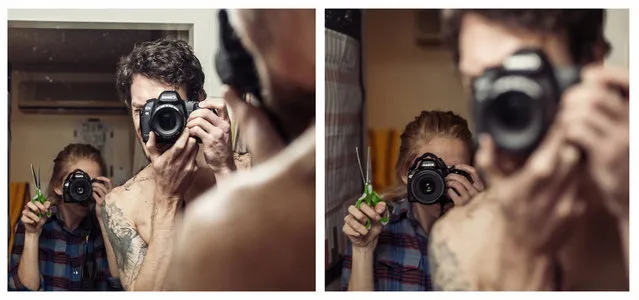
Globe-trotting photographer couple Peter Sedlacik and Zuzu Galova have found a fun way to document their travels around the world. Wherever they are, they face each other, frame up a great composition, and take a picture of each other… taking a picture of each other. Thus was born the photo series/project “Lens Between Us”, which is quickly scooping up followers on Tumblr, Facebook and Instagram alike. The resulting diptychs are creative, well-composed, and whimsical in the best way. A tribute to how their focus is always on each other, the images are part travel photography, part portraiture, and challenging to boot since each shot requires that they figure out not one, but two compositions. (Photo by Peter Sedlacik/Zuzu Galova)
Details
11 Aug 2014 11:30:00
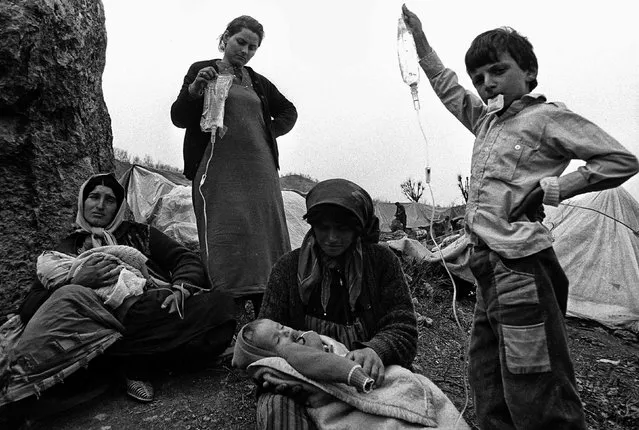
Iraqi Kurdish refugees wait with children in Cukurca refugee camp in Turkey April 8, 1991. Reuters photographers have chronicled Kurdish refugee crises over the years. In 1991 Srdjan Zivulovic documented refugees in Cukurca who had escaped a military operation by Saddam Hussein's government in Iraq aimed at “Arabising” Kurdish areas in the north. (Photo by Srdjan Zivulovic/Reuters)

Iraqi Kurdish refugees wait with children in Cukurca refugee camp in Turkey April 8, 1991. Reuters photographers have chronicled Kurdish refugee crises over the years. In 1991 Srdjan Zivulovic documented refugees in Cukurca who had escaped a military operation by Saddam Hussein's government in Iraq aimed at “Arabising” Kurdish areas in the north. Hundreds of thousands fled into Turkey and Iran. Images shot in recent months show familiar scenes as crowds of people flee Islamic State militants in Syria. There are as many as 30 million Kurds, spread through Turkey, Iraq, Syria and Iran. Most Kurds are Sunni Muslims, but tend to feel more loyalty to their Kurdishness, rather than their religion. (Photo by Srdjan Zivulovic/Reuters)
Details
14 Nov 2014 14:09:00
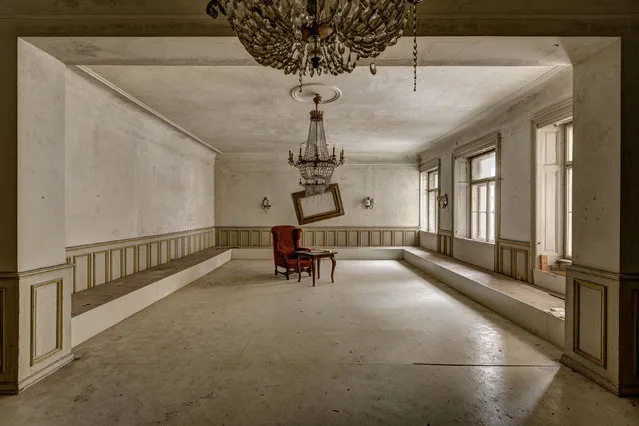
Grand banqueting halls, opulent lobbies and vast ballrooms; you could easily be forgiven for thinking this was a collection of photographs was documenting some of Europe’s grandest hotels. However, a closer look will reveal the majestic rooms to be engulfed in swathes of dust and moss; hotels that once hosted royals and high society abandoned to the elements. (Photo by Thomas Windisch/Caters News)

Grand banqueting halls, opulent lobbies and vast ballrooms; you could easily be forgiven for thinking this was a collection of photographs was documenting some of Europe’s grandest hotels. However, a closer look will reveal the majestic rooms to be engulfed in swathes of dust and moss; hotels that once hosted royals and high society abandoned to the elements. This is the latest result of urban exploration photography, going beyond “no entry” signs to capture images of dilapidated buildings across Europe. IT worker Thomas Windisch, from Graz in Austria, indulged his passion for photography by traveling across the continent, visiting over 100 abandoned hotels along the way. Here: inside a hotel in Austria. (Photo by Thomas Windisch/Caters News)
Details
24 Mar 2015 10:26:00
A “Maya” girl sits in an altar during the traditional celebration of “Las Mayas” on the streets in Madrid, Spain Sunday, May 10, 2015. The festivity of the Maya comes from pagan rites and dates from the medieval age, appearing in ancient documents. It takes place every year in the beginning of May and celebrates the beginning of the spring. (Photo by Daniel Ochoa de Olza/AP Photo)

A “Maya” girl sits in an altar during the traditional celebration of “Las Mayas” on the streets in Madrid, Spain Sunday, May 10, 2015. The festivity of the Maya comes from pagan rites and dates from the medieval age, appearing in ancient documents. It takes place every year in the beginning of May and celebrates the beginning of the spring. Girls between 7 and 11 years old are chosen as “Maya” and should sit still, serious and quiet for a couple of hours in altars on the street decorated with flowers and plants and afterwards they walk to the church with their family where they attend a ceremony. (Photo by Daniel Ochoa de Olza/AP Photo)
Details
14 May 2015 11:12:00
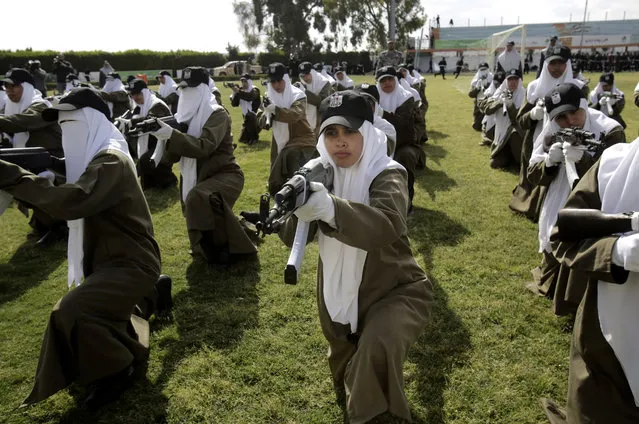
Palestinian female Hamas security officers demonstrate their skills during a graduation ceremony in the northern Gaza Strip, Wednesday, April 2, 2014. 1200 officers graduated from advanced training courses that lasted one year in Gaza police academy of Hamas. (Photo by Adel Hana/AP Photo)

Palestinian female Hamas security officers demonstrate their skills during a graduation ceremony in the northern Gaza Strip, Wednesday, April 2, 2014. 1200 officers graduated from advanced training courses that lasted one year in Gaza police academy of Hamas. (Photo by Adel Hana/AP Photo)
Details
05 Apr 2014 13:41:00
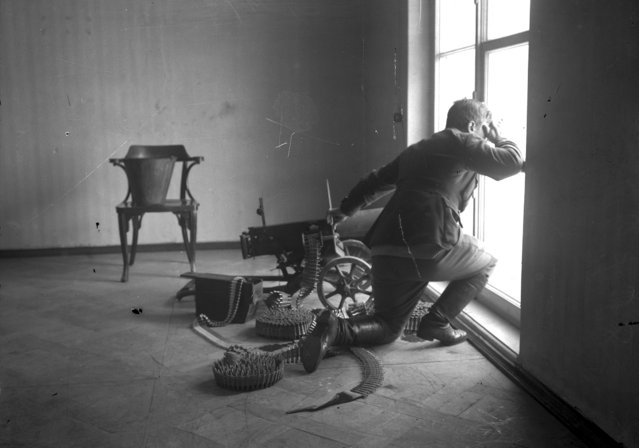
In this photo taken in October 1917, provided by Russian State Documentary Film and Photo Archive, a machine gunner looks through a window at his position near the Kremlin in Moscow, Russia. The 1917 Bolshevik Revolution was long before the digital revolution allowed anyone to instantly document events. But the clumsy cameras of the time still caught some images that capture the period's drama. (Photo by Russian State Documentary Film and Photo Archive via AP Photo)

In this photo taken in October 1917, provided by Russian State Documentary Film and Photo Archive, a machine gunner looks through a window at his position near the Kremlin in Moscow, Russia. The 1917 Bolshevik Revolution was long before the digital revolution allowed anyone to instantly document events. But the clumsy cameras of the time still caught some images that capture the period's drama. (Photo by Russian State Documentary Film and Photo Archive via AP Photo)
Details
06 Nov 2017 09:02:00
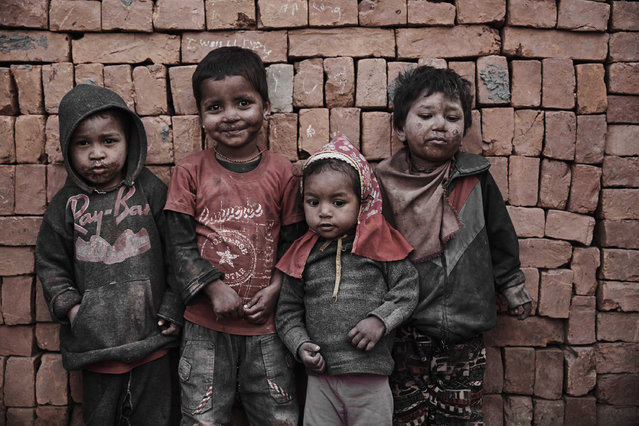
A group of dust covered child labourers gather for a portrait in the brick kiln in Kathmandu Valley, Nepal, 22 February 2015. Bleak photos identify the children working their fingers to the bone in Nepalís brick kilns. Photographer Jan Mˆller Hansen documented the conditions of the brick kilns in Kathmandu Valley, Nepal between 2013 and 2016 while he lived and worked in the area. Jan estimates between 150,000 and 175,000 people are employed in the 200 brick kilns littering the Kathmandu Valley. (Photo by Jan Moeller Hansen/Barcroft Images)

A group of dust covered child labourers gather for a portrait in the brick kiln in Kathmandu Valley, Nepal, 22 February 2015. Bleak photos identify the children working their fingers to the bone in Nepalís brick kilns. Photographer Jan Mˆller Hansen documented the conditions of the brick kilns in Kathmandu Valley, Nepal between 2013 and 2016 while he lived and worked in the area. Jan estimates between 150,000 and 175,000 people are employed in the 200 brick kilns littering the Kathmandu Valley. (Photo by Jan Moeller Hansen/Barcroft Images)
Details
04 Feb 2017 01:04:00
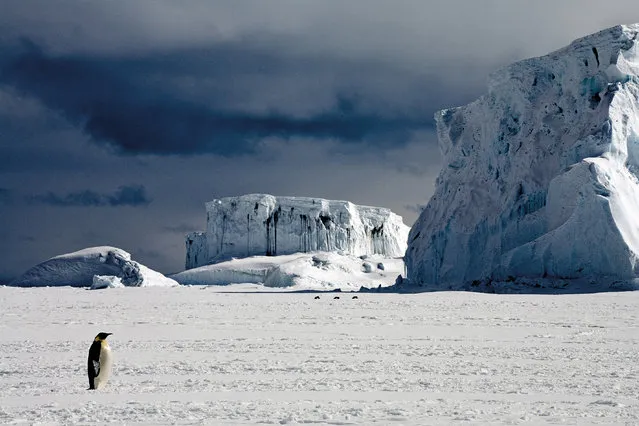
Image from Camille Seamans new book, “Melting Away”. (Photo by Camille Seaman/Barcroft Media)

Documenting the effects of climate change first hand over the past eight years, Camille Seaman fears we may be on the road to the last iceberg. Photographing the enormous frozen floats at both poles for the past eight years, the Californian adventurer has seen the receding ice shelves and experienced the changing warmer weather. Feeling that her intimate and emotional work documents a snapshot of history, Camille presents her series “The Last Iceberg” as a study of what she sees as the personality of each huge iceberg. Drawing parallels with the famous novel, “The Last of the Mohicans”, Camille, 42, wonders whether these unique, almost alien natural features will become a thing of the past or part of nature's renewal process. (Photo by Camille Seaman/Barcroft Media)
Details
02 Dec 2014 12:10:00