Loading...
Done
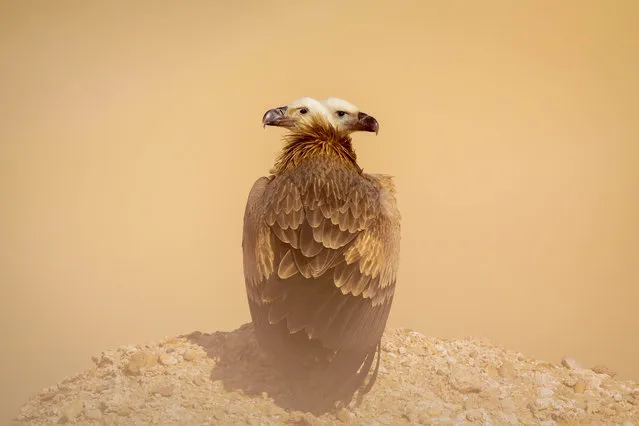
“Double head vulture”. On the day of windy days during raptors migration some people in my country start to catch these tired raptors, so in this day we go to photograph some raptors and we saw these tow tired vultures, so we start to drag them away from the hunters until they reach a good hidden place, to make them safe until they start a new journey. Photo location: Kuwait. (Photo and caption by Mohd Khorshed/National Geographic Photo Contest)

“Double head vulture”. On the day of windy days during raptors migration some people in my country start to catch these tired raptors, so in this day we go to photograph some raptors and we saw these tow tired vultures, so we start to drag them away from the hunters until they reach a good hidden place, to make them safe until they start a new journey. Photo location: Kuwait. (Photo and caption by Mohd Khorshed/National Geographic Photo Contest)
Details
06 Nov 2014 09:40:00


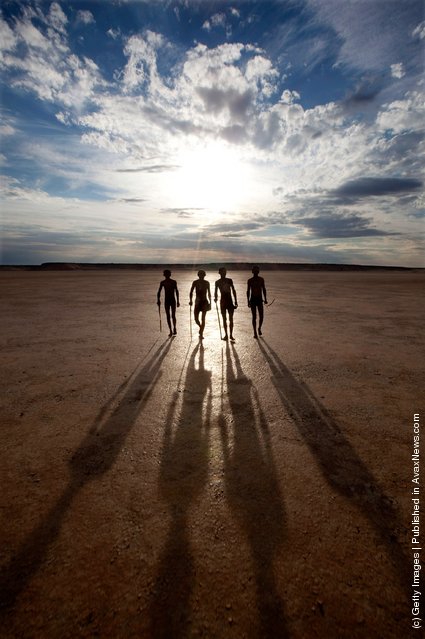
A group of San Bushmen from the Khomani San community practice their hunter-gatherer craft in the Southern Kalahari desert on October 15, 2009 in the Kalahari, South Africa. One of the largest studies of African genetics by an international team from the University of Pennsylvania, published in April 2009, revealed that the San of Southern Africa are the most genetically diverse on earth, and that the San homeland could be the spot where modern humanity began. (Photo by Dan Kitwood/Getty Images)
Details
07 May 2011 09:35:00
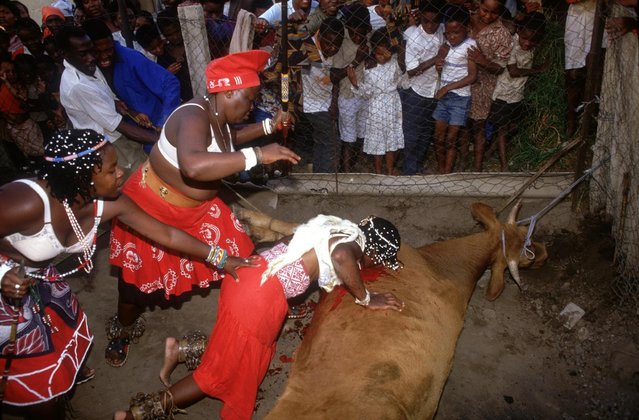
South African Sangomas are wizards and witches who are supposedly chosen by their ancestors to follow a traditional training and go through a rite of passage after which they become Sangomas and can cure and help people. They are so respected and trusted that western medical authorities have actually advised the government of South Africa to develop its cooperation with Sangomas in order to improve hygiene and health among the population. Today is graduation day for Trissa, 25, a Sangoma student in Tembisa, near Pretoria. Thanks to the help of the spirits of her ancestors, she has found a cow that had been hidden. The cow has then been killed by Sangoma Thelma and Trissa is now drinking its blood, thus becoming a Sangoma and changing her name to Nomadlozi. Location: Tembisa, near Pretoria, South Africa. (Photo by Patrick Durand/Sygma via Getty Images)

South African Sangomas are wizards and witches who are supposedly chosen by their ancestors to follow a traditional training and go through a rite of passage after which they become Sangomas and can cure and help people. They are so respected and trusted that western medical authorities have actually advised the government of South Africa to develop its cooperation with Sangomas in order to improve hygiene and health among the population. (Photo by Patrick Durand/Sygma via Getty Images)
Details
24 Feb 2017 00:05:00
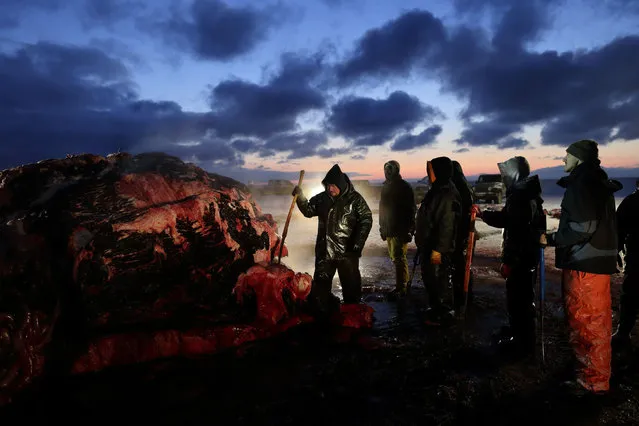
In this October 7, 2014, photo, Fredrick Brower, center, helps cut up a bowhead whale caught by Inupiat subsistence hunters on a field near Barrow, Alaska. Drawing on tradition, and keeping within the closely monitored Aboriginal subsistence whaling guidelines, a bowhead whale is carved and divided by a crew armed with knives and hooks, and then shared according to custom. (Photo by Gregory Bull/AP Photo)

In this October 7, 2014, photo, Fredrick Brower, center, helps cut up a bowhead whale caught by Inupiat subsistence hunters on a field near Barrow, Alaska. Drawing on tradition, and keeping within the closely monitored Aboriginal subsistence whaling guidelines, a bowhead whale is carved and divided by a crew armed with knives and hooks, and then shared according to custom. (Photo by Gregory Bull/AP Photo)
Details
07 Nov 2014 12:58:00
This photo taken on February 10, 2025 shows a captured green iguana being held by hunters after it was brought down by a slingshot in Pingtung. Taiwan's iguana population has exploded since the spikey-backed giant lizards were introduced from Central and South America more than 20 years ago as exotic pets. Many escaped or were dumped by their owners and have bred rapidly in the warm climate of southern Taiwan, invading neighbourhoods and ravaging farmers' crops. (Photo by I-Hwa Cheng/AFP Photo)

This photo taken on February 10, 2025 shows a captured green iguana being held by hunters after it was brought down by a slingshot in Pingtung. Taiwan's iguana population has exploded since the spikey-backed giant lizards were introduced from Central and South America more than 20 years ago as exotic pets. Many escaped or were dumped by their owners and have bred rapidly in the warm climate of southern Taiwan, invading neighbourhoods and ravaging farmers' crops. (Photo by I-Hwa Cheng/AFP Photo)
Details
02 Mar 2025 04:03:00
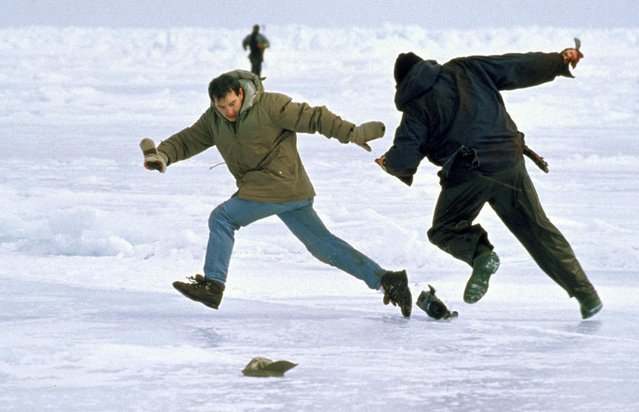
In this 1997 photo released by the International Fund for Animal Welfare, a seal hunter, right, threatens a cameraman with a knife during the filming of a seal hunt in the Gulf of St. Lawrence, Canada. “Huntwatch”, a documentary by the organization about the fight to end commercial seal hunts, premieres in September 2016 on Discovery. The producers say it includes grainy but powerful archive footage that had languished in the basement of the group’s headquarters on Cape Cod for nearly five decades. (Photo by Richard Sobol/IFAW via AP Photo)

In this 1997 photo released by the International Fund for Animal Welfare, a seal hunter, right, threatens a cameraman with a knife during the filming of a seal hunt in the Gulf of St. Lawrence, Canada. “Huntwatch”, a documentary by the organization about the fight to end commercial seal hunts, premieres in September 2016 on Discovery. The producers say it includes grainy but powerful archive footage that had languished in the basement of the group’s headquarters on Cape Cod for nearly five decades. (Photo by Richard Sobol/IFAW via AP Photo)
Details
17 Sep 2016 10:41:00
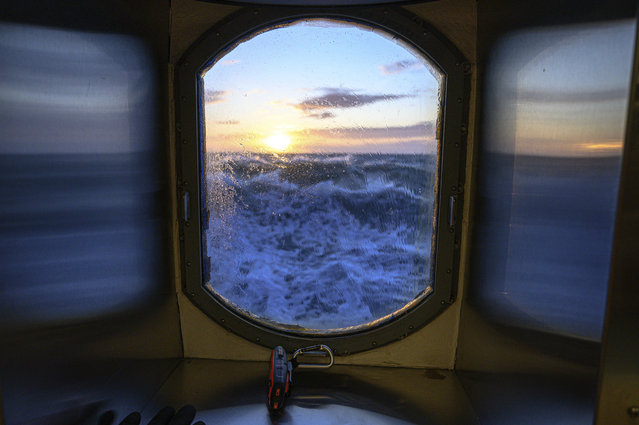
This November 8, 2019, photo provided by John Guillote shows a view from the main lab of the Sikuliaq in the Chukchi Sea. University of Washington scientists onboard the research vessel are studying the changes and how less sea ice will affect coastlines, which already are vulnerable to erosion because increased waves delivered by storms. More erosion would increase the chance of winter flooding in villages and danger to hunters in small boats. (Photo by John Guillote via AP Photo)

This November 8, 2019, photo provided by John Guillote shows a view from the main lab of the Sikuliaq in the Chukchi Sea. University of Washington scientists onboard the research vessel are studying the changes and how less sea ice will affect coastlines, which already are vulnerable to erosion because increased waves delivered by storms. More erosion would increase the chance of winter flooding in villages and danger to hunters in small boats. (Photo by John Guillote via AP Photo)
Details
26 Aug 2021 08:22:00


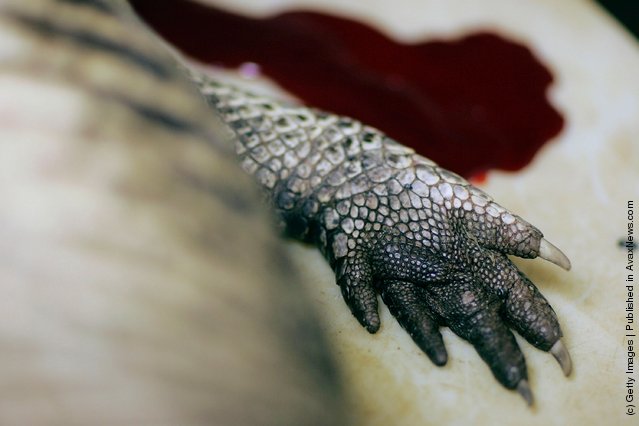
An alligator is skinned at All American Gator August 16, 2006 in Pembroke Park, Florida. The company processes gators for their skins, meat and trophies and was at full capacity a day after the start of gator hunting season. This year more than 4,000 licenses were sold with each license allowing hunters to kill two gators. The hunt has been expanded by 41 days over previous years, running August 15 to November 1. (Photo by Joe Raedle/Getty Images)
Details
04 Apr 2011 10:51:00