Loading...
Done


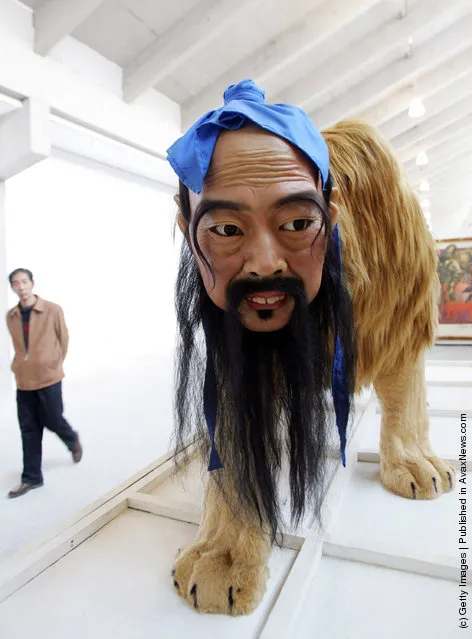
A visitor walks past an installation artwork entitled “Confuciuse” which combines the word “Confucius” and “confuse” in the contemporary art exhibition at “Fun and Art” Festival on December 13, 2008 in Xian of Shaanxi Province, China. (Photo by China Photos/Getty Images)
Details
12 May 2011 08:35:00


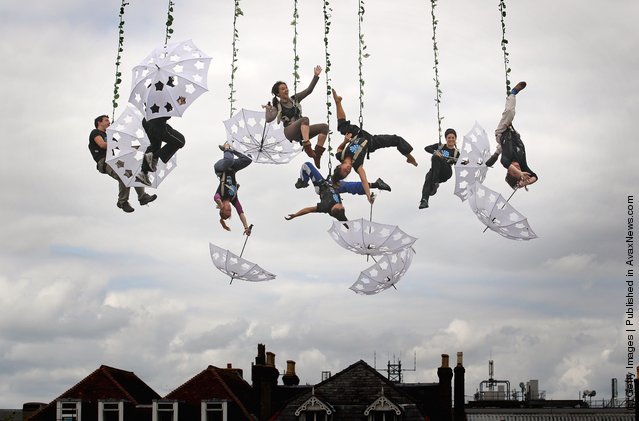
Aerial dancers from Voloa, perform a dress rehearsal ahead of their performance at the opening night of Salisbury International Arts Festival on May 20, 2011 in Salisbury, England. The 39th Salisbury International Arts Festival runs from tonight until Saturday 4 June 2011 and features a programme of theatre, dance, circus, film, music, comedy and spoken word in locations around the historic city, from Salisbury Cathedral to Stonehenge. (Photo by Matt Cardy/Getty Images)
Details
21 May 2011 07:42:00
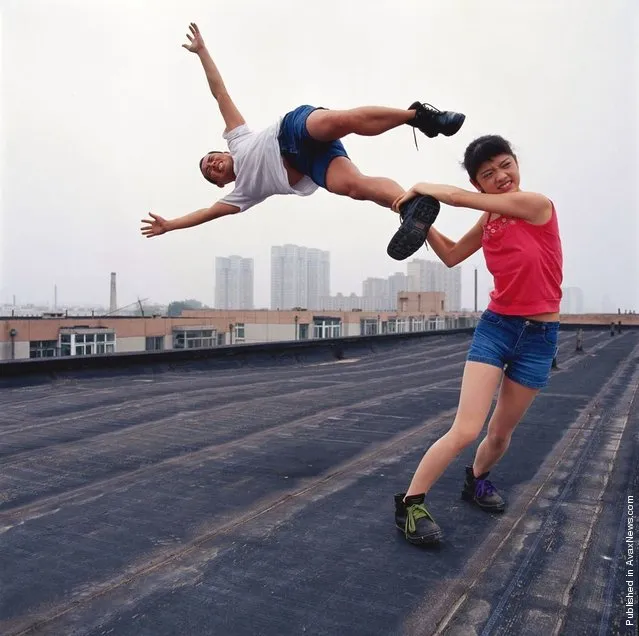
Love at the high place 1 Li Wei

“Li Wei (born in 1970, Hubei, China) is a contemporary artist from Beijing, China. His work often depicts him in apparently gravity-defying situations. Wei started off his performance series, Mirroring, and later on took off attention with his Falls series which shows the artist with his head and chest embedded into the ground. His work is a mixture of performance art and photography that creates illusions of a sometimes dangerous reality. Li Wei states that these images are not computer montages and works with the help of props such as mirror, metal wires, scaffolding and acrobatics”. – Wikipedia

Photo: Love at the high place I (Photo by Li Wei)
Details
25 Apr 2012 12:36:00
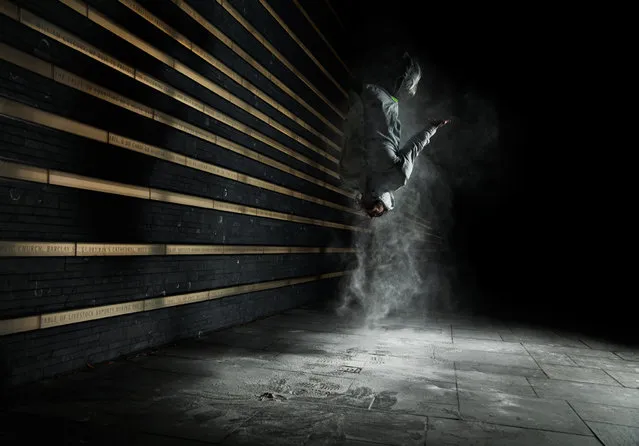
Parkour In Motion By Ben Franke

New York-based photographer and videographer Ben Franke captures the beautiful, acrobatic movement of parkour. The photographer followed New York City free runners, known as tracers, for a few years, documenting their athletic prowess as they freely roamed about the urban streets with a zest for life. Finally, he decided to take his personal project to the next level by producing a collection of dramatically captivating portraits of these athletes for his series titled Parkour Motion.
Details
07 Feb 2013 12:19:00
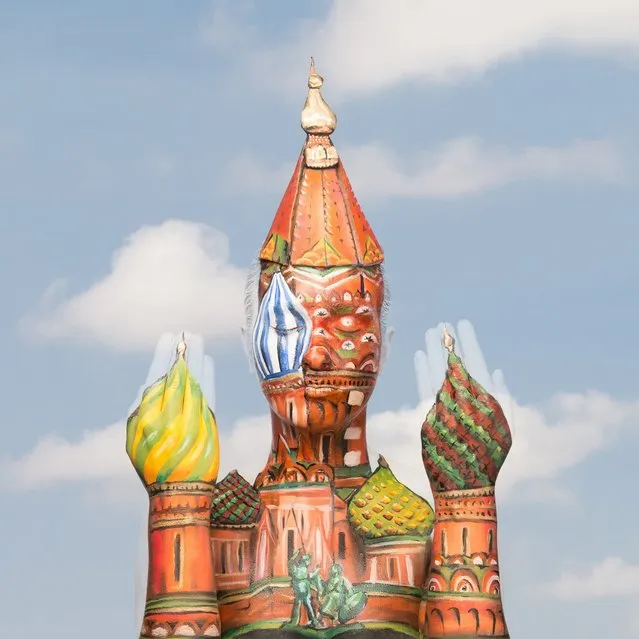
Body Painter By Emma Fay

There is something frightening and at the same time appealing in the living sculptures of 27-year-old British artist Emma Fay. Body art in conjunction with the flexibility of acrobats and fantasy of the artist using water-based paints, a brush and sponge, is transformed into a beautiful work of art. It is not immediately possible to make out the human body in the picture. First you look at the landscape and suddenly begin to distinguish someone’s arm, or neck. Or you look into the eyes of an amazing bull, and it turns out that it is perfectly folded back. Lovely people, temples are and wonderful people-insects are.
Details
10 Jan 2016 08:02:00
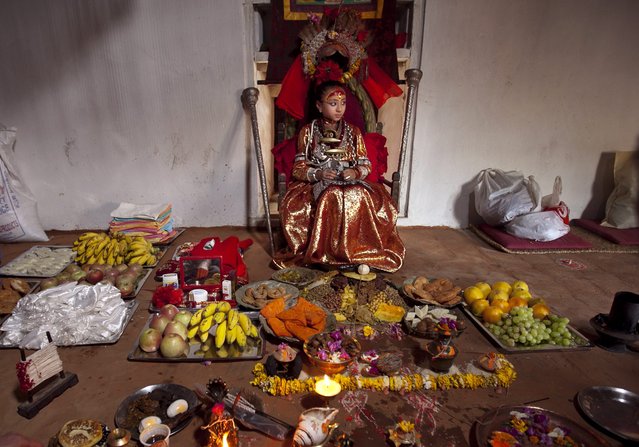
Kumari Samita Bajracharya sits in front of devotees offers during a special puja at Kumari Ghar in Patan, Nepal, 09 April 2011. It is believed that worshipping Kumari and receiving tika from her reduces illness and avoid problems. Kumari, or Kumari Devi, is a “living goddess”. The word literally means virgin in Nepali. The Living Goddesses are young pre-pubescent girls that are considered to be incarnations of the Hindu Goddess of Power, Kali. The Kumari retires when she reaches puberty. (Photo by Narendra Shrestha/EPA)

Kumari Samita Bajracharya sits in front of devotees offers during a special puja at Kumari Ghar in Patan, Nepal, 09 April 2011. It is believed that worshipping Kumari and receiving tika from her reduces illness and avoid problems. Kumari, or Kumari Devi, is a “living goddess”. The word literally means virgin in Nepali. The Living Goddesses are young pre-pubescent girls that are considered to be incarnations of the Hindu Goddess of Power, Kali. The Kumari retires when she reaches puberty. (Photo by Narendra Shrestha/EPA)
Details
18 Jun 2014 12:31:00
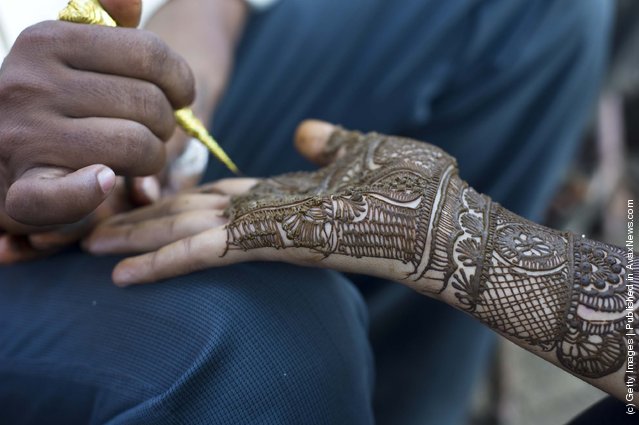
Application of henna or “Mehndi”  to a girls hand in a market in Jaipur, India

“Mehndi or menhdi is the application of henna as a temporary form of skin decoration in India, as well as by expatriate communities from the country. The word mehndi is derived from the Sanskrit word mendhikā. The use of mehndi and turmeric is described in the earliest Vedic ritual books. Haldi (Staining oneself with turmeric paste) as well as mehndi are important Vedic customs as a symbolic representation of the Outer and the Inner Sun. Vedic customs are meant to awaken the “inner light” and so the gold of the inner Sun has an important symbolic function”. – Wikipedia

Photo: Application of henna or “Mehndi” to a girls hand in a market on October 18, 2010 in Jaipur, India. (Photo by Simon de Trey-White/Getty Images)
Details
23 Nov 2011 13:33:00
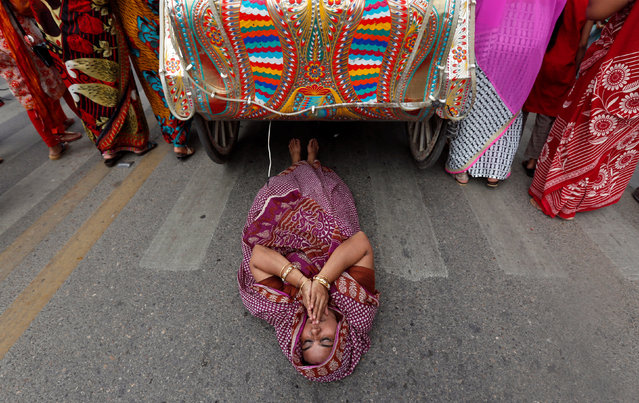
A Hindu devotee lies on a road as the holy “Rath”, or the chariot of lord Jagannath, passed over her during the Rath Yatra, or chariot procession in Karachi, Pakistan, July 17, 2016. Ratha-jatra is derived from two Odia words ratha/rotho meaning “chariot” and jatra meaning “journey”. The festival involves an annual procession (journey) of a deity's idols. Other names for the festival include ratha jatra or chariot festival. (Photo by Akhtar Soomro/Reuters)

A Hindu devotee lies on a road as the holy “Rath”, or the chariot of lord Jagannath, passed over her during the Rath Yatra, or chariot procession in Karachi, Pakistan, July 17, 2016. Ratha-jatra is derived from two Odia words ratha/rotho meaning “chariot” and jatra meaning “journey”. The festival involves an annual procession (journey) of a deity's idols. Other names for the festival include ratha jatra or chariot festival. (Photo by Akhtar Soomro/Reuters)
Details
18 Jul 2016 12:42:00