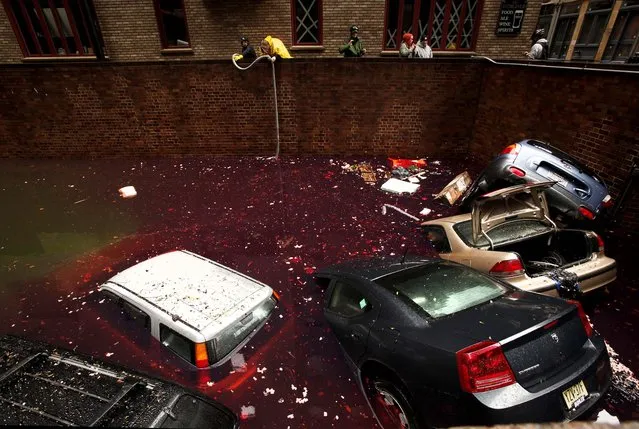
Cars float up from a car garage in a mixture of storm water and gasoline in lower Manhattan as workers begin the process of pumping out the mess. (Photo by Carolyn Cole/Los Angeles Times/MCT)
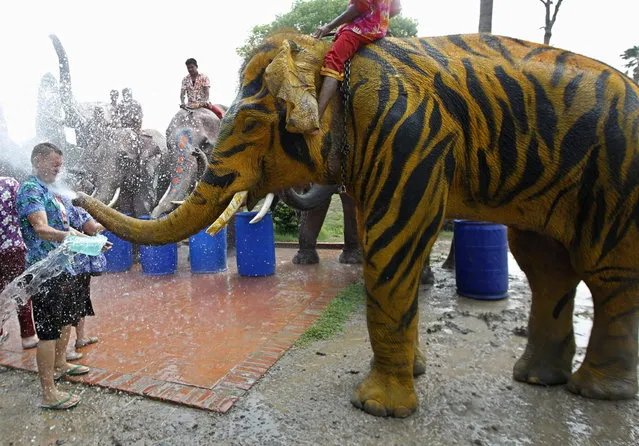
Elephants spray tourists with water in celebration of the Songkran water festival in Thailand's Ayutthaya province, about 80 km (50 miles) north of Bangkok, April 9, 2014. (Photo by Rungroj Yongrit/EFE)
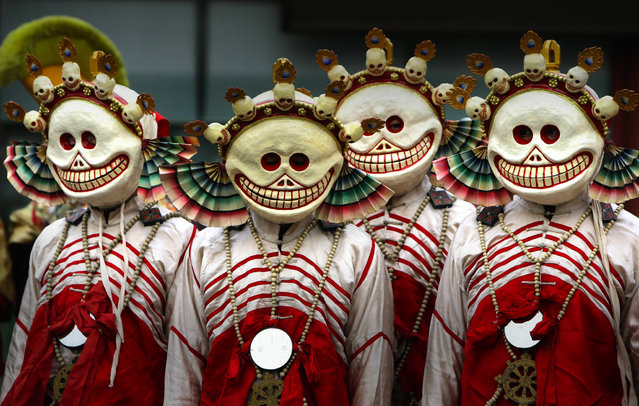
Monks dressed as Tibetan Buddhism characters attend a religious ceremony, known as “Da Gui” or beating ghost, to celebrate the upcoming Tibetan New Year which starts on March 1 at Yonghegong Lama Temple, in Beijing February 28, 2014. This Tibetan ceremony is held annually at the end of the first lunar month with mask dancing to expel ghosts, according to a press release. (Photo by Jason Lee/Reuters)
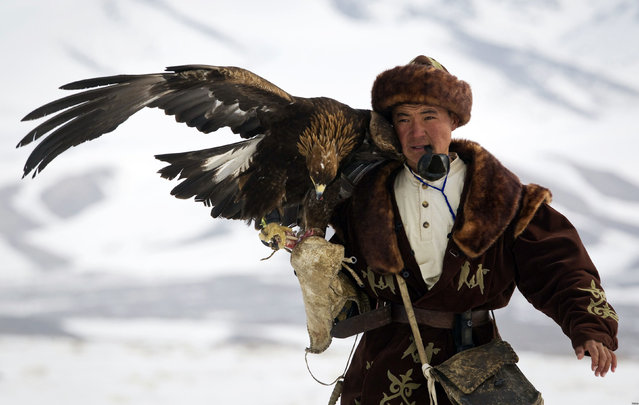
A Kazakh hunter walks with his tamed golden eagle during an annual hunting competition in Chengelsy Gorge, some 150 km (93 miles) east of Almaty February 22, 2013. (Photo by Shamil Zhumatov/Reuters)
Zombie Boy, who holds a Guinness World Record for most bones inked on a human body, gave Londoners a fright on October 5, 2016 as he was spotted at commuter hotspots across the capital to promote Thorpe Park’s new Halloween attraction. Canadian born Zombie Boy has 90% of his body covered in tattoos with a value of over $20,000 in total, including an entire skeleton and skull on his face, visited Canary Wharf, Oxford Street and Soho. (Photo by Rex Features)
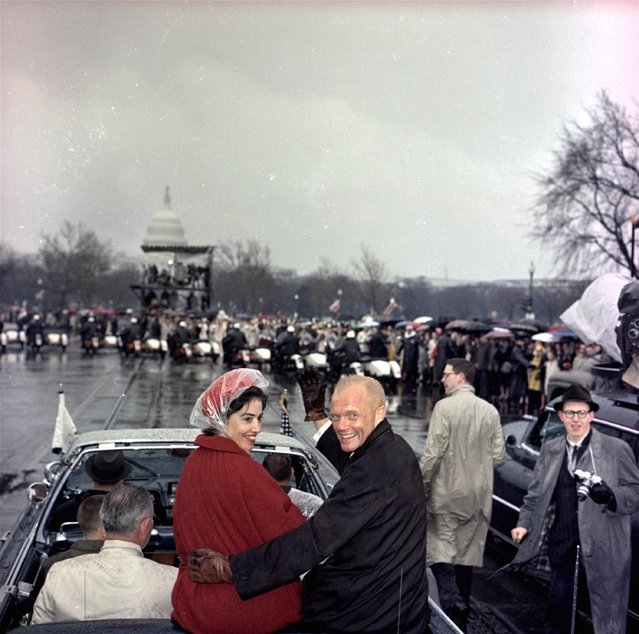
In this February 26, 1962 file photo, Mercury astronaut John Glenn, and his wife, Annie, ride in the back of an open car with Vice-President Johnson during a parade in Glenn's honor in Washington. The Capitol is seen in the background. Glenn, the first American to orbit Earth who later spent 24 years representing Ohio in the Senate, died Thursday, Dec. 8, 2016, at the age of 95. (Photo by AP Photo)
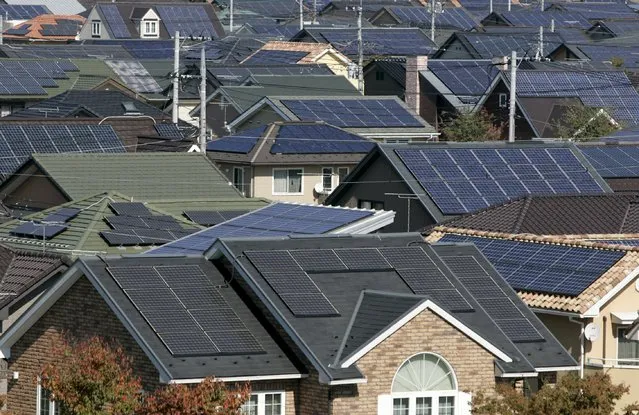
Rooftops of solar powered houses are pictured in Ota, 80 km northwest of Tokyo in this October 28, 2008 file photo. One by one, Japan is turning off the lights at the giant oil-fired power plants that propelled it to the ranks of the world's top industrialised nations. With nuclear power in the doldrums after the Fukushima disaster, it's solar energy that is becoming the alternative. Solar power is set to become profitable in Japan as early as this quarter, according to the Japan Renewable Energy Foundation (JREF), freeing it from the need for government subsidies and making it the last of the G7 economies where the technology has become economically viable. (Photo by Yuriko Nakao/Reuters)