Loading...
Done
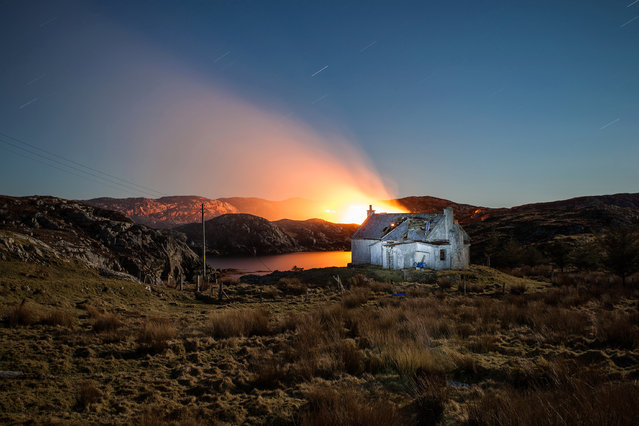
“Peat Fire”. Taken in March 2013 on the east coast of Harris. The fire is from muir-burning, when farmers burn off grasses and heather to improve grazing for their sheep. (Photo by John Maher/The Guardian)

Photographer John Maher, once the drummer with punk bank Buzzcocks, travelled to the Outer Hebrides to photograph abandoned crofters’ cottages – many of which, like this one, have seemingly been untouched since. Here: “Peat Fire”. Taken in March 2013 on the east coast of Harris. The fire is from muir-burning, when farmers burn off grasses and heather to improve grazing for their sheep. (Photo by John Maher/The Guardian)
Details
19 Aug 2016 11:39:00
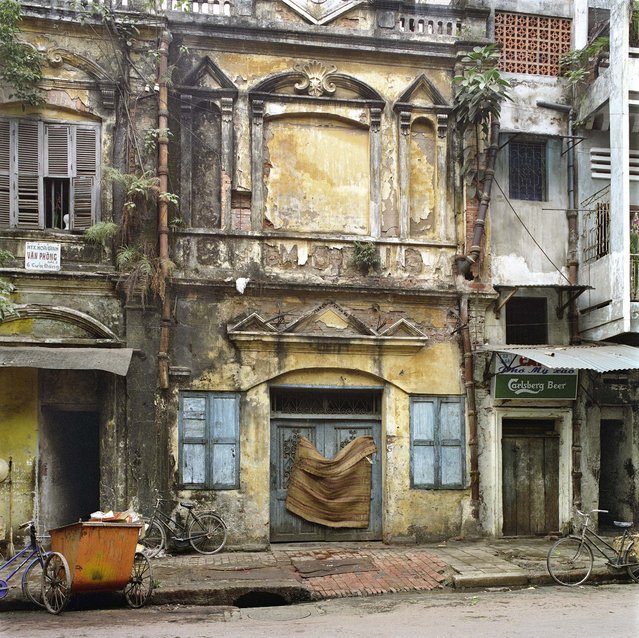
54 Hàng Ga (Chicken Street), 1994. (Photo by  William E. Crawford from the book “Hanoi Streets 1985-2015: In the Years of Forgetting”)

Documentary photographer William E. Crawford was one of the first Western photographers to gain access to North Vietnam after the war ended. He has photographed the capital, Hanoi, at regular intervals since 1985, concentrating on the colonial and indigenous architecture, urban details, landscapes and intimate portraits of people in their home settings, street scenes and the city’s surrounding countryside. Here: 54 Hàng Ga (Chicken Street), 1994. (Photo by William E. Crawford from the book “Hanoi Streets 1985-2015: In the Years of Forgetting”)
Details
27 Jun 2018 00:01:00
Parade-goers walk in the annual West Indian Day Parade on September 02, 2019 in the Brooklyn borough of New York City. The annual celebration of Caribbean culture is one of the largest of its kind and features dozens of floats and costumed participants that make their way down Flatbush Avenue. (Photo by Yana Paskova/Getty Images)

Parade-goers walk in the annual West Indian Day Parade on September 02, 2019 in the Brooklyn borough of New York City. The annual celebration of Caribbean culture is one of the largest of its kind and features dozens of floats and costumed participants that make their way down Flatbush Avenue. (Photo by Yana Paskova/Getty Images)
Details
05 Sep 2019 00:05:00
A pro-Russian rebel shows his t-shirt depicting Russian President Vladimir Putin at a checkpoint in the village of Chornukhyne near the town of Debaltseve, north-east from Donetsk, March 12, 2015. (Photo by Marko Djurica/Reuters)

A pro-Russian rebel shows his t-shirt depicting Russian President Vladimir Putin at a checkpoint in the village of Chornukhyne near the town of Debaltseve, north-east from Donetsk, March 12, 2015. (Photo by Marko Djurica/Reuters)
Details
30 Mar 2015 13:26:00
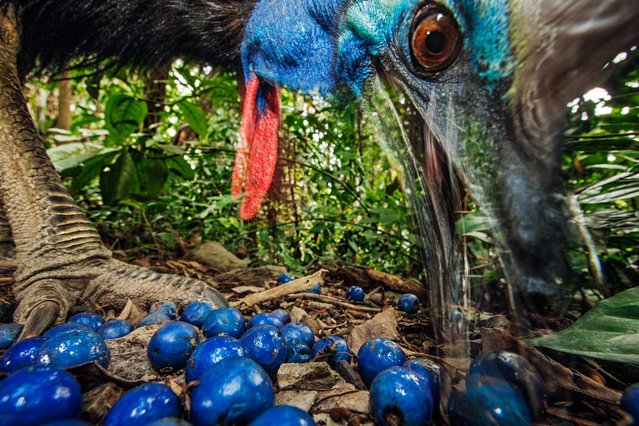
“Cassowaries are large, flightless birds related to emus and (more distantly) to ostriches, rheas, and kiwis”, writes Olivia Judson in the September issue of National Geographic magazine. (Photo by Christian Ziegler/National Geographic)

“Cassowaries are large, flightless birds related to emus and (more distantly) to ostriches, rheas, and kiwis”, writes Olivia Judson in the September issue of National Geographic magazine. How large? People-size: Adult males stand well over five foot five and top 110 pounds. Females are even taller, and can weigh more than 160 pounds. Dangerous when roused, they’re shy and peaceable when left alone. But even birds this big and tough are prey to habitat loss. The dense New Guinea and Australia rain forests where they live have dwindled. Today cassowaries might number 1,500 to 2,000. And because they help shape those same forests – by moving seeds from one place to another – “if they vanish”, Judson writes, “the structure of the forest would gradually change” too. (Photo by Christian Ziegler/National Geographic)
Details
06 Jan 2014 12:21:00
Vanessa: Hunts Point, Bronx

Vanessa: Hunts Point, Bronx

Vanessa, thirty-five, had three children with an abusive husband. She “lost her mind, started doing heroin”, after losing the children, who were taken away and given to her mother. The drugs led to homelessness and prostitution. She grew up on Arthur Avenue in the Bronx, but now spends her time in Hunts Point, “trying to survive everyday. Just doing whatever it takes”.
Details
13 May 2012 10:13:00
Two women wearing nun outfits drink beer while watching the 2014 Tim Hortons Brier curling championships in Kamloops, British Columbia in this March 8, 2014 file photo. (Photo and caption by Ben Nelms/Reuters)

Two women wearing nun outfits drink beer while watching the 2014 Tim Hortons Brier curling championships in Kamloops, British Columbia in this March 8, 2014 file photo. Although some people might conclude that a curling event could produce a dull atmosphere, it is actually far from it. Some of the most energetic and loyal fans are committed to showing their colours at tournaments around the world. There was a lull in the games that were being held on this day and I remember spotting these nuns sitting in their seats earlier. Although them just sitting there didn't produce a picture, I kept my eye on them for the entire match. As soon as I spotted them with beer in their hands, I slowly turned my camera towards them and waited for them to take a drink. One of the challenges of shooting this image was to not have everyone notice me taking the photo. I had a longer lens on and was right in the middle of the rink. I slowly turned my lens, not to make my intentions too obvious, and waited until they drank from their beers together. (Photo and caption by Ben Nelms/Reuters)
Details
27 Nov 2014 14:39:00
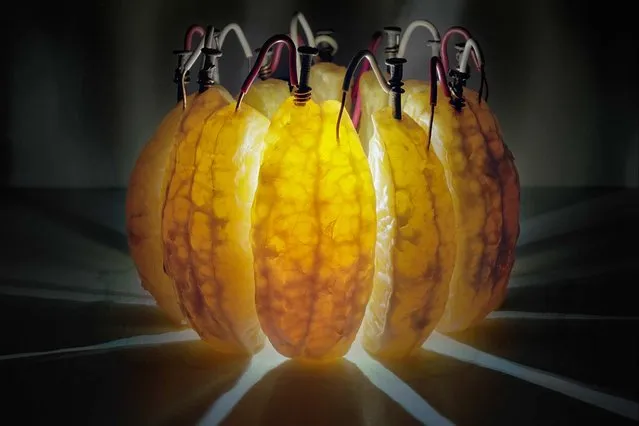
Wedges of an orange generate enough current and electrical juice – 3.5 volts – to power an LED. The fruit’s citric acid helps electrons flow from galvanized nails to copper wire in this 14-hour exposure. This image was published in September’s Visions of Earth, a trio of photos that appear in each issue of National Geographic. (Photo by Caleb Charland/National Geographic)

Wedges of an orange generate enough current and electrical juice – 3.5 volts – to power an LED. The fruit’s citric acid helps electrons flow from galvanized nails to copper wire in this 14-hour exposure. This image was published in September’s Visions of Earth, a trio of photos that appear in each issue of National Geographic. (Photo by Caleb Charland/National Geographic)
Details
06 Jan 2014 12:09:00