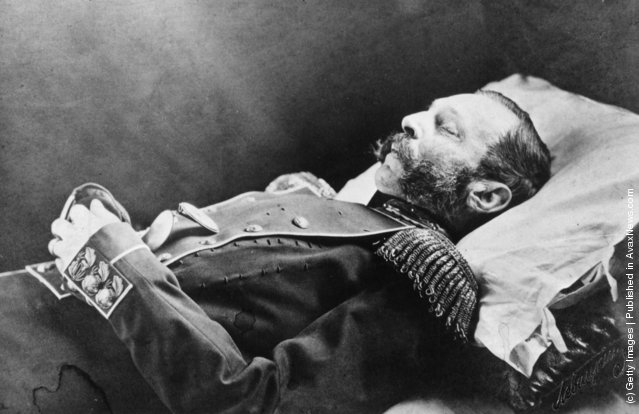
Tsar Alexander II (1818–1881) known as “The Liberator” lying in state. He was mortally wounded by an assassination attack in St Petersburg. (Photo by Hulton Archive/Getty Images). March 1881
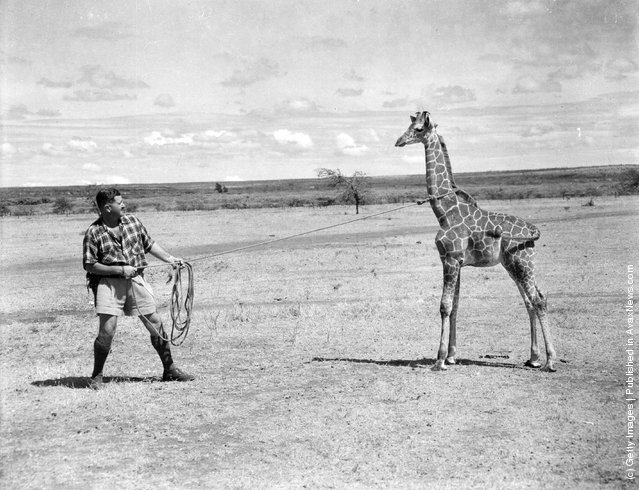
The world's biggest wild animal farmer, Carr Hartley of Rumuruti in Kenya, sells animals to zoos, circuses and film companies. (Photo by Maxim Ruston/BIPs/Getty Images). November 1956
People gather in the street the night before a local lockdown amidst the spread of the coronavirus disease (COVID-19) in Manchester, Britain on October 22, 2020. (Photo by Molly Darlington/Reuters)
A woman dances during a rehearsal by the group “Tambores de Olokun” in Rio de Janeiro, Brazil, Sunday, April 17, 2022. The Brazilian municipalities of Rio de Janeiro and Sao Paulo postponed the traditional parades of the carnival samba schools to April 22 - 23, as a result of the COVID-19 pandemic. (Photo by Bruna Prado/AP Photo)
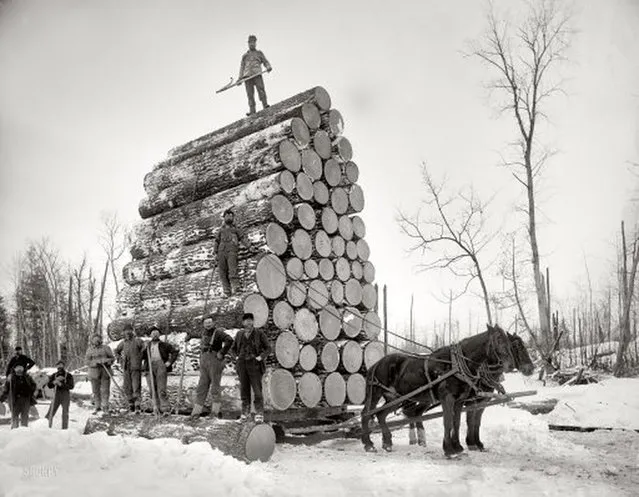
This picture was taken in the 1890's and shows a group of loggers hauling a heavy load. It is hard to even picture how they got the logs stacked that high. It is also hard to imagine how they keep it from tipping over.
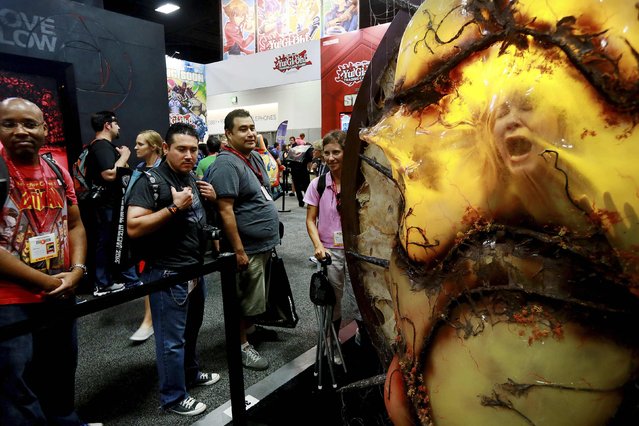
Jill Olsen (R) has her picture taken inside a giant cocoon, from the “Falling Skies” TV series, during the 2014 Comic-Con International Convention in San Diego, California July 24, 2014. (Photo by Sandy Huffaker/Reuters)
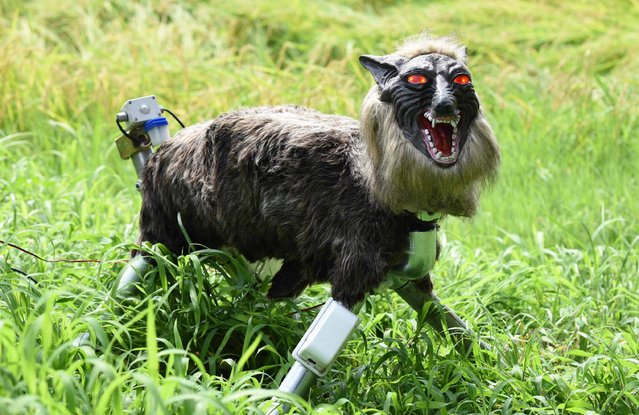
A wolf-like robot “Super Monster Wolf” stands beside a rice field to drive away wild animals that cause damages to crops in Kisarazu, Chiba prefecture, on August 25, 2017. The agricultural coopetative association JA Kisarazu-shi introduced the 65cm-long and 50cm-high robot recently on a trial basis which can detect wild animals such as boars and deers with an infrared ray sensor when they approach and intimidates them, flashing the red LED eyes and blaring 48 types of sounds including a wolf growl and human voice. (Photo by Toru Yamanaka/AFP Photo)