Loading...
Done
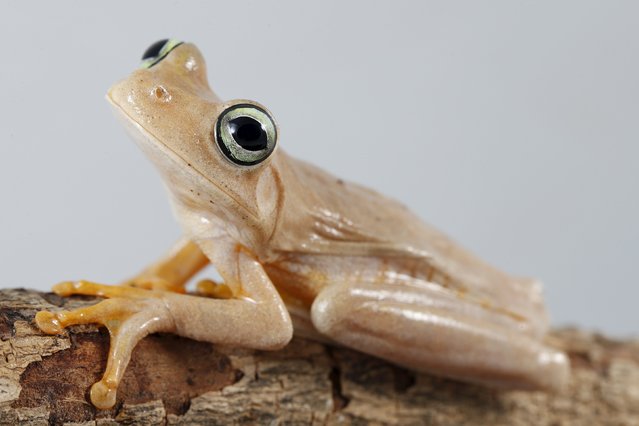
A Hypsiboas crepitans frog is pictured at a terrarium in Caracas November 30, 2015. Venezuelan frogs and toads are in critical danger due to climate change as rising temperatures complicate reproduction and spread a deadly fungus, say scientists, who liken the species to canaries in a coalmine warning of imminent danger. (Photo by Carlos Garcia Rawlins/Reuters)

A Hypsiboas crepitans frog is pictured at a terrarium in Caracas November 30, 2015. Venezuelan frogs and toads are in critical danger due to climate change as rising temperatures complicate reproduction and spread a deadly fungus, say scientists, who liken the species to canaries in a coalmine warning of imminent danger. The survival of a group of nearly 20 frog and toad species, which top Venezuela's list of endangered species, may rest on a small group of academics in a Caracas laboratory attempting to recreate the amphibians' natural reproductive conditions. (Photo by Carlos Garcia Rawlins/Reuters)
Details
17 Dec 2015 08:04:00
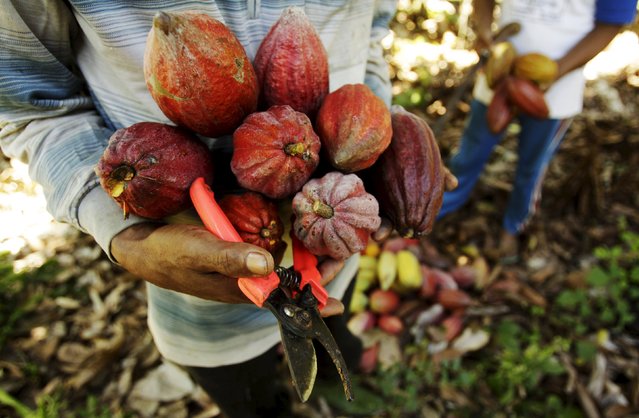
Farmers harvest cocoa fruits at a plantation in Gantarang Keke Village, South Sulawesi, Indonesia May 8, 2015. (Photo by Yusuf Ahmad/Reuters)

Farmers harvest cocoa fruits at a plantation in Gantarang Keke Village, South Sulawesi, Indonesia May 8, 2015. Sulawesi is at the heart of Asia's largest cocoa producing region, and is where some international confectioners are looking to boost output to feed growing demand for chocolate in the region. (Photo by Yusuf Ahmad/Reuters)
Details
12 May 2015 11:49:00
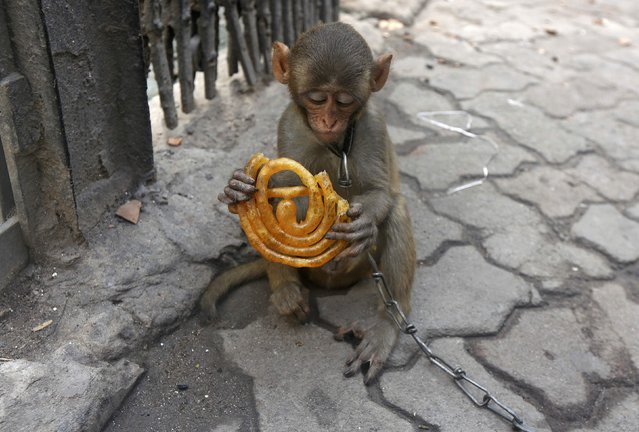
Musafir, a pet monkey, eats sweets on a pavement in Kolkata, India, June 9, 2016. (Photo by Rupak De Chowdhuri/Reuters)

Musafir, a pet monkey, eats sweets on a pavement in Kolkata, India, June 9, 2016. (Photo by Rupak De Chowdhuri/Reuters)
Details
11 Jun 2016 12:10:00
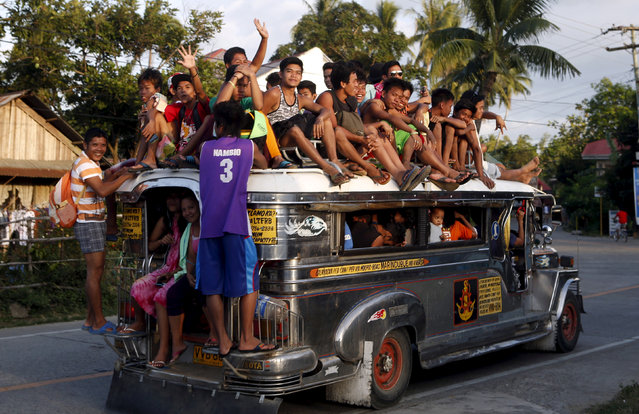
Residents ride on top of an overcrowded “Jeepney”, a locally manufactured public transport, along a highway in Mogpog town on Marinduque island in central Philippines April 8, 2015. (Photo by Erik De Castro/Reuters)

Residents ride on top of an overcrowded “Jeepney”, a locally manufactured public transport, along a highway in Mogpog town on Marinduque island in central Philippines April 8, 2015. (Photo by Erik De Castro/Reuters)
Details
03 Sep 2016 09:47:00
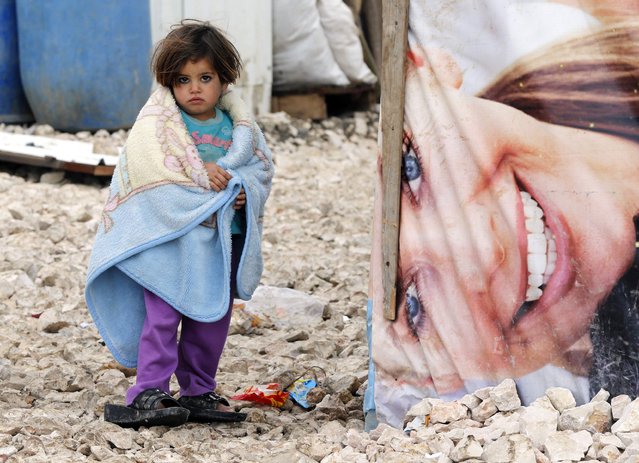
A Syrian refugee girl covers herself with a blanket as she stands outside tents at a makeshift settlement in Bar Elias in the Bekaa valley January 5, 2015. Lebanon enforced new immigration controls at the Syrian border on Monday in a move to gain control of the steady stream of refugees from its much larger neighbour. (Photo by Mohamed Azakir/Reuters)

A Syrian refugee girl covers herself with a blanket as she stands outside tents at a makeshift settlement in Bar Elias in the Bekaa valley January 5, 2015. Lebanon enforced new immigration controls at the Syrian border on Monday in a move to gain control of the steady stream of refugees from its much larger neighbour. (Photo by Mohamed Azakir/Reuters)
Details
06 Jan 2015 11:56:00
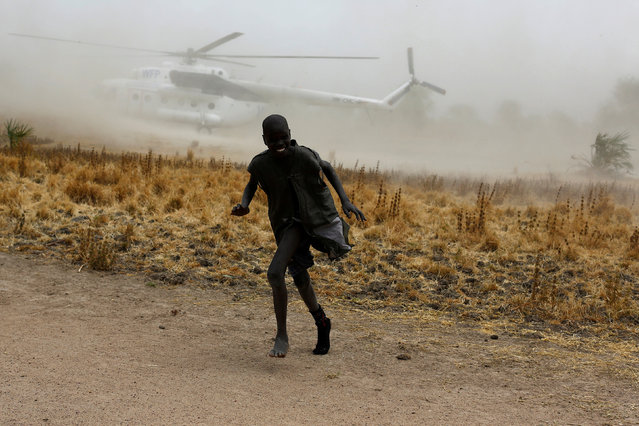
A boy moves away as a United Nations World Food Programme (WFP) helicopter lands in Rubkuai village, Unity State, northern South Sudan, February 18, 2017. (Photo by Siegfried Modola/Reuters)

A boy moves away as a United Nations World Food Programme (WFP) helicopter lands in Rubkuai village, Unity State, northern South Sudan, February 18, 2017. South Sudan on Monday declared famine in some parts of the country, with more than three years of war leaving nearly five million hungry in what aid groups called a “man-made” tragedy. (Photo by Siegfried Modola/Reuters)
Details
22 Feb 2017 00:03:00
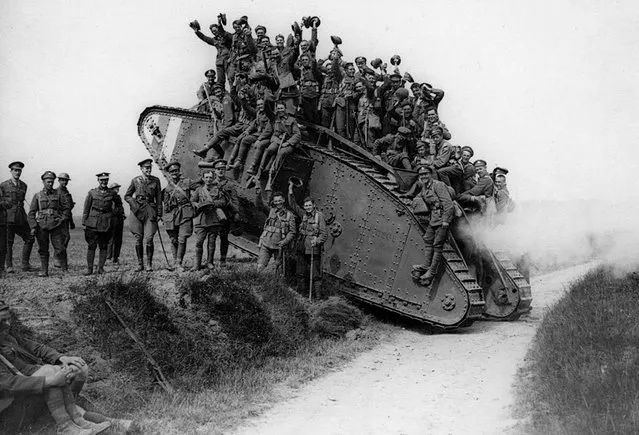
These black-and-white photos are taken from the new book “Armoured Warfare in the First World War 1916 – 1918” by Anthony Tucker-Jones and published by Pen & Sword Military. “Interestingly the British, French and Germans took completely different approaches with varying results”. The British military produced “Little Willie” in Autumn 1915 weighing 18 tonnes, which had a crew of two plus four gunners. “Inspired by a tracked artillery tractor “Little Willie” was referred to as a water tank – hence the name tank – to ensure secrecy”, said Anthony. “This led to the strange looking Mark I with its peculiar rhomboid shape, designed to cross trenches with guns in sponsons on either side. The Germans saw the tank as unchivalrous and were slow to grasp its utility. They favoured the Stormtrooper (specialist soldiers used to infiltrate enemy trenches) and artillery, not the tank”, said Anthony. “However, they didn’t hesitate to make use of captured British tanks. Although the tank helped secure victory and German soldiers dubbed it “Germany’s Downfall” the country was ultimately brought to its knees by the Allies blockade”. Here: British troops hitch a ride on a Mark IV after the massed tank fleet spearheading attack at Cambrai on November 20, 1917. (Photo by Anthony Tucker-Jones/Mediadrumworld.com)

These black-and-white photos are taken from the new book “Armoured Warfare in the First World War 1916 – 1918” by Anthony Tucker-Jones and published by Pen & Sword Military. Here: British troops hitch a ride on a Mark IV after the massed tank fleet spearheading attack at Cambrai on November 20, 1917. (Photo by Anthony Tucker-Jones/Mediadrumworld.com)
Details
23 Feb 2017 00:02:00
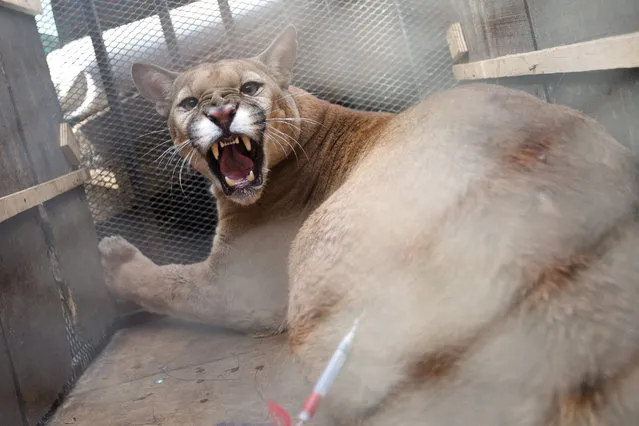
A male puma, named Bordo arrives for an examination and tests at a veterinary in Brasilia, Brazil, 31 October 2017 (issued 01 November 2017). Bordo, a young male puma, captured when he was a cub, will become the first animal of his species to be released in a sanctuary in the Brazilian savannah in Goias State close to Brasilia. The sanctuary, a preserve for wild cats,  is in the first phase and is located on private lands but state funded. (Photo by Joedson Alves/EPA/EFE)

A male puma, named Bordo arrives for an examination and tests at a veterinary in Brasilia, Brazil, 31 October 2017 (issued 01 November 2017). Bordo, a young male puma, captured when he was a cub, will become the first animal of his species to be released in a sanctuary in the Brazilian savannah in Goias State close to Brasilia. The sanctuary, a preserve for wild cats, is in the first phase and is located on private lands but state funded. (Photo by Joedson Alves/EPA/EFE)
Details
05 Nov 2017 08:13:00