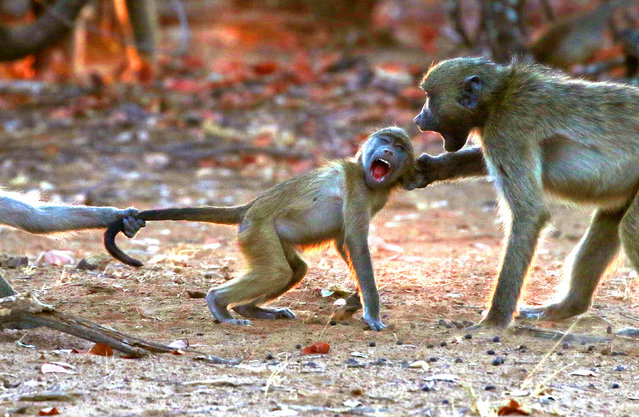
A young baboon receives an earful from an adult as another primate yanks its tail at Kruger National Park, South Africa in the first decade of July 2024. (Photo by John Mullineux/Solent News)
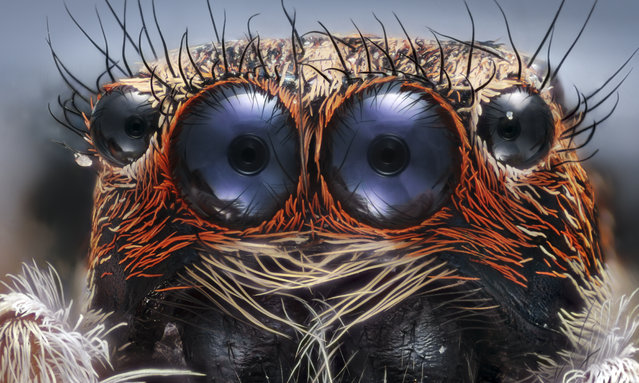
A competition, now in its 43rd year, dedicated to showcasing the beautiful and bizarre as seen under a light microscope attracted over 2,000 entries from 88 countries. Here: Honorable Mention by Emre Can Alagöz, Istanbul, Turkey: The eyes of a jumping spider, magnified 6x. (Photo by Emre Can Alagöz/2017 Nikon Small World Photomicrography Competition)
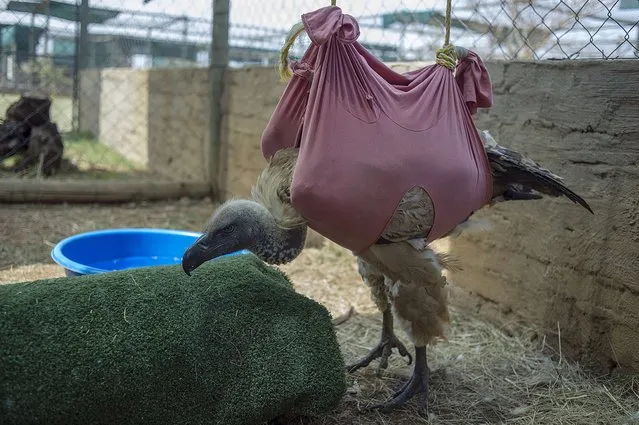
An injured vulture is treated at the VulPro Vulture Rehabilitation Centre in Hartebeepoortdam in the Magalisburg region on September 15, 2015. Confined to southern Africa, just under 4,000 breeding pairs of Cape Vultures remain in the wild, mostly in South Africa, Lesotho and Botswana. Unless conservation efforts are successful, Africa's largest vulture species may be facing eventual extinction. (Photo by Mujahid Safodien/AFP Photo)
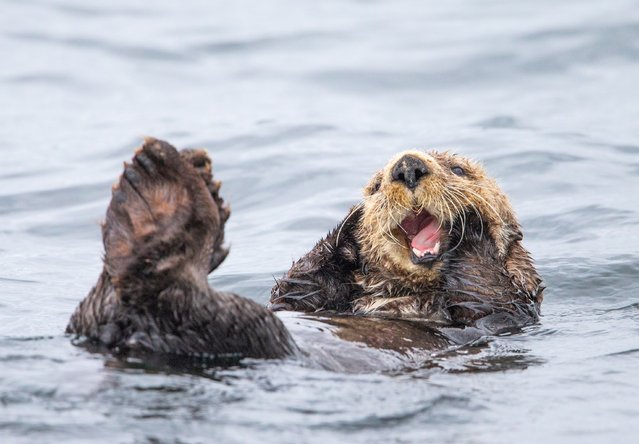
A sea otter in the Great Bear Rainforest, off the Pacific coast of British Columbia, Canada in the second decade of December 2024, appeared to be enjoying a relaxing swim as it preened its fur, the densest of any mammal. (Photo by Max Waugh/Solent News & Photo Agency)
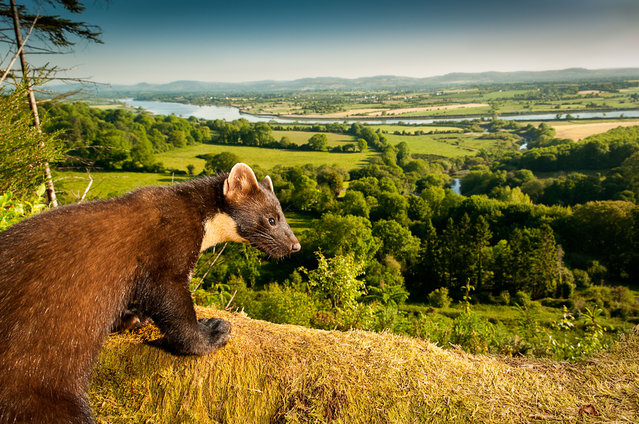
A pine marten – one of a few wild mammals doing well in Britain (although they number just 3,700). A fifth of the country’s wild mammals are at high risk of extinction, research shows. (Photo by Maurice Flynn/The Mammal Society)
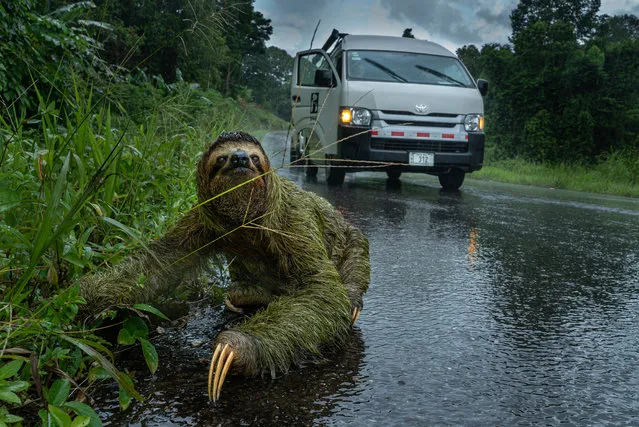
People and Nature category winner: Why did the sloth cross the road? by Andrew Whitworth (Osa Conservation and University of Glasgow), taken in Osa Peninsula, Costa Rica. “I was driving out from the Osa Peninsula, located on the southern Pacific coast of Costa Rica on a dark, stormy day. This female three-toed sloth (Bradypus variegatus) had luckily just about made it across the road, and the drivers of the Toyota on this occasion had spotted her in good time”. (Photo by Andrew Whitworth/2019 British Ecological Society Photography Competition)
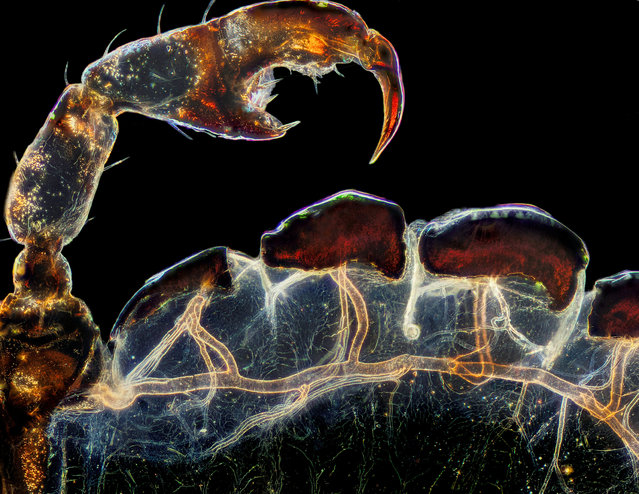
Third place: the rear leg, claw and respiratory trachea of a louse (Haematopinus suis). (Photo by Frank Reiser/Nassau Community College/Nikon Small World Photomicrography 2021)