Loading...
Done
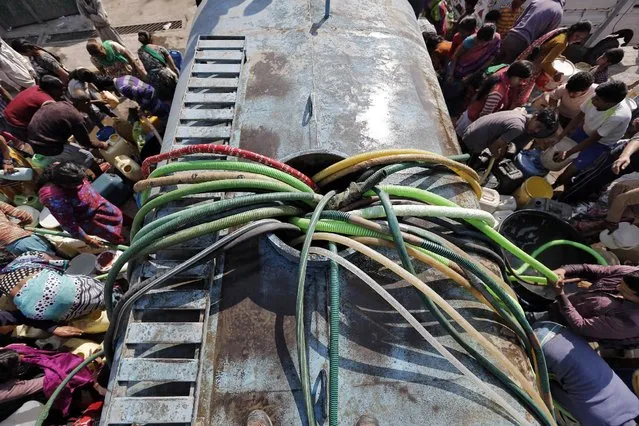
Residents with their empty containers crowd around a municipal tanker to fetch water in New Delhi, India, February 22, 2016. (Photo by Anindito Mukherjee/Reuters)

Residents with their empty containers crowd around a municipal tanker to fetch water in New Delhi, India, February 22, 2016. The Indian army has taken control of a canal that supplies three-fifths of Delhi's water, the state's chief minister said on Monday, raising hope that a water crisis in the metropolis of more than 20 million people can be averted. (Photo by Anindito Mukherjee/Reuters)
Details
22 Feb 2016 10:08:00
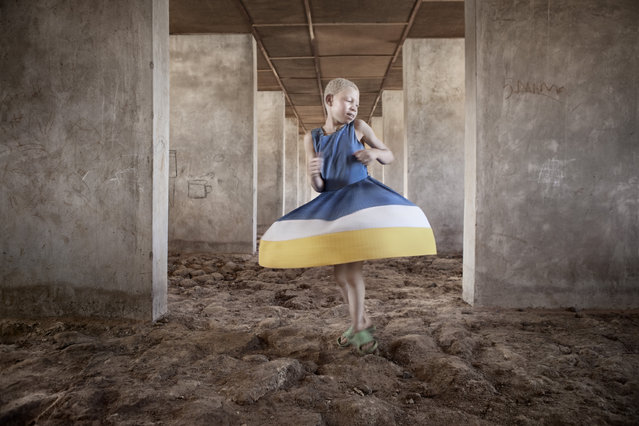
Eleven-year-old Kelen loves to dance in the half-built rooms of the centre in Kabanga Refuge Centre, Tanzania, 2012. (Photo by Ana Palacios/Barcroft Images)

Eleven-year-old Kelen loves to dance in the half-built rooms of the centre in Kabanga Refuge Centre, Tanzania, 2012. The rescue centres protect albino people from the vicious hunters who sell their body parts to witch doctors. Photojournalist Ana Palacios, 43, visited the centre in Tanzania three times between 2012 and 2016 to find out more about the plight of albino people. (Photo by Ana Palacios/Barcroft Images)
Details
01 Oct 2016 11:02:00
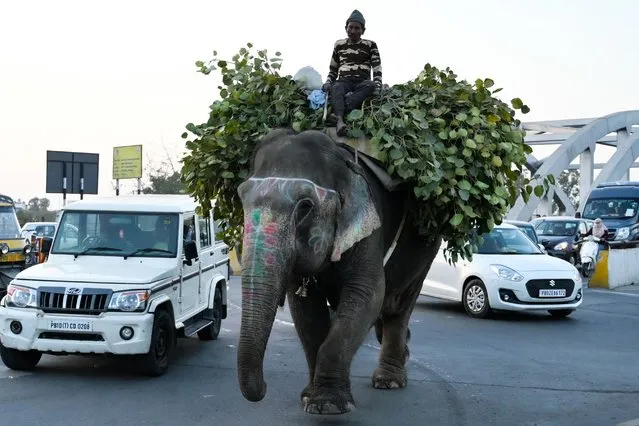
A mahout carrying leaves rides an elephant along a street in Amritsar on February 27, 2024. (Photo by Narinder Nanu/AFP Photo)

A mahout carrying leaves rides an elephant along a street in Amritsar on February 27, 2024. (Photo by Narinder Nanu/AFP Photo)
Details
12 Mar 2024 06:37:00
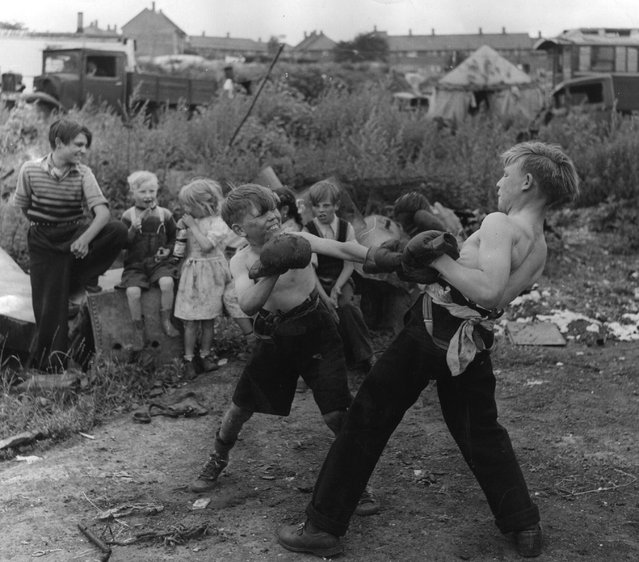
The unromantic gypsies. Children boxing in a gypsy camp in Kent, England on July 1, 1951. Like all boys these gypsy lads like to try their hand at boxing. Encouraged by their friends they fight it out on Corke's Meadow. Few Romanies now live a life of wandering romance. Most are like the three hundred squatters of Corke's Meadow, Kent, which is part of a “gypsy problem” that involves about 100,000 today. Of those about 25,000 can be rightly called gypsies, the rest are Mumpers and Posh-rats and Hobos. Corke's Meadow has both kinds. “Picture Post” cameraman Bert Hardy photographs the Corke's Meadow gypsies in their encampment. (Photo by Hulton-Deutsch Collection/Corbis via Getty Images)

The unromantic gypsies. Children boxing in a gypsy camp in Kent, England on July 1, 1951. Like all boys these gypsy lads like to try their hand at boxing. Encouraged by their friends they fight it out on Corke's Meadow. Few Romanies now live a life of wandering romance. Most are like the three hundred squatters of Corke's Meadow, Kent, which is part of a “gypsy problem” that involves about 100,000 today. Of those about 25,000 can be rightly called gypsies, the rest are Mumpers and Posh-rats and Hobos. Corke's Meadow has both kinds. “Picture Post” cameraman Bert Hardy photographs the Corke's Meadow gypsies in their encampment. (Photo by Hulton-Deutsch Collection/Corbis via Getty Images)
Details
12 Mar 2017 00:01:00
A health worker shows an empty syringe after inoculating a woman with AstraZeneca's COVID-19 vaccine during the first day of a nationwide three-day vaccination drive at a school in Quezon city, Philippines on Monday, November 29, 2021. There has been no reported infection so far caused by the new variant in the Philippines, a Southeast Asian pandemic hotspot where COVID-19 cases have considerably dropped to below 1,000 each day in recent days, but the emergence of the Omicron variant has set off a new alarm. (Photo by Aaron Favila/AP Photo)

A health worker shows an empty syringe after inoculating a woman with AstraZeneca's COVID-19 vaccine during the first day of a nationwide three-day vaccination drive at a school in Quezon city, Philippines on Monday, November 29, 2021. There has been no reported infection so far caused by the new variant in the Philippines, a Southeast Asian pandemic hotspot where COVID-19 cases have considerably dropped to below 1,000 each day in recent days, but the emergence of the Omicron variant has set off a new alarm. (Photo by Aaron Favila/AP Photo)
Details
30 Nov 2021 08:56:00
Aerialist Erin Blaire, 33, performs a hair hanging trick for a photographer while hanging from a metal bar on a subway platform on March 14, 2023 in New York City. Erin Blaire, originally from Vermont, has lived in New York City for eight years and has been performing her aerial hair routine for the last three. The origin of hair hanging is believed to have originated in China, according to reports, and is a closely guarded circus trick passed from mentor to mentee. Although it is possible to find the technique and secrets online it is most-likely not how professional performers learned the skillset, and not how Blaire did either. (Photo by Alexi Rosenfeld/Getty Images)

Aerialist Erin Blaire, 33, performs a hair hanging trick for a photographer while hanging from a metal bar on a subway platform on March 14, 2023 in New York City. Erin Blaire, originally from Vermont, has lived in New York City for eight years and has been performing her aerial hair routine for the last three. The origin of hair hanging is believed to have originated in China, according to reports, and is a closely guarded circus trick passed from mentor to mentee. Although it is possible to find the technique and secrets online it is most-likely not how professional performers learned the skillset, and not how Blaire did either. (Photo by Alexi Rosenfeld/Getty Images)
Details
23 Mar 2023 04:45:00


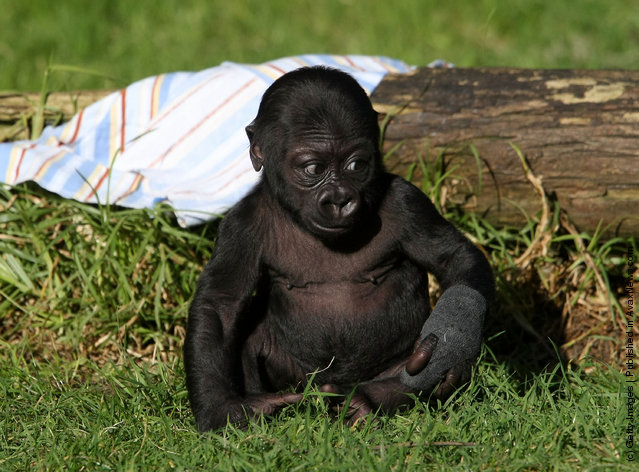
A three month-old baby gorilla named Hasani sits in the grass March 11, 2009 at the San Francisco Zoo in San Francisco, California. The newborn gorilla was given the name Hasani. Hasani's father, a twenty seven year-old gorilla named Oscar Jonsey, picked between five color coded cantaloupes representing the five name finalists to come up with the newborn's name that was submitted by Amanda VerPloeg of Oskaloosa, Iowa. (Photo by Justin Sullivan/Getty Images)
Details
30 Mar 2011 13:46:00
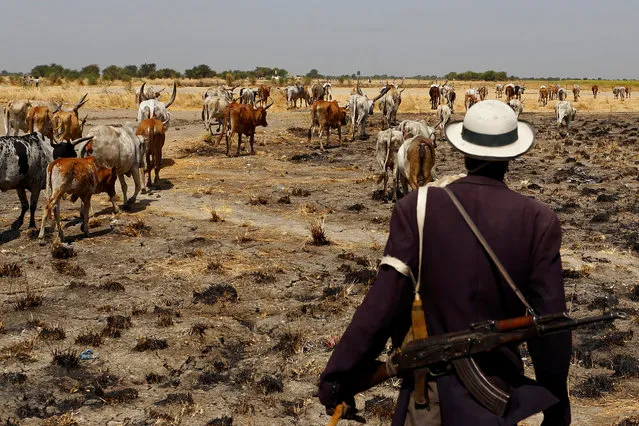
An armed man herds his cattle close to the village of Nimini in northern South Sudan, February 8, 2017. (Photo by Siegfried Modola/Reuters)

An armed man herds his cattle close to the village of Nimini in northern South Sudan, February 8, 2017. In the chaos of South Sudan's civil war, it took three years for Nyagonga Machul to find her lost children. Machul had traveled from her village to the capital when President Salva Kiir, an ethnic Dinka, fired his deputy Riek Machar, a Nuer, in 2013. (Photo by Siegfried Modola/Reuters)
Details
19 Feb 2017 00:04:00