Loading...
Done
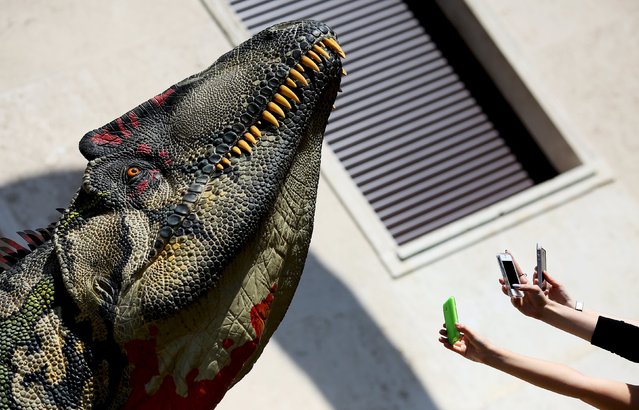
People take pictures with their mobile phone of a scale model of a dinosaur displayed in front of La Sapienza University headquarters in Rome April 10, 2015. The realistic reproductions of dinosaurs are part of the “Dinosaurs in the flesh, science and art bring to life the rulers of a lost world” exhibition. (Photo by Alessandro Bianchi/Reuters)

People take pictures with their mobile phone of a scale model of a dinosaur displayed in front of La Sapienza University headquarters in Rome April 10, 2015. The realistic reproductions of dinosaurs are part of the “Dinosaurs in the flesh, science and art bring to life the rulers of a lost world” exhibition. (Photo by Alessandro Bianchi/Reuters)
Details
11 Apr 2015 10:47:00
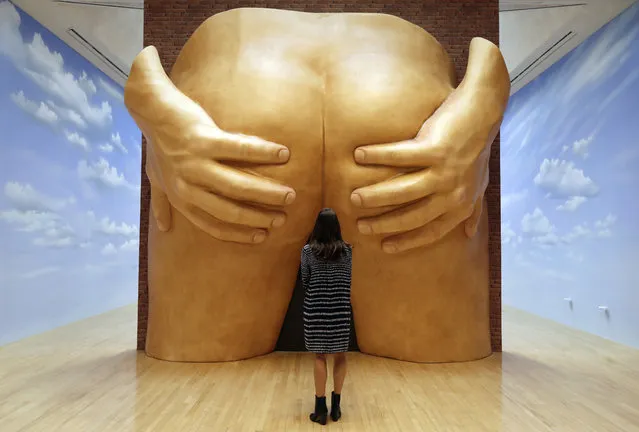
A woman looks towards part of an artwork called “Lichen! Libido! (London!) Chastity!” by Anthea Hamilton, one of the four artists shortlisted for the Turner Prize 2016, as it is displayed at the Tate Britain gallery in London, Monday, September 26, 2016. The Turner Prize aims to promote public debate around new developments in contemporary British art. (Photo by Kirsty Wigglesworth/AP Photo)

A woman looks towards part of an artwork called “Lichen! Libido! (London!) Chastity!” by Anthea Hamilton, one of the four artists shortlisted for the Turner Prize 2016, as it is displayed at the Tate Britain gallery in London, Monday, September 26, 2016. The Turner Prize aims to promote public debate around new developments in contemporary British art. (Photo by Kirsty Wigglesworth/AP Photo)
Details
27 Sep 2016 09:51:00
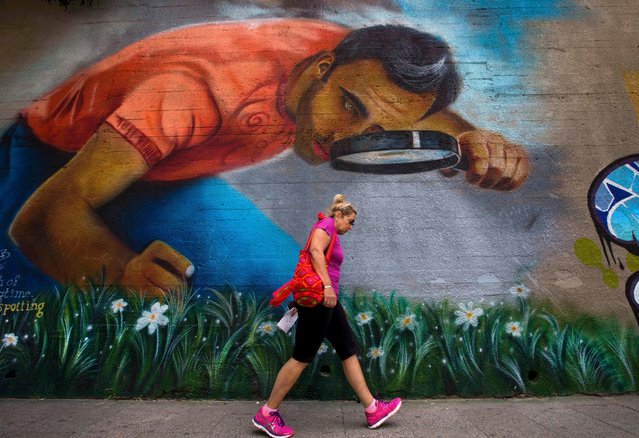
A woman walks past graffiti in Beirut, Lebanon, Wednesday, May 4, 2016. Graffiti artists have been trying to re-engage disillusioned youth in a debate about the country's latest wave of political turmoil. (Photo by Hassan Ammar/AP Photo)

A woman walks past graffiti in Beirut, Lebanon, Wednesday, May 4, 2016. Graffiti artists have been trying to re-engage disillusioned youth in a debate about the country's latest wave of political turmoil. (Photo by Hassan Ammar/AP Photo)
Details
05 May 2016 14:07:00
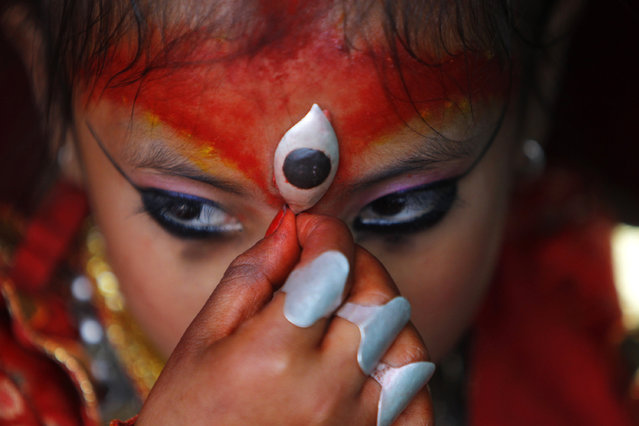
Nepal's Kumari, or living goddess, adjusts her ornament as she watches the Rato Machindranath chariot Festival in Lalitpur, Nepal, Friday, April 24, 2015. Nepal's living goddesses are young pre-pubescent girls considered by devotees to be incarnations of a Hindu goddess. Selected as toddlers, living goddesses usually keep their positions until they reach puberty. (Photo by Niranjan Shrestha/AP Photo)

Nepal's Kumari, or living goddess, adjusts her ornament as she watches the Rato Machindranath chariot Festival in Lalitpur, Nepal, Friday, April 24, 2015. Nepal's living goddesses are young pre-pubescent girls considered by devotees to be incarnations of a Hindu goddess. Selected as toddlers, living goddesses usually keep their positions until they reach puberty. (Photo by Niranjan Shrestha/AP Photo)
Details
25 Apr 2015 10:05:00
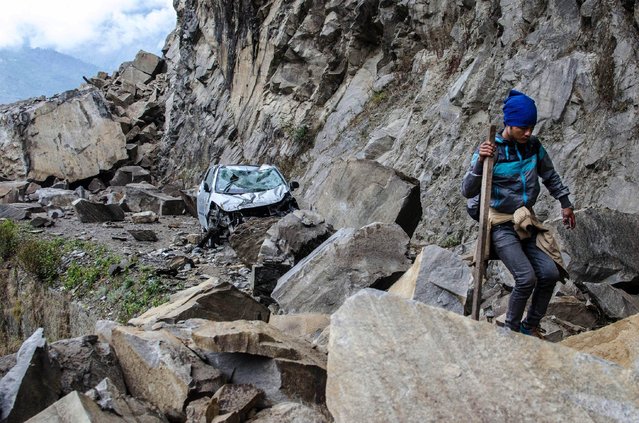
In this Monday, April 27, 2015 photo, a Nepalese man walks over fallen rocks and past a crushed car on the way to Dhunche, Nepal, a village in Langtang National Park, two days after a 7.8-magnatude earthquake hit the region. (Photo by Joe Sieder via AP Photo)

In this Monday, April 27, 2015 photo, a Nepalese man walks over fallen rocks and past a crushed car on the way to Dhunche, Nepal, a village in Langtang National Park, two days after a 7.8-magnatude earthquake hit the region. The photographer, Joe Sieder, said the man was part of a group of Nepalese workers and trekkers who left Syabrubesi earlier that day and hiked about 30 km (19 miles) for 13 hours, mostly over boulder-strewn roads with some small landslides along the way to make their way to a passable road. (Photo by Joe Sieder via AP Photo)
Details
30 Apr 2015 10:54:00
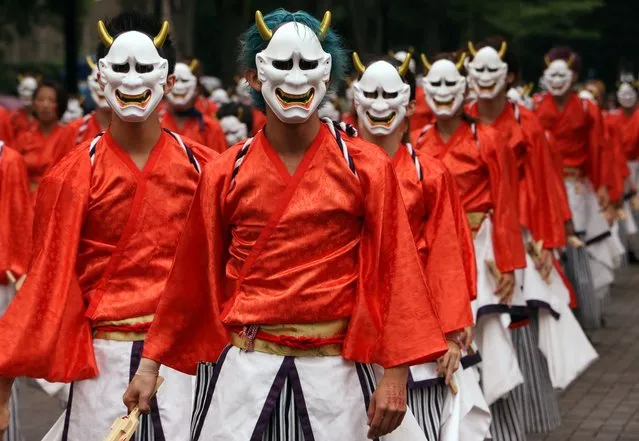
Dancers wearing masks and kimonos perform in the streets at the “Super Yosakoi 2015” dance festival in Tokyo on August 30, 2015. One hundred dance teams with some 5,500 people participated in the two-day summer festival event. (Photo by Yoshikazu Tsuno/AFP Photo)

Dancers wearing masks and kimonos perform in the streets at the “Super Yosakoi 2015” dance festival in Tokyo on August 30, 2015. One hundred dance teams with some 5,500 people participated in the two-day summer festival event. (Photo by Yoshikazu Tsuno/AFP Photo)
Details
31 Aug 2015 12:33:00
British tourists snap a cheeky selfie with a monkey at the Ubud Monkey Forest in Bali, Indonesia, August 4, 2015. George Benton, 22, from Paignton, Devon was visiting the Sacred Monkey Forest Sanctuary in Ubud, Bali whilst traveling with his girlfriend Chloe when the couple snapped a surprise shot with Balinese long-tailed monkey using a “selfie stick”. (Photo by George Benton/Splash News)

British tourists snap a cheeky selfie with a monkey at the Ubud Monkey Forest in Bali, Indonesia, August 4, 2015. George Benton, 22, from Paignton, Devon was visiting the Sacred Monkey Forest Sanctuary in Ubud, Bali whilst traveling with his girlfriend Chloe when the couple snapped a surprise shot with Balinese long-tailed monkey using a “selfie stick”. “We couldn't believe our luck when we looked back at the photos, he looked straight into the camera!” said George, who went on to reward the cheeky chap with a banana for giving the couple such a memorable photo. (Photo by George Benton/Splash News)
Details
05 Aug 2015 14:41:00
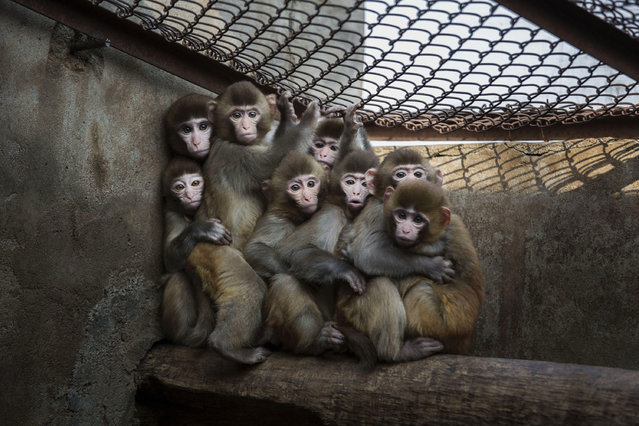
Macaque monkeys crowd together in their cage at a monkey farm on February 3, 2016 in Xinye county, Henan province, China. The area boasts a centuries-long and lucrative history of raising and training monkeys for performance. In Xinye, villagers are seeing an increase in business with the lunar calendar's “Year of the Monkey”. Farmers say most of the monkeys are bred and raised for domestic zoos, circuses, and performing groups, but add that some are also sold for medical research in China and the United States. Despite the popularity of the tradition, critics contend the training methods and conditions constitute animal cruelty. (Photo by Kevin Frayer/Getty Images)

Macaque monkeys crowd together in their cage at a monkey farm on February 3, 2016 in Xinye county, Henan province, China. The area boasts a centuries-long and lucrative history of raising and training monkeys for performance. In Xinye, villagers are seeing an increase in business with the lunar calendar's “Year of the Monkey”. Farmers say most of the monkeys are bred and raised for domestic zoos, circuses, and performing groups, but add that some are also sold for medical research in China and the United States. Despite the popularity of the tradition, critics contend the training methods and conditions constitute animal cruelty. (Photo by Kevin Frayer/Getty Images)
Details
31 Dec 2016 09:56:00