Loading...
Done
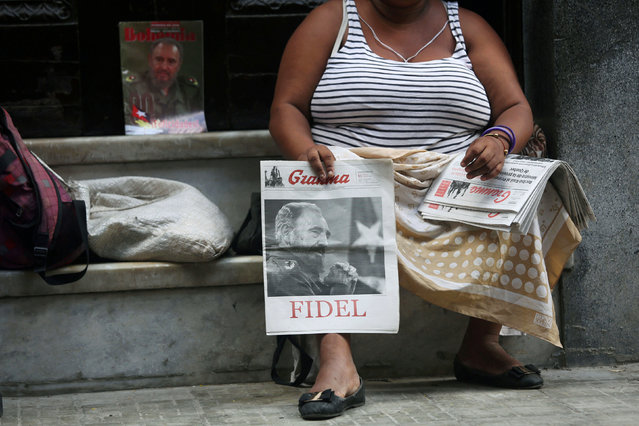
A woman sells Cuban Communist Party (PCC) official newspaper Granma with a picture of former Cuba's President Fidel Castro at the front page, at the main touristic road in Havana, Cuba, September 14, 2016. (Photo by Alexandre Meneghini/Reuters)

A woman sells Cuban Communist Party (PCC) official newspaper Granma with a picture of former Cuba's President Fidel Castro at the front page, at the main touristic road in Havana, Cuba, September 14, 2016. (Photo by Alexandre Meneghini/Reuters)
Details
14 Oct 2016 11:51:00
The National Geographic Photo Ark is a travelling exhibition of photographer Joel Sartore’s quest to create a photo archive of biodiversity around the world. So far, Sartore has captured studio portraits of more than 6,000 species – a number that he hopes to double. On 1 July, the ark will open at Melbourne zoo – the first time it has been exhibited in the southern hemisphere. More than 50 portraits will be on display, including many of Australian endangered animals being protected by programs at the zoo itself. These captions have been edited from text supplied by Melbourne zoo. Here: Barking owl. So-named because its call sounds like a barking dog, these birds are native to Australia, Indonesia and Papua New Guinea. In Victoria they are listed as an endangered species, and in 2003 there were estimated to be fewer than 50 breeding pairs. The main threat to the species in Victoria is loss of habitat, especially large trees with hollows in which they can nest and on which many of their prey depend. Apart from a bark, they may utter a chilling scream when they feel threatened. (Photo by Joel Sartore/National Geographic Photo Ark/The Guardian)

The National Geographic Photo Ark is a travelling exhibition of photographer Joel Sartore’s quest to create a photo archive of biodiversity around the world. So far, Sartore has captured studio portraits of more than 6,000 species – a number that he hopes to double. On 1 July, the ark will open at Melbourne zoo – the first time it has been exhibited in the southern hemisphere. More than 50 portraits will be on display, including many of Australian endangered animals being protected by programs at the zoo itself. These captions have been edited from text supplied by Melbourne zoo. Here: Barking owl. (Photo by Joel Sartore/National Geographic Photo Ark/The Guardian)
Details
01 Jul 2017 07:45:00
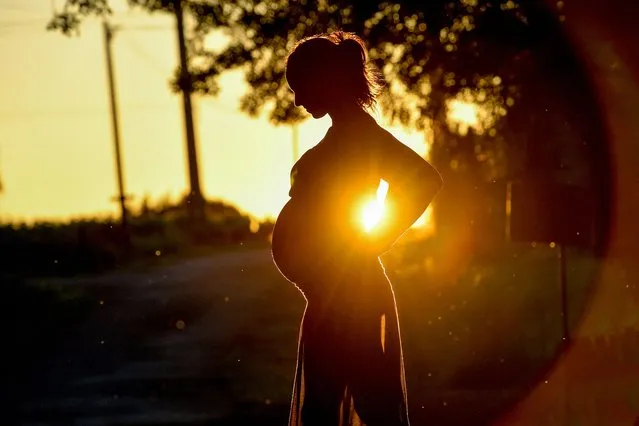
A pregnant woman poses on June 19, 2018 in Vertou, western France. France had an estimated population of 68.4 million by January 1, 2024, representing a further year-on-year increase of 0.3 percent, limited by a marked drop in the birth rate, the INSEE national statistics bureau of France reported on January 16, 2024. In 2023, 678,000 babies were born in France, 6.6 percent fewer than the previous year, the lowest number of births in any year since 1946. Over the same period, there were 631,000 deaths, down 6.5 percent on 2022, a year marked by the consequences of the Covid-19 pandemic and episodes of extreme heat. (Photo by Loic Venance/AFP Photo)

A pregnant woman poses on June 19, 2018 in Vertou, western France. France had an estimated population of 68.4 million by January 1, 2024, representing a further year-on-year increase of 0.3 percent, limited by a marked drop in the birth rate, the INSEE national statistics bureau of France reported on January 16, 2024. In 2023, 678,000 babies were born in France, 6.6 percent fewer than the previous year, the lowest number of births in any year since 1946. Over the same period, there were 631,000 deaths, down 6.5 percent on 2022, a year marked by the consequences of the Covid-19 pandemic and episodes of extreme heat. (Photo by Loic Venance/AFP Photo)

Details
27 Feb 2024 07:29:00
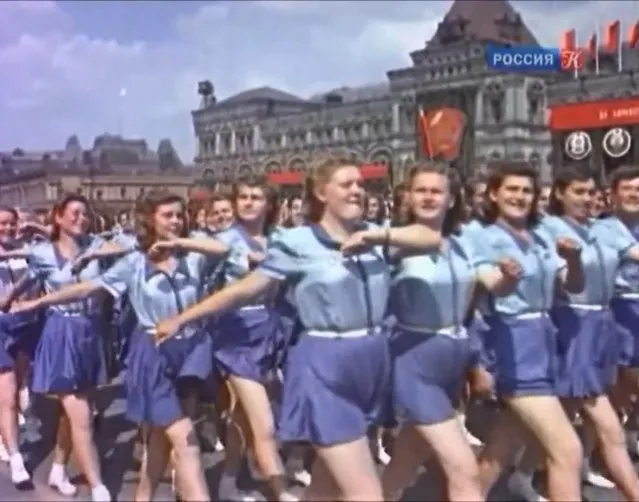
Russia – Back in the USSR

Russia – Back in the USSR. No comment.


Details
03 Sep 2014 15:40:00
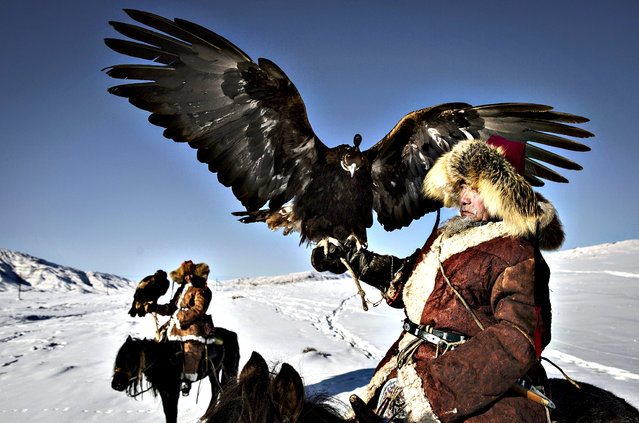
Chinese Kazakh eagle hunters sit on horseback as they travel to a local competition on January 29, 2015 in the mountains of Qinghe County, Xinjiang, northwestern China. The festival, organised by the local hunting community, is part of an effort to promote and grow traditional hunting practices for new generations in the mountainous region of western China that borders Kazakhstan, Russia and Mongolia. (Photo by Kevin Frayer/Getty Images)

Chinese Kazakh eagle hunters sit on horseback as they travel to a local competition on January 29, 2015 in the mountains of Qinghe County, Xinjiang, northwestern China. The festival, organised by the local hunting community, is part of an effort to promote and grow traditional hunting practices for new generations in the mountainous region of western China that borders Kazakhstan, Russia and Mongolia. The training and handling of the large birds of prey follows a strict set of ancient rules that Kazakh eagle hunters are preserving for future generations. (Photo by Kevin Frayer/Getty Images)
Details
07 Feb 2015 14:11:00
Spectators pose for a selfie before the running of the Melbourne Cup at the Flemington Racecourse in Melbourne, Australia, Tuesday, November 6, 2018. (Photo by Andy Brownbill/AP Photo)

Spectators pose for a selfie before the running of the Melbourne Cup at the Flemington Racecourse in Melbourne, Australia, Tuesday, November 6, 2018. (Photo by Andy Brownbill/AP Photo)
Details
06 Nov 2018 09:50:00


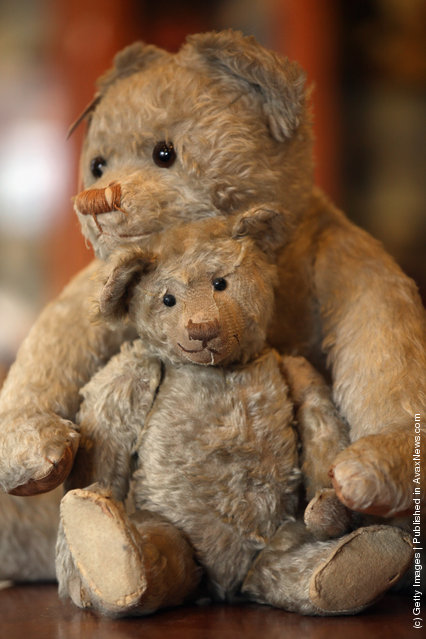
Two Teddy Bears from the 1920's sit on display in the museum section of the Merrythought Teddy Bear shop on April 5, 2011 in Ironbridge, England. Established in 1930, Merrythought has been hand-making Teddy Bears for over 80 years in Shropshire. The family-run company is the last remaining British teddy bear factory and is launching its latest limited edition bear to mark the royal wedding. The Commemorative Royal Wedding bear is limited to 75 and comes after its popular Prince William and Catherine Middleton bears completely sold out. Merrythought has also been selected by the London Olympic Games organisers to produce the official teddy bears of the London 2012 Olympic and Paralympic games. (Photo by Christopher Furlong/Getty Images)
Details
06 Apr 2011 10:27:00
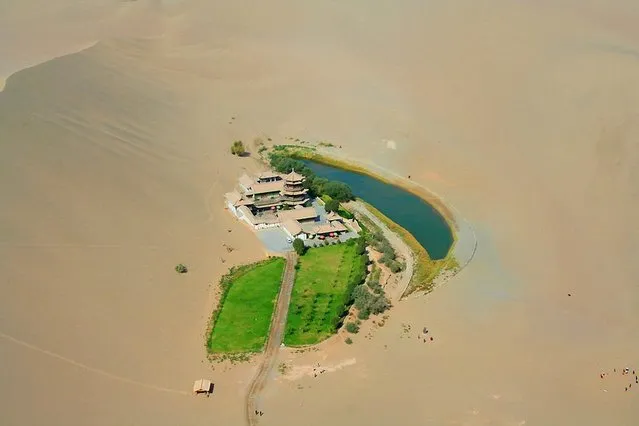
Crescent Lake In China

Yueyaquan is a crescent-shaped lake in an oasis, 6 km south of the city of Dunhuang in Gansu Province, China. It was named Yueyaquan in the Qing Dynasty. According to measurements made in 1960, the average depth of the lake was 4 to 5 meters, with a maximum depth of 7.5 metres In the following 40 years, the depth of the lake continually declined. In the early 1990s, its area had shrunk to only 5,500 m2 with an average depth of 0.9 meter (maximum 1.3 meter). In 2006, the local government with help of the central government started to fill the lake and restore its depth; its depth and size have been growing yearly since then. The lake and the surrounding deserts are very popular with tourists, who are offered camel and 4x4 rides.
Details
25 Jun 2013 10:29:00