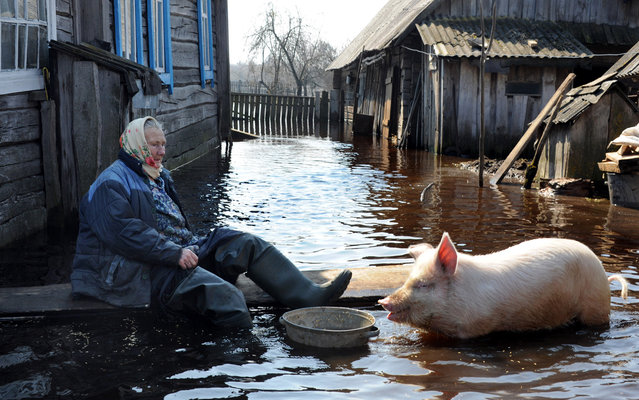
A woman feeds a pig in her yard during spring flood in the Belarus village of Snyadin near Pripyat river, some 300 km south of Minsk, on April 16, 2013. (Photo by Viktor Drachev/AFP Photo)
Russian soldiers rehearse ahead of a forthcoming parade on Red Square in Moscow on November 5, 2017 The event will take place on November 7, marking the 76 th anniversary of a 1941 parade, when Red Army soldiers marched past the Kremlin walls towards the front line to fight Nazi Germany troops during World War Two. (Photo by Mladen Antonov/AFP Photo)
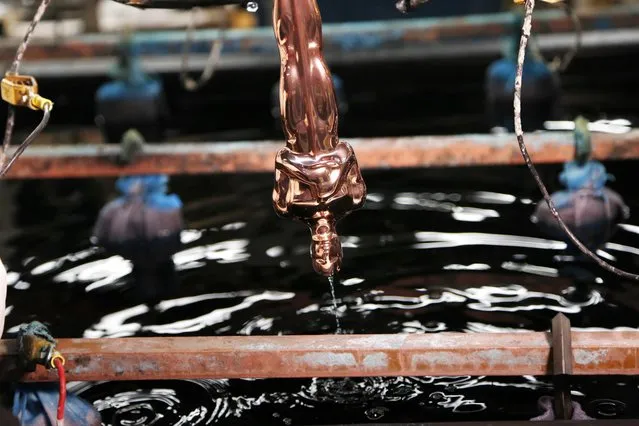
A copper plated Oscar statuette is run through a series of chemical baths at Epner Technology in the Brooklyn borough of New York, Tuesday, January 17, 2017. Every Oscar fist-pumped or tearfully cradled by Academy Award winners is first cast, buffed and fussed over by people far from Hollywood who have spent the last several months making 60 identical gold Oscars for the Feb. 26th awards. (Photo by Seth Wenig/AP Photo)
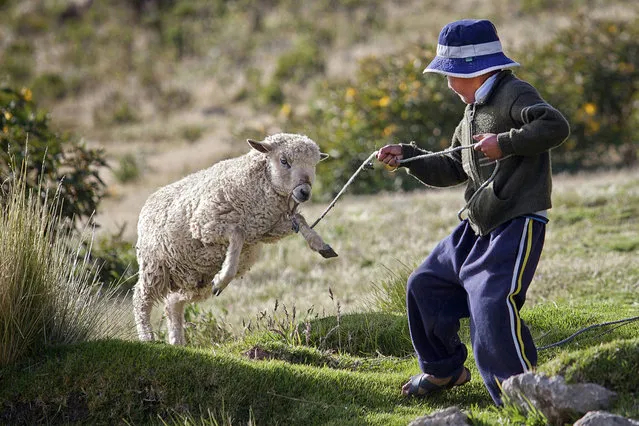
“The Challenge!” Young boy relishes in a game of tug of war before school. Photo location: Lake Titicaca, Peru. (Photo and caption by Paul Heyman/National Geographic Photo Contest)
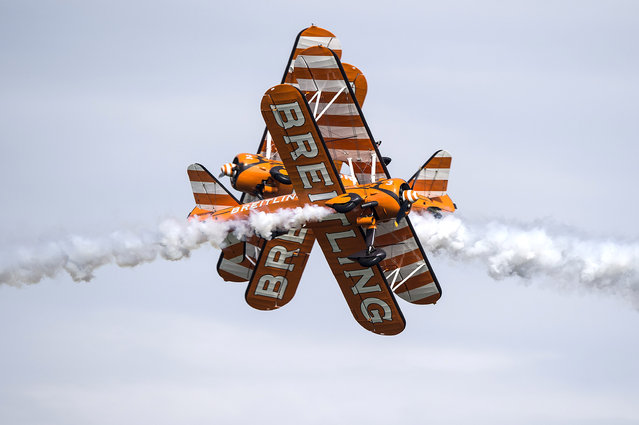
Two biplanes of the Team Breitling cross during a training flight prior the AIR14 air show in Payerne, Switzerland, August 29, 2014. (Photo by Peter Schneider/EPA)
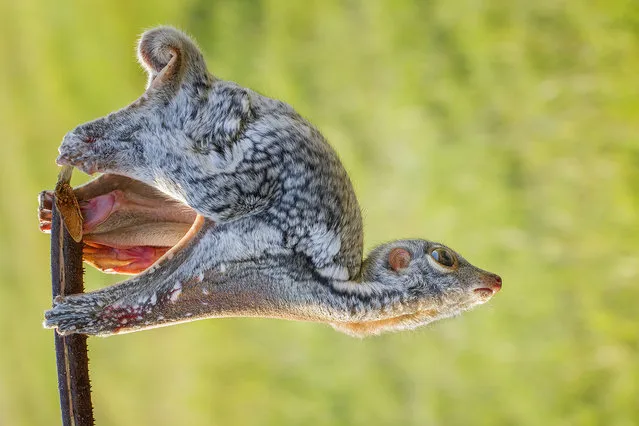
“Warming up”. This photo I capture in the early afternoon, the animal species of lemurs fly. Photo location: Sambas, West Kalimantan, Indonesia. (Photo and caption by Hendy Mp/National Geographic Photo Contest)
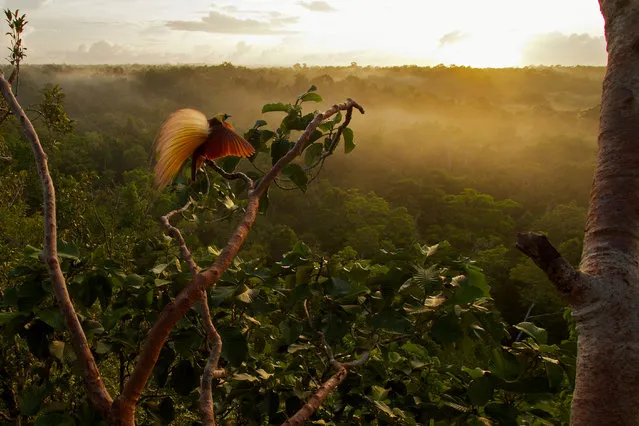
A greater bird of paradise (Paradisaea apoda) displaying in Badigaki Forest, Wokam Island (Aru Islands, Indonesia). Found here in Aru and on adjacent New Guinea, the greater bird of paradise represents about 40 different species of birds of paradise that depend on intact rainforest across the New Guinea region spanning eastern Indonesia and Papua New Guinea. With more than 80% of forest cover still intact, this region represents the largest remaining block of rainforest in the entire Asia-Pacific. (Photo by Tim Laman/naturepl.com/LDY Agency)
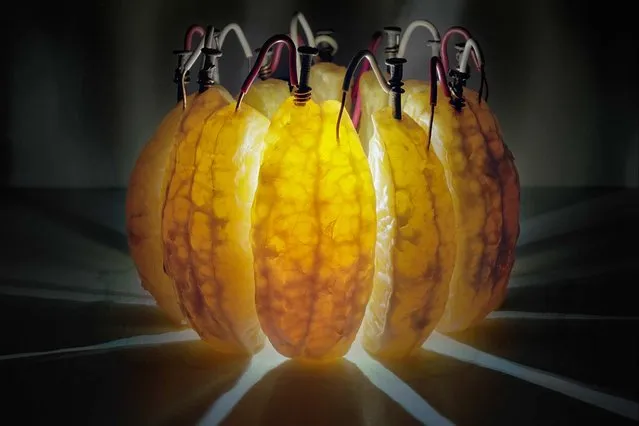
Wedges of an orange generate enough current and electrical juice – 3.5 volts – to power an LED. The fruit’s citric acid helps electrons flow from galvanized nails to copper wire in this 14-hour exposure. This image was published in September’s Visions of Earth, a trio of photos that appear in each issue of National Geographic. (Photo by Caleb Charland/National Geographic)