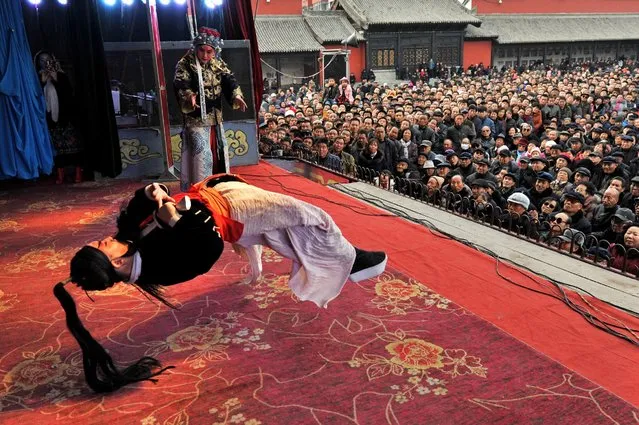
Folk artists perform at an local opera ahead of Lantern Festival to celebrate Lunar New Year, in Tianshui, Gansu province, China, February 10, 2017. (Photo by Reuters/Stringer)
Participants celebrate the awakening of the Hoppeditz, a fictional character whose return to life marks the start of the carnival season in Düsseldorf, western Germany on November 11, 2021. The 11.11. is celebrated this year again under Corona conditions in presence. However, in the carnival strongholds of Cologne and Düsseldorf, this only applies to the vaccinated and the recovered. (Photo by Federico Gambarini/dpa/Alamy Live News)
Inflatable dolls in the shape of ducks are seen in front of the National Congress during a protest against tax increases in Brasilia, Brazil, March 29, 2016. The campaign “I will not pay the Duck” is organized by the Federation of Industries of Sao Paulo (FIESP) and uses the duck symbol in reference to industries that pay high taxes. (Photo by Gregg Newton/Reuters)
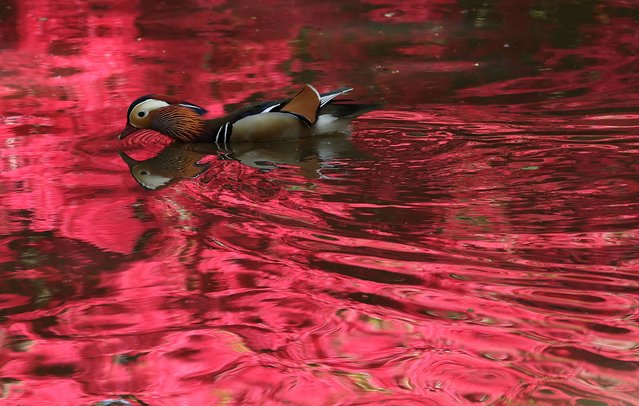
A mandarin duck swims through reflections of spring growth and blossom on a pond in Richmond Park in London, Britain on April 28, 2025. (Photo by Toby Melville/Reuters)
Veterans Day is right around the corner, so it’s nice to see that one of the time-lapses making the most impact online over the past couple of days is one showing a homeless US Army veteran being given a makeover and, in some ways, a new lease on life.
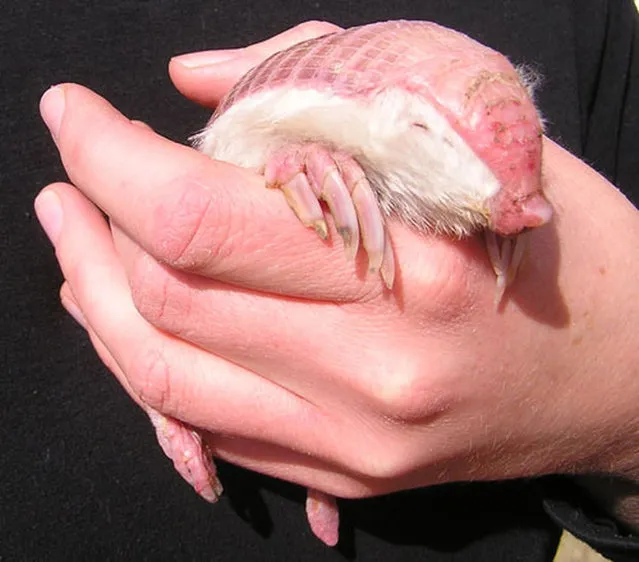
The pink fairy armadillo (Chlamyphorus truncatus) or pichiciego is the smallest species of armadillo (mammals of the family Dasypodidae, mostly known for having a bony armor shell). It is found in central Argentina, where it inhabits dry grasslands and sandy plains with thorn bushes and cacti.The pink fairy armadillo is approximately 90–115 mm (3.5-4.5 inches) long, excluding the tail, and is pale rose or pink in color. It has the ability to bury itself completely in a matter of seconds if frightened.
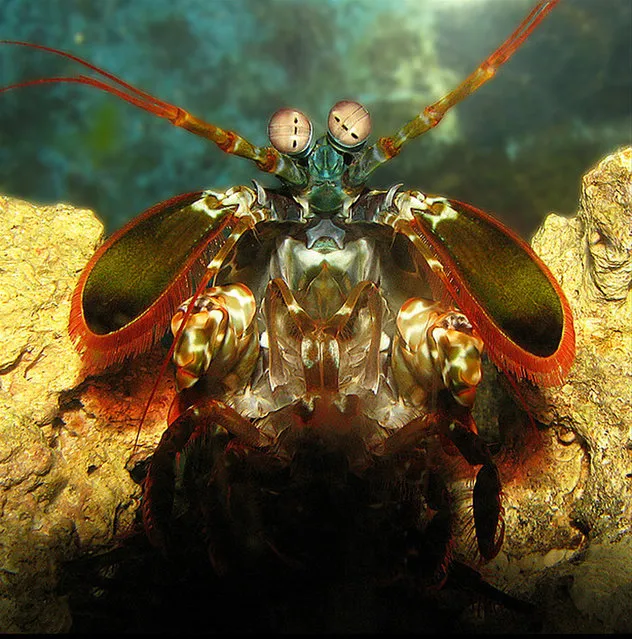
Odontodactylus scyllarus, known as the peacock mantis shrimp, harlequin mantis shrimp or painted mantis shrimp, is a large mantis shrimp native to the Indo-Pacific from Guam to East Africa.
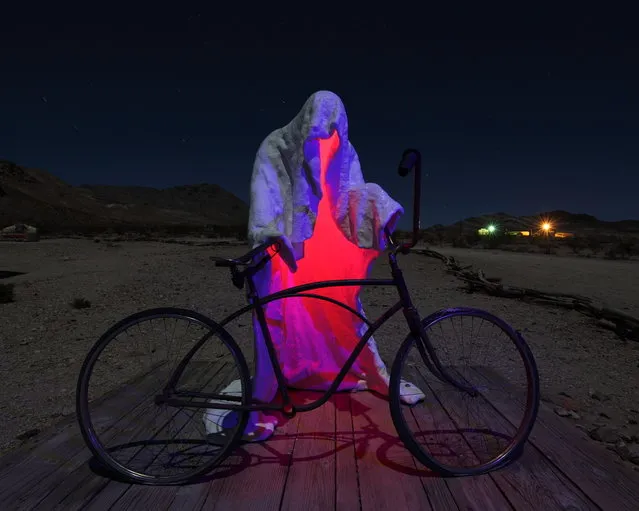
Just outside of a Nevada ghost town, Rhyolite, is the Goldwell Open Air Museum. The museum was created by a group of Belgian artists and consists of seven outdoor sculptures dramatically using the Mojae Desert as a backdrop. The Last Supper, created by the late artist Charles Szukalski, is a piece that was due to last only a couple of years but withstood time and nature since 1984. Men from the local community were covered in linen and plaster to create the eerie forms, reminiscent of Da Vinci's last supper. It is a truly unique environment and piece of art in the great American desert.