Loading...
Done

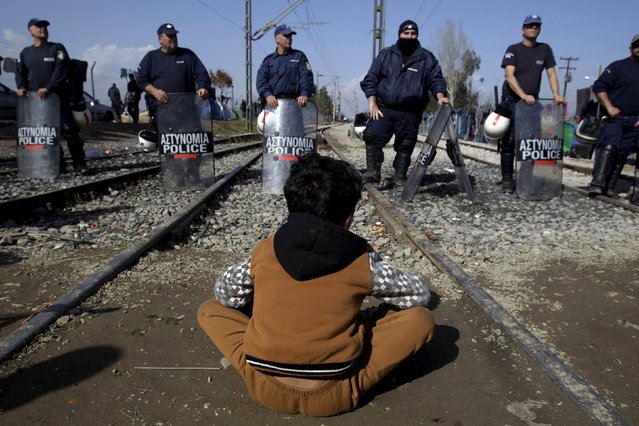
A refugee sits in front of a Greek riot police cordon during a protest at the Greek-Macedonian border, near the Greek village of Idomeni, March 1, 2016. (Photo by Alexandros Avramidis/Reuters)

A refugee sits in front of a Greek riot police cordon during a protest at the Greek-Macedonian border, near the Greek village of Idomeni, March 1, 2016. (Photo by Alexandros Avramidis/Reuters)
Details
02 Mar 2016 13:19:00
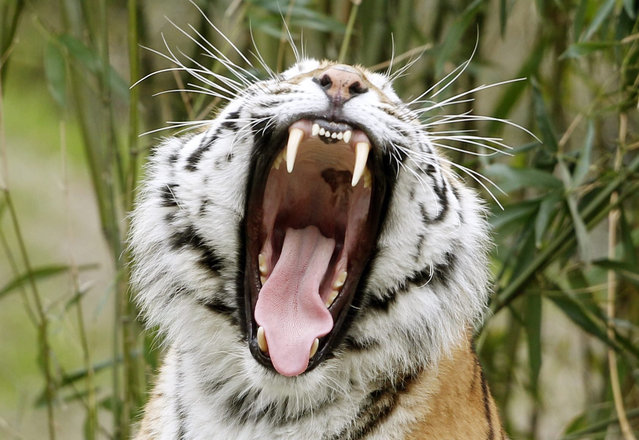
Female Siberian tiger Dasha yawns in the new enclosure at the zoo in Duisburg, Germany, 30 March 2016. The new facility is three times larger than the old one and will be opened to the public on the same day. (Photo by Roland Weihrauch/EPA)

Female Siberian tiger Dasha yawns in the new enclosure at the zoo in Duisburg, Germany, 30 March 2016. The new facility is three times larger than the old one and will be opened to the public on the same day. (Photo by Roland Weihrauch/EPA)
Details
03 Apr 2016 11:38:00
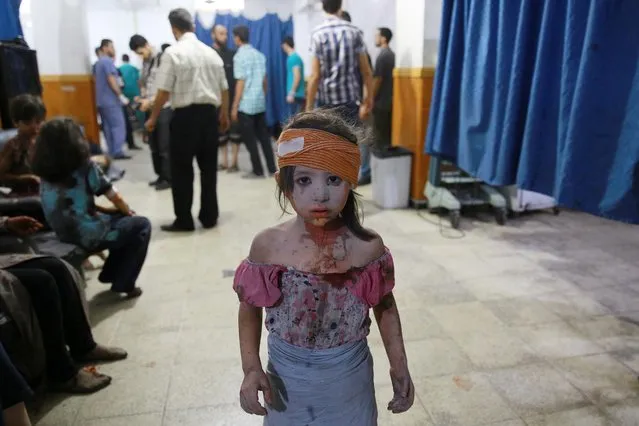
A wounded Syrian girl looks on at a make shift hospital in the rebel-held area of Douma, east of the capital Damascus, following shelling and air raids by Syrian government forces on August 22, 2015. (Photo by Abd Doumany/AFP Photo)

A wounded Syrian girl looks on at a make shift hospital in the rebel-held area of Douma, east of the capital Damascus, following shelling and air raids by Syrian government forces on August 22, 2015. At least 20 civilians and wounded or trapped 200 in Douma, a monitoring group said, just six days after regime air strikes killed more than 100 people and sparked international condemnation of one of the bloodiest government attacks in Syria's war. (Photo by Abd Doumany/AFP Photo)
Details
25 Aug 2015 10:52:00
Reverse Side Of A Mother’s Love By Anna Radchenko

Photographer Anna Radchenko explores this theme in her project “Reverse Side of a Mother’s Love,” where mother love becomes more than just mother-daughter relationship and causes some strange feelings. She visualizes, sadly, typical psychological problems in parent-child relationship: unrealized wishes of the parents, excessive strictness, total control and overprotection.
Details
08 May 2014 11:07:00
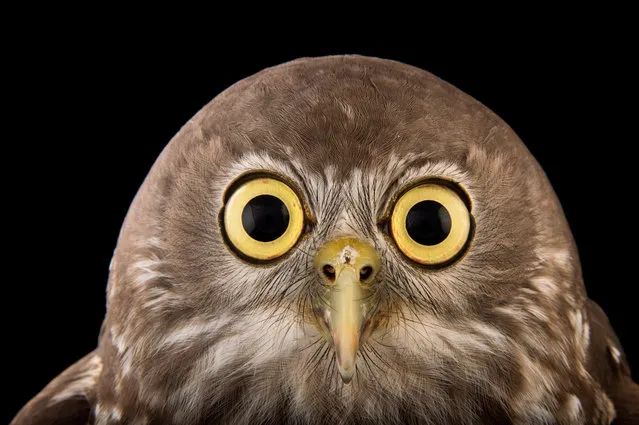
The National Geographic Photo Ark is a travelling exhibition of photographer Joel Sartore’s quest to create a photo archive of biodiversity around the world. So far, Sartore has captured studio portraits of more than 6,000 species – a number that he hopes to double. On 1 July, the ark will open at Melbourne zoo – the first time it has been exhibited in the southern hemisphere. More than 50 portraits will be on display, including many of Australian endangered animals being protected by programs at the zoo itself. These captions have been edited from text supplied by Melbourne zoo. Here: Barking owl. So-named because its call sounds like a barking dog, these birds are native to Australia, Indonesia and Papua New Guinea. In Victoria they are listed as an endangered species, and in 2003 there were estimated to be fewer than 50 breeding pairs. The main threat to the species in Victoria is loss of habitat, especially large trees with hollows in which they can nest and on which many of their prey depend. Apart from a bark, they may utter a chilling scream when they feel threatened. (Photo by Joel Sartore/National Geographic Photo Ark/The Guardian)

The National Geographic Photo Ark is a travelling exhibition of photographer Joel Sartore’s quest to create a photo archive of biodiversity around the world. So far, Sartore has captured studio portraits of more than 6,000 species – a number that he hopes to double. On 1 July, the ark will open at Melbourne zoo – the first time it has been exhibited in the southern hemisphere. More than 50 portraits will be on display, including many of Australian endangered animals being protected by programs at the zoo itself. These captions have been edited from text supplied by Melbourne zoo. Here: Barking owl. (Photo by Joel Sartore/National Geographic Photo Ark/The Guardian)
Details
01 Jul 2017 07:45:00
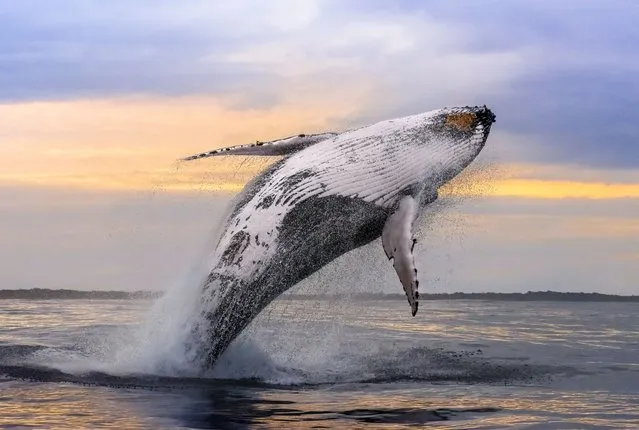
A 40-tonne humpback launching out of the water in an incredible breach in New South Wales, Australia on October 2022 in front of a sunset. The humpback whale can grow up to 56 feet long and typically covers 9,900 miles a year as it travels through the oceans of the world. Humpback whales are a species of Baleen whale, meaning they don't have teeth. Instead, they have baleen which helps them to filter feed. Their main source of food is krill or tiny bait fish. (Photo by Jodie Lowe/Media Drum Images)

A 40-tonne humpback launching out of the water in an incredible breach in New South Wales, Australia on October 2022 in front of a sunset. The humpback whale can grow up to 56 feet long and typically covers 9,900 miles a year as it travels through the oceans of the world. Humpback whales are a species of Baleen whale, meaning they don't have teeth. Instead, they have baleen which helps them to filter feed. Their main source of food is krill or tiny bait fish. (Photo by Jodie Lowe/Media Drum Images)
Details
30 Oct 2022 04:28:00
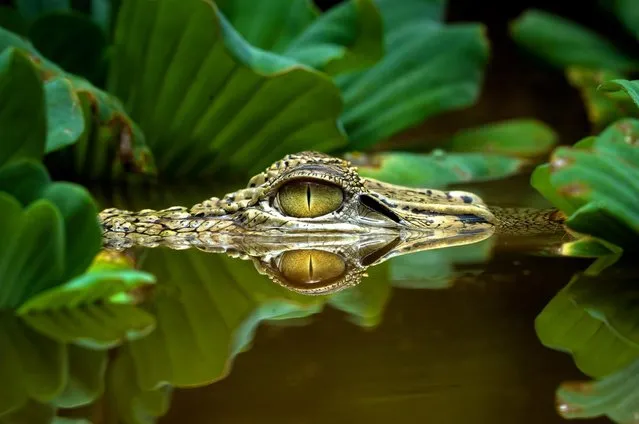
Patience paid off for the photographer who waited for hours to catch a crocodile on Java, the largest Indonesian island in March 2023. (Photo by Tanto Yensen/Solent News)

Patience paid off for the photographer who waited for hours to catch a crocodile on Java, the largest Indonesian island in March 2023. (Photo by Tanto Yensen/Solent News)
Details
09 Apr 2023 05:12:00
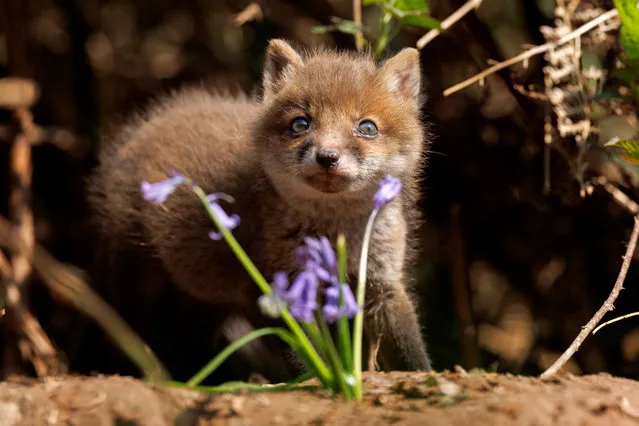
A fox cub with some bluebells in some woodland at Wye Valley near Gloucester, United Kingdom on April 29, 2023. (Photo by Thomas Winstone/Picture Exclusive)

A fox cub with some bluebells in some woodland at Wye Valley near Gloucester, United Kingdom on April 29, 2023. (Photo by Thomas Winstone/Picture Exclusive)
Details
21 May 2023 04:10:00