Loading...
Done
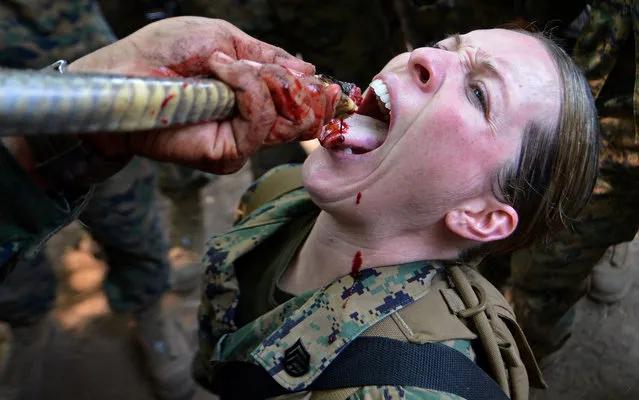
In a military base in the Thai province of Chon Buri February 20 U.S. Marines Navy with Thailand began their studies in jungle survival. The event is held in joint military exercises “Cobra Gold 2013”. During a jungle survival program February 20, 2013 taught by Royal Thai Special Forces in Sannapit, Thailand, U.S. Marines learned to catch cobras and drink their fresh blood, not to mention eat forest insects and pull the heads off of chicken. The training was part of Operation Cobra Gold 13, the 32nd edition of international military exercises hosted by the Thai. According to a U.S. Marines press release, Cobra Gold is the largest exercise of its kind in Asia and incorporates troops from five other nations in addition to the U.S. and Thailand. The Daily Mail reports that the Marines were invited to experience the local custom of drinking cobra blood after being taught to catch and kill cobras in the wild. As CNN notes, Cobra blood is believed to be a panacea and aphrodiasic in parts of Southeast Asia. In Jakarta, vendors can earn over $100 a night selling shots of cobra blood mixed with liquor. (Photo by Pornchai Kittiwongsakul/AFP Photo)

During a jungle survival program February 20, 2013 taught by Royal Thai Special Forces in Sannapit, Thailand, U.S. Marines learned to catch cobras and drink their fresh blood, not to mention eat forest insects and pull the heads off of chicken. The training was part of Operation Cobra Gold 13, the 32nd edition of international military exercises hosted by the Thai. According to a U.S. Marines press release, Cobra Gold is the largest exercise of its kind in Asia and incorporates troops from five other nations in addition to the U.S. and Thailand. The Daily Mail reports that the Marines were invited to experience the local custom of drinking cobra blood after being taught to catch and kill cobras in the wild. As CNN notes, Cobra blood is believed to be a panacea and aphrodiasic in parts of Southeast Asia. In Jakarta, vendors can earn over $100 a night selling shots of cobra blood mixed with liquor. (Photo by Pornchai Kittiwongsakul/AFP Photo)
Details
23 Feb 2013 11:52:00
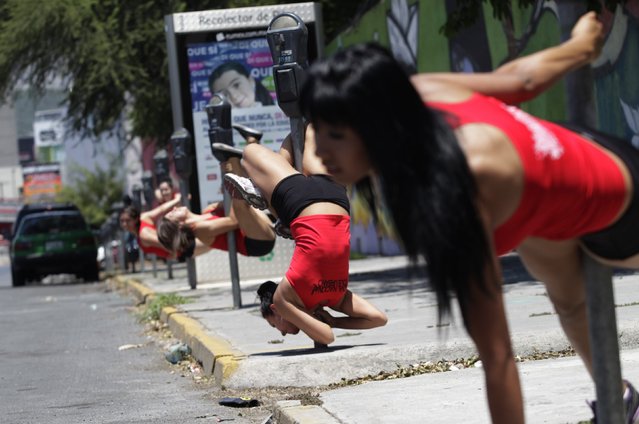
Women perform a pole dancing routine during the national day celebration of “Urban Pole” dance along a street in Monterrey, Mexico, on June 9, 2013. (Photo by Daniel Becerril/Reuters)

Women perform a pole dancing routine during the national day celebration of “Urban Pole” dance along a street in Monterrey, Mexico, on June 9, 2013. (Photo by Daniel Becerril/Reuters)
Details
15 Jun 2013 11:21:00
A illegal gold miner of Kamoro people, Tinus, pan for gold on February 4, 2017 in Timika, Papua Province, Indonesia. (Photo by Ulet Ifansasti/Getty Images)

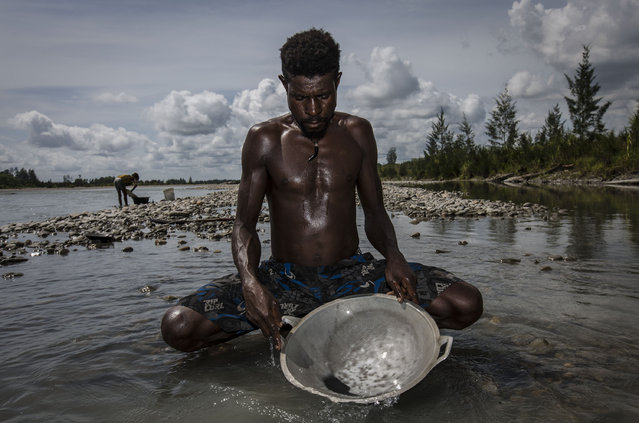
A illegal gold miner of Kamoro people, Tinus, pan for gold on February 4, 2017 in Timika, Papua Province, Indonesia. Indonesia produces over 70 billion dollars in gold a year and is home to the largest gold mine and the third largest copper mine in the world, the Grasberg mine, which is located at West Papua. (Photo by Ulet Ifansasti/Getty Images)
Details
09 Feb 2017 00:05:00
In this August 31, 2017, photo, mock fish are displayed to offer to the ancestors during the “Hungry Ghost Festival” in Hong Kong. (Photo by Kin Cheung/AP Photo)

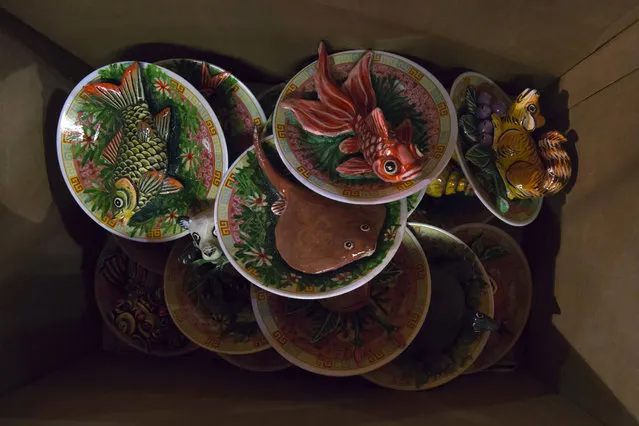
In this August 31, 2017, photo, mock fish are displayed to offer to the ancestors during the “Hungry Ghost Festival” in Hong Kong. Countless hungry and restless ghosts are roaming Hong Kong, and the world, to visit their living ancestors, at least according to Chinese convention. In traditional Chinese belief, the seventh month of the lunar year is reserved for the Hungry Ghost festival, or Yu Lan, a raucous celebration marked by feasts and music. (Photo by Kin Cheung/AP Photo)
Details
05 Sep 2017 09:22:00
In this Wednesday, August 2, 2017 photo, Borre, an 8-year-old cat sits in a basket next to the canal on the Catboat shelter in Amsterdam, Netherlands. (Photo by Muhammed Muheisen/AP Photo)

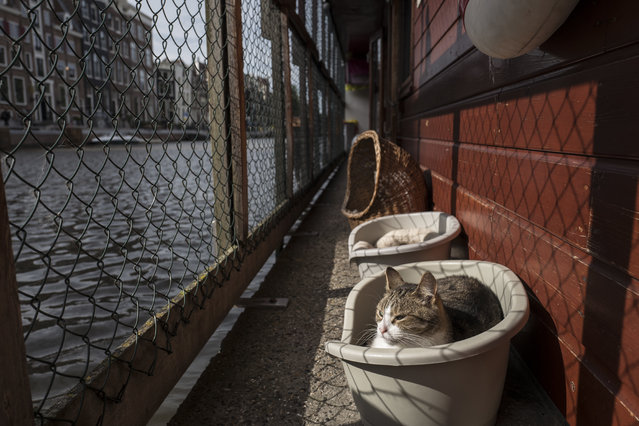
In this Wednesday, August 2, 2017 photo, Borre, an 8-year-old cat sits in a basket next to the canal on the Catboat shelter in Amsterdam, Netherlands. In the heart of the Dutch capital, on a canal near one of the busiest shopping streets, a floating animal sanctuary called The Catboat provides refuge for about 50 stray and abandoned felines. (Photo by Muhammed Muheisen/AP Photo)
Details
09 Aug 2017 07:31:00
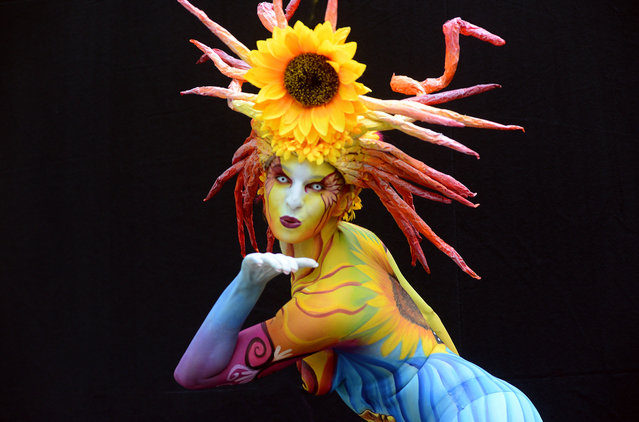
A model poses with her bodypainting designed by bodypainting artist Arianna Barlini from Italy, in the 2016 World Bodypainting Festival, 2016 in Poertschach am Woerthersee, Austria. (Photo by Didier Messens/Getty Images)

A model poses with her bodypainting designed by bodypainting artist Arianna Barlini from Italy, in the 2016 World Bodypainting Festival, 2016 in Poertschach am Woerthersee, Austria. (Photo by Didier Messens/Getty Images)
Details
07 Jul 2016 11:06:00
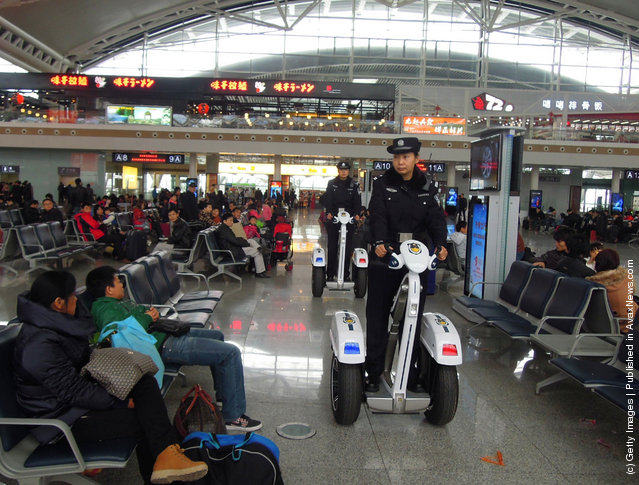
Police women ride Segways as they patrol at Guangzhou South Railway Station in Guangzhou, China

Police women ride Segways as they patrol at Guangzhou South Railway Station on Jaunary 4, 2012 in Guangzhou, China. (Photo by ChinaFotoPress/ChinaFotoPress via Getty Images)
Details
04 Jan 2012 14:14:00
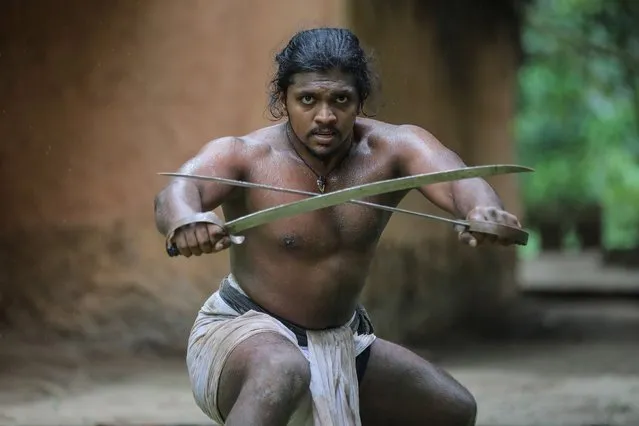
A student of the Sri Lankan ancient martial art “Angampora” performs during a practice session at the angam maduwa or fighting field, in Korathota, a suburb of Colombo, Sri Lanka, 07 September 2022. Sri Lanka's ancient martial art, Angampora, is thought to be thousands of years old. Anga translates to “body parts” and Angampora is a fighting art that uses body parts. Martial arts practitioners in Angampora were mostly in the king's service, and they were tasked with protecting the king and his kingdom. Angampora was practiced in secret for most centuries because the British, who colonized Sri Lanka, banned it in 1818 after seeing it as a threat. (Photo by Chamila Karunarathne/EPA/EFE)

A student of the Sri Lankan ancient martial art “Angampora” performs during a practice session at the angam maduwa or fighting field, in Korathota, a suburb of Colombo, Sri Lanka, 07 September 2022. Sri Lanka's ancient martial art, Angampora, is thought to be thousands of years old. Anga translates to “body parts” and Angampora is a fighting art that uses body parts. Martial arts practitioners in Angampora were mostly in the king's service, and they were tasked with protecting the king and his kingdom. Angampora was practiced in secret for most centuries because the British, who colonized Sri Lanka, banned it in 1818 after seeing it as a threat. (Photo by Chamila Karunarathne/EPA/EFE)
Details
14 Oct 2022 04:47:00