Loading...
Done
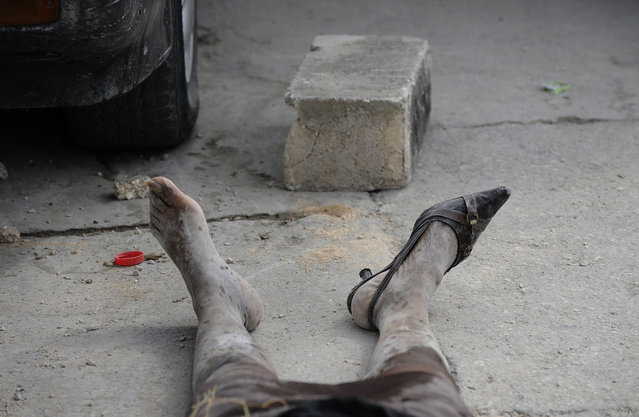
In this photo submitted by the Washington Post tilted “The Moment Time Stopped”, survivors piled bodies of the dead outside for weeks after earthquake on January 14, 2010 in Port-au-Prince, Haiti. The Washington Post has won a Pulitzer Prize for breaking news photography on Monday, April 18, 2011 for images taken in Haiti following the earthquake there.(Photo by Carol Guzy/AP Photo/The Washington Post)

In this photo submitted by the Washington Post tilted “The Moment Time Stopped”, survivors piled bodies of the dead outside for weeks after earthquake on January 14, 2010 in Port-au-Prince, Haiti. The 7.0 magnitude earthquake struck in 2010, and the Haitian government has said more than 300,000 people were killed. The exact toll is unknown because there was no systematic effort to count bodies among the chaos and destruction. (Photo by Carol Guzy/AP Photo/The Washington Post)
Details
13 Jan 2015 14:17:00
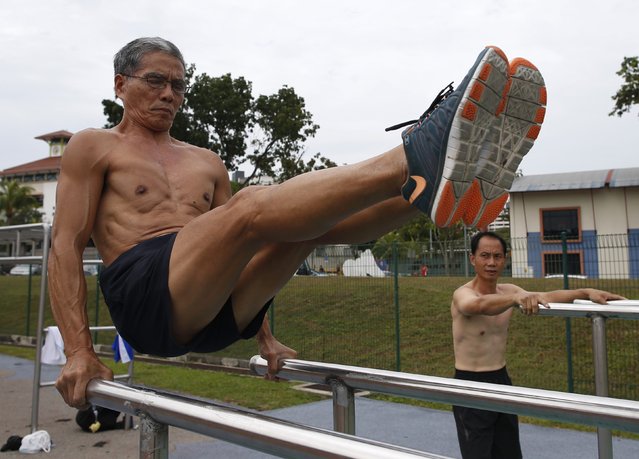
Team Strong Silvers member Ngai Hin Kwok, 66, works out as teammate Ng Siu Chi, 57, watches at a stadium in Singapore March 15, 2015. Team Strong Silvers, is a group of senior citizens who train in calisthenics. The trio trains individually at least three times a week, and meets up for joint calisthenics at least twice a month. (Photo by Edgar Su/Reuters)

Team Strong Silvers member Ngai Hin Kwok, 66, works out as teammate Ng Siu Chi, 57, watches at a stadium in Singapore March 15, 2015. Team Strong Silvers, is a group of senior citizens who train in calisthenics. The trio trains individually at least three times a week, and meets up for joint calisthenics at least twice a month. (Photo by Edgar Su/Reuters)
Details
16 Mar 2015 10:25:00
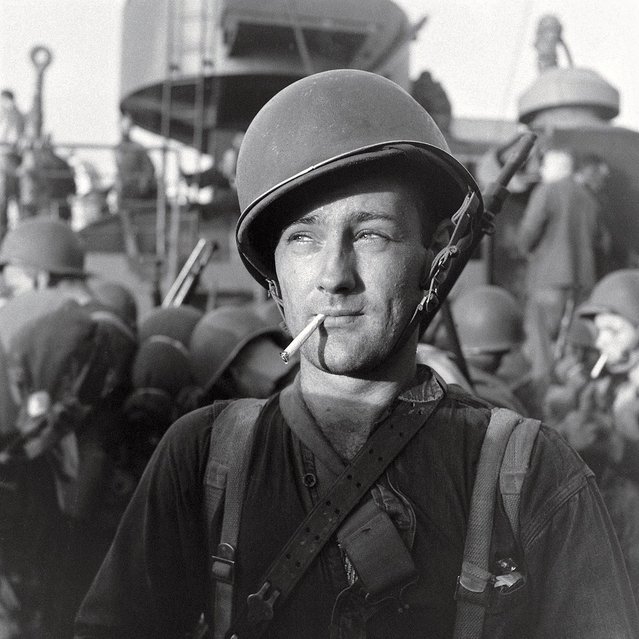
An American Marine readies to land on Guadalcanal during the five-month struggle for the island between late 1942 and early 1943. Three thousand miles south of Tokyo, Guadalcanal was a major shipping point for military supplies. The Allied victory there in February, 1943, marked a major turning point in the war after a string of Japanese victories in the Pacific. (Photo by Joe Scherschel/Time & Life Pictures)

An American Marine readies to land on Guadalcanal during the five-month struggle for the island between late 1942 and early 1943. Three thousand miles south of Tokyo, Guadalcanal was a major shipping point for military supplies. The Allied victory there in February, 1943, marked a major turning point in the war after a string of Japanese victories in the Pacific. (Photo by Joe Scherschel/Time & Life Pictures)
Details
10 Mar 2013 12:50:00
Undated handout photo issued by Guinness World Records of Fabio Reggiani from Italy who has made it into the Guinness Book of World Records for constructing the worlds largest rideable motorcycle measuring 5.10 meters (16ft 8.78 in) from the ground to the top of the handlebars. Six times larger than a normal motorcycle, it's 10.03 m long, 2.5 m wide, and weighs approximately 5,000 kg (5 tonnes). (Photo by Guinness World Records/PA Wire)

Undated handout photo issued by Guinness World Records of Fabio Reggiani from Italy who has made it into the Guinness Book of World Records for constructing the worlds largest rideable motorcycle measuring 5.10 meters (16ft 8.78 in) from the ground to the top of the handlebars. Six times larger than a normal motorcycle, it's 10.03 m long, 2.5 m wide, and weighs approximately 5,000 kg (5 tonnes). (Photo by Guinness World Records/PA Wire)
Details
14 Sep 2013 11:39:00
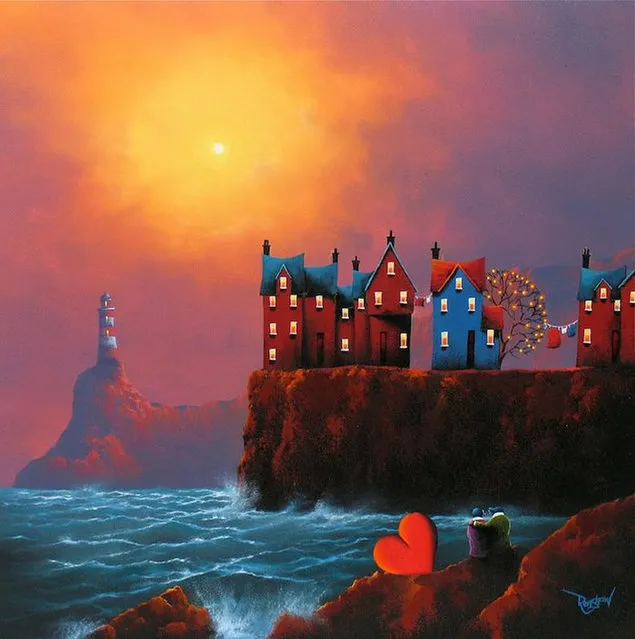
A Northern Romance Series By David Renshaw

Lovely is the correct work to describe this beautiful paintings series by David Renshaw from “Ted n’ Doris – A Northern Romance”. “Deep down I always knew what I wanted to do for a living and in my school years I remember my father teaching me some basic elements of drawing and I dreamed of one day becoming an artist. Being only really interested in art I left school and studied Graphic Design, after which I started work at a local art gallery as a picture framer. I continued to paint alongside my job, mainly developing techniques and ideas and in 2005 decided it was time to follow my dreams and dedicate myself to painting full time. I always try to make my work feel atmospheric, and I like to pay particular attention to sky and cloud formations as I consider this element of my work to be extremely important to the mood of the finished painting, whether it be a dramatic sunset or a misty moonlit night.”
Details
19 Oct 2013 11:48:00
Bao Bao, the Giant Panda cub is seen by the media for the first time January 6, 2014 inside his glass enclosure at the Smithsonian's National Zoo in Washington, DC, a few days before going on display to the general public. Bao Bao was born at the Smithsonian's National Zoo August 2, 2013. (Photo by Paul J. Richards/AFP Photo)

Bao Bao, the Giant Panda cub is seen by the media for the first time January 6, 2014 inside his glass enclosure at the Smithsonian's National Zoo in Washington, DC, a few days before going on display to the general public. Bao Bao was born at the Smithsonian's National Zoo August 2, 2013. (Photo by Paul J. Richards/AFP Photo)
Details
07 Jan 2014 08:58:00
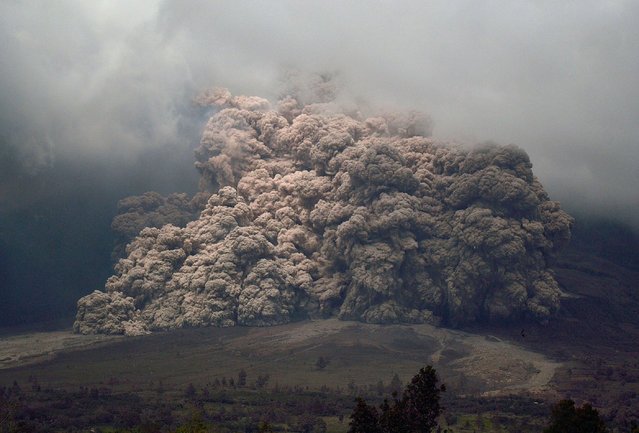
Sinabung mount spews ash to the air during an eruption near from Karo, North Sumatra on January 7, 2014. An Indonesian volcano that has erupted relentlessly for months shot volcanic ash into the air 30 times on January 4, forcing further evacuations with more than 20,000 people now displaced, an official said. (Photo by Sutanta Aditya/AFP Photo)

Sinabung mount spews ash to the air during an eruption near from Karo, North Sumatra on January 7, 2014. An Indonesian volcano that has erupted relentlessly for months shot volcanic ash into the air 30 times on January 4, forcing further evacuations with more than 20,000 people now displaced, an official said. (Photo by Sutanta Aditya/AFP Photo)
Details
09 Jan 2014 09:33:00
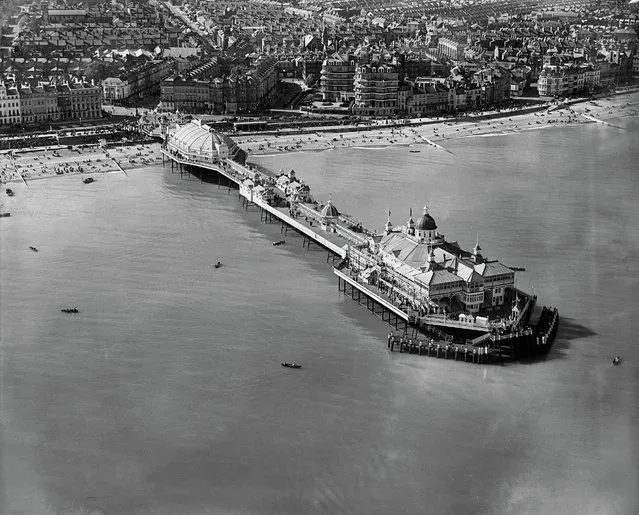
While the lido was described as bringing “modernism to the masses” on the British coast it was just the latest example of a trend that had been developing since Victorian times – transforming seaside towns into resorts for leisure and entertainment. In the latter half of the nineteenth century, the fashion was for local authorities to build great piers stretching from the promenade out into the sea

While the lido was described as bringing “modernism to the masses” on the British coast it was just the latest example of a trend that had been developing since Victorian times – transforming seaside towns into resorts for leisure and entertainment. In the latter half of the nineteenth century, the fashion was for local authorities to build great piers stretching from the promenade out into the sea. The Eastbourne Pier, pictured here in May 1931, was erected between 1866 and 1870 to an ingenious design by Eugenius Birch, which saw the structure sitting on special cups allowing the supporting struts to “move” in bad weather. Arranged on the pier's 1,000-foot length were kiosks, a theatre, a ballroom and a camera obscura. 1931. (Photo by Aerofilms Collection via “A History of Britain From Above”)
Details
25 Feb 2014 12:59:00