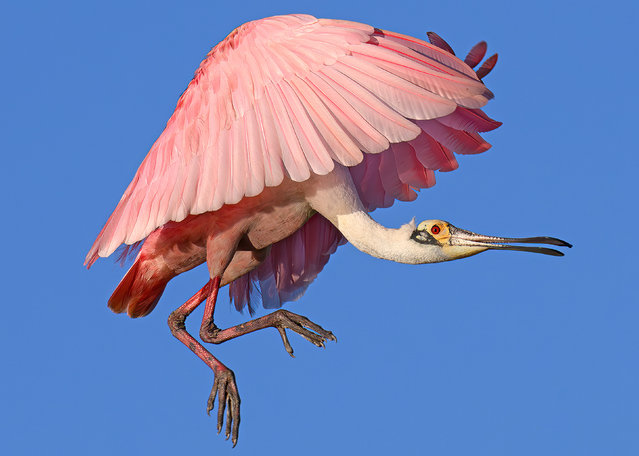
A spoonbill appears to creep across the sky as it comes in to land on a nearby branch in the Orlando Wetlands, Florida in the second decade of June 2024. (Photo by Deborah Sandidge/Solent News)
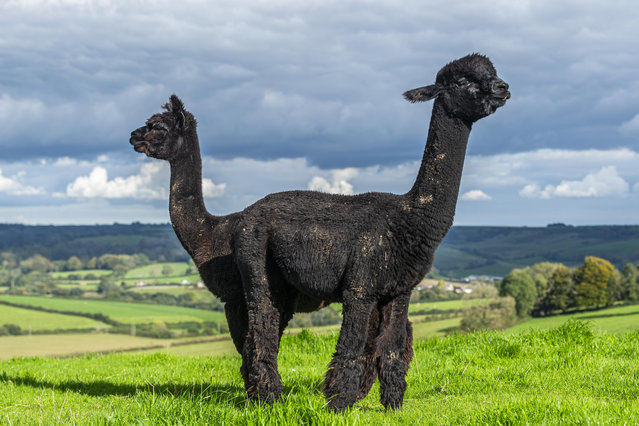
A pair of alpacas at a British farm in Dorchester, Dorset on October 9, 2024 pose together at the perfect time to conjure up a creature straight out of Dr Dolittle's imagination. (Phoot by MaxWillcock/Bournemouth News)
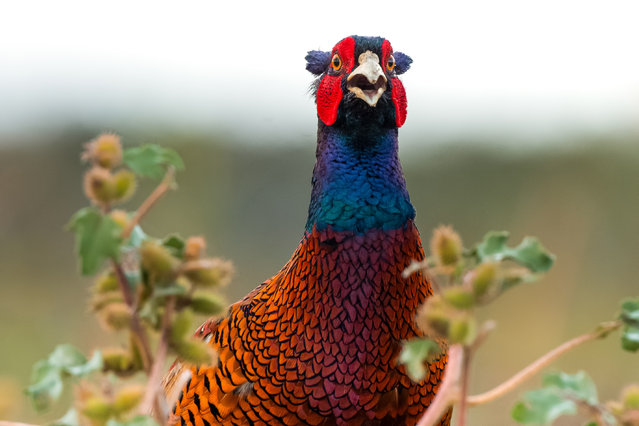
A pheasant is seen among grasses in Bursa, Turkiye on October 07, 2024. Pheasants mostly live in forested areas, thickets and wetlands. Unlike females, male pheasants have a much more remarkable structure with their long tails and feathers in bright and variable colors. Also, they feed on fruits, grains, seeds and invertebrates. (Photo by Alper Tuydes/Anadolu via Getty Images)
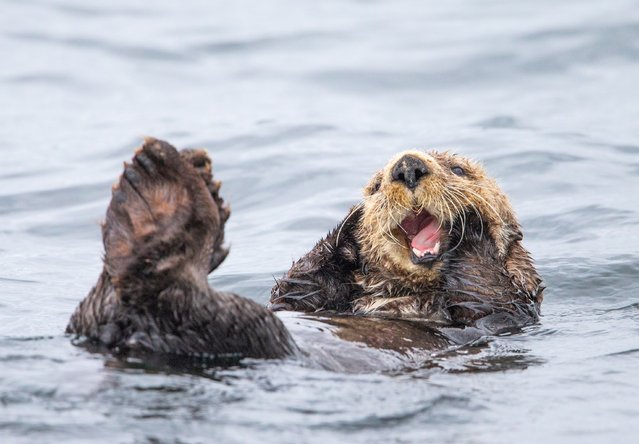
A sea otter in the Great Bear Rainforest, off the Pacific coast of British Columbia, Canada in the second decade of December 2024, appeared to be enjoying a relaxing swim as it preened its fur, the densest of any mammal. (Photo by Max Waugh/Solent News & Photo Agency)
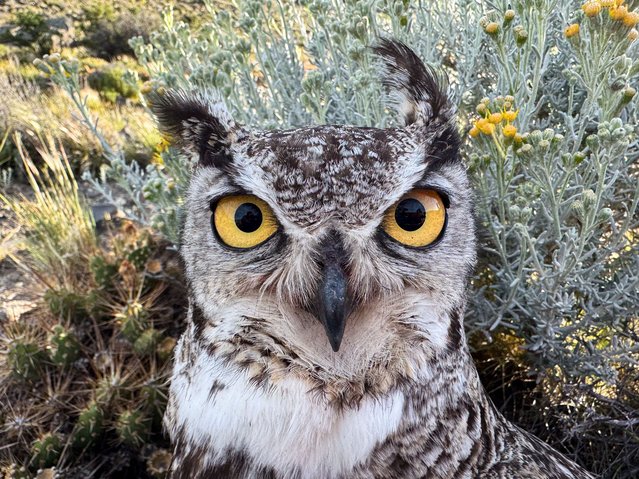
Lesser Horned Owl (Bubo magellanicus) is seen at the meadows of Patagonian valley in Santa Cruz, Argentina on December 21, 2024. Lesser Horned Owl is a large owl of the genus Bubo found in southern South America, with its distinctive “horns”, black-rimmed face and heavily striped abdomen. (Photo by Mehmet Emin Yogurtcuoglu/Anadolu via Getty Images)
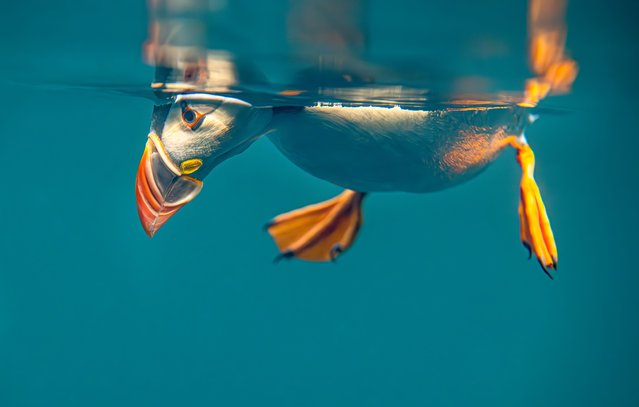
A puffin swims underwater in search for fish off the coast of the Farne Islands in Northumberland, North East England in the last decade of July 2025. (Photo by Brian Matthews/Solent News & Photo Agency)
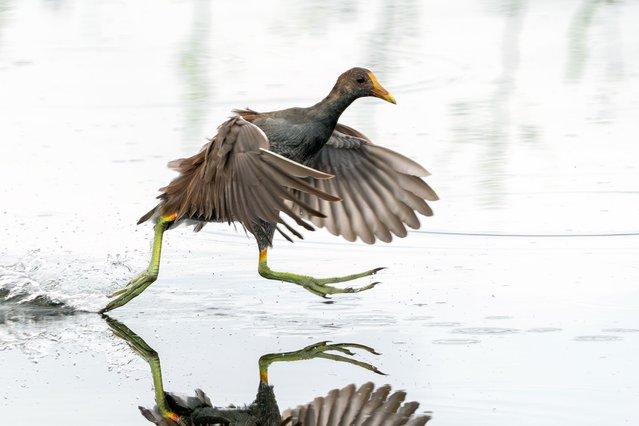
A common gallinule runs across the water to escape a nearby alligator at Green Cay Nature Center in Boynton Beach, Florida on September 4, 2025. Unlike most waterbirds, gallinules have long toes that allow them to walk on floating vegetation. The species is known for its loud, cackling calls that often echo through wetlands. (Photo by Ronen Tivony/NurPhoto/Rex Features/Shutterstock)