Loading...
Done
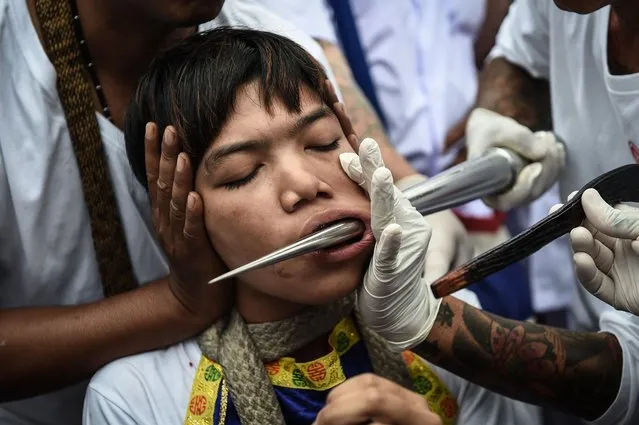
A young devotee of the Nine Emperor Gods has a large needle pushed through his cheek during the annual Phuket Vegetarian Festival in the southern province of Phuket on October 1, 2016. (Photo by Lillian Suwanrumpha/AFP Photo)

A young devotee of the Nine Emperor Gods has a large needle pushed through his cheek during the annual Phuket Vegetarian Festival in the southern province of Phuket on October 1, 2016. (Photo by Lillian Suwanrumpha/AFP Photo)
Details
04 Oct 2016 10:40:00
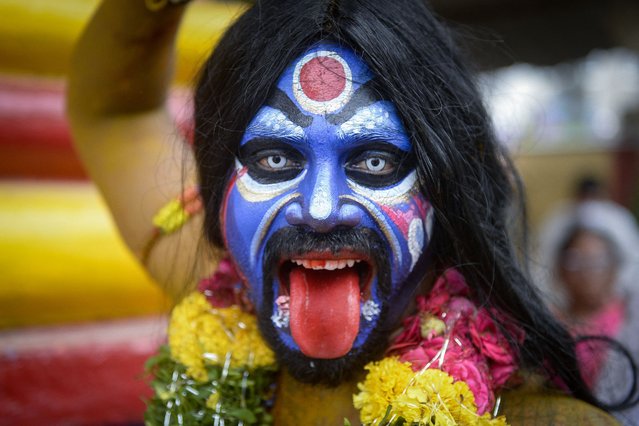
Artists dressed as Hindu gods reacts to the camera during the Bonalu festival procession in Secunderabad, the twin city of Hyderabad, on July 26, 2021. (Photo by Noah Seelam/AFP Photo)

Artists dressed as Hindu gods reacts to the camera during the Bonalu festival procession in Secunderabad, the twin city of Hyderabad, on July 26, 2021. (Photo by Noah Seelam/AFP Photo)
Details
03 Aug 2021 09:25:00
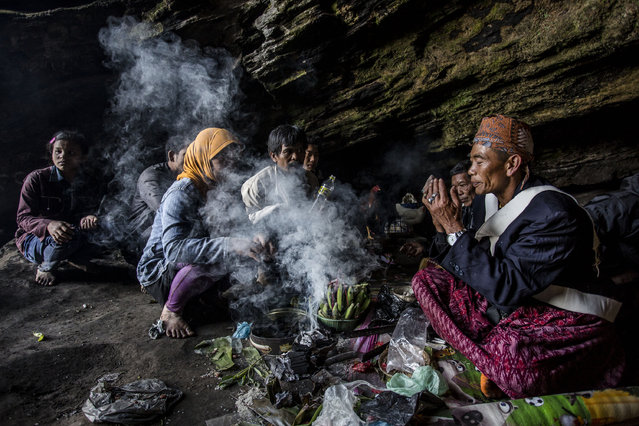
A Tenggerese shaman praying for worshippers at Widodaren cave during the Tenggerese Hindu Yadnya Kasada festival on July 31, 2015 in Probolinggo, East Java, Indonesia. The festival is the main festival of the Tenggerese people and lasts about a month. On the fourteenth day, the Tenggerese make the journey to Mount Bromo to make offerings of rice, fruits, vegetables, flowers and livestock to the mountain gods by throwing them into the volcano's caldera. (Photo by Ulet Ifansasti/Getty Images)

A Tenggerese shaman praying for worshippers at Widodaren cave during the Tenggerese Hindu Yadnya Kasada festival on July 31, 2015 in Probolinggo, East Java, Indonesia. The festival is the main festival of the Tenggerese people and lasts about a month. On the fourteenth day, the Tenggerese make the journey to Mount Bromo to make offerings of rice, fruits, vegetables, flowers and livestock to the mountain gods by throwing them into the volcano's caldera. The origin of the festival lies in the 15th century when a princess named Roro Anteng started the principality of Tengger with her husband Joko Seger, and the childless couple asked the mountain Gods for help in bearing children. The legend says the Gods granted them 24 children but on the provision that the 25th must be tossed into the volcano in sacrifice. The 25th child, Kesuma, was finally sacrificed in this way after initial refusal, and the tradition of throwing sacrifices into the caldera to appease the mountain Gods continues today. (Photo by Ulet Ifansasti/Getty Images)

Details
01 Aug 2015 12:07:00
Strange Children by John Seven

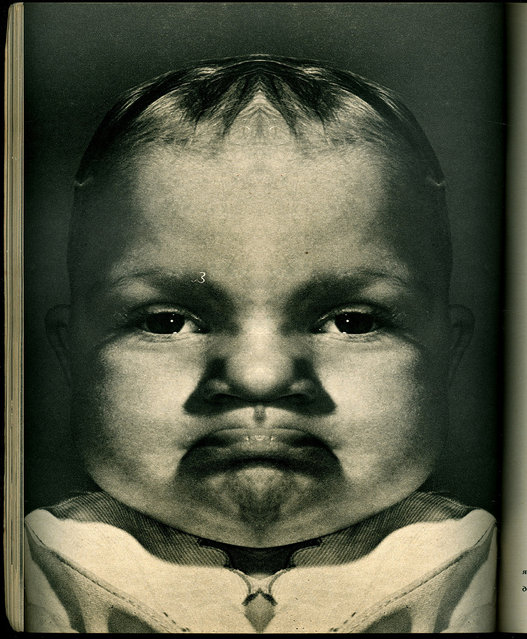
«My God! My Shoulder!», “Re-Gruntled”, 2011. (Photo by John Seven)
Details
07 Jul 2012 10:57:00
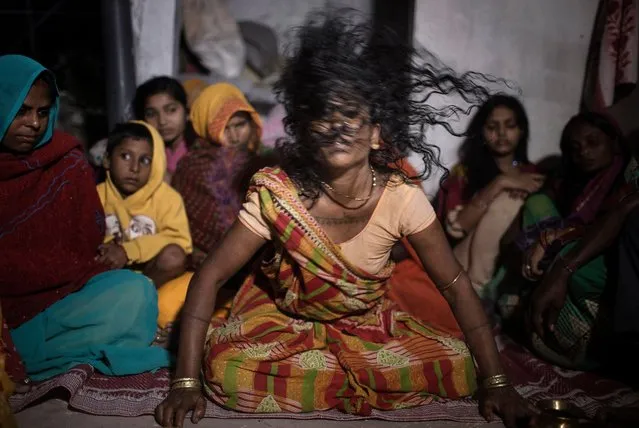
Marani Devi Chaudhary (C), aged 40, performs a ritual in front of shaman Paltan Yadav (unseen) at her home in Rajaur village in Dhanusha district, Nepal, 02 November 2017. The shaman identified Marani Devi to be possessed by their lineage god who was dissatisfied by their worship is thought by the family to have caused them misfortune and is even feared lead to their death. Therefore Marani Devi spent 1,500 USD to perform a healing ritual at the Ghost Festival held at the banks of Kamala River in Dhanusha district two days later. Every family or community has their own sacred god, called 'Kuldevta' in Nepali which means family deity or lineage god. Only family members or people within communities of the same caste can worship to the deity. They have their own rules and regulations of worship which varies from one family and community to another. Being unable to follow the rules and regulations or carry out worship is believed to cause misfortune. (Photo by Narendra Shrestha/EPA/EFE)

Marani Devi Chaudhary (C), aged 40, performs a ritual in front of shaman Paltan Yadav (unseen) at her home in Rajaur village in Dhanusha district, Nepal, 02 November 2017. The shaman identified Marani Devi to be possessed by their lineage god who was dissatisfied by their worship is thought by the family to have caused them misfortune and is even feared lead to their death. (Photo by Narendra Shrestha/EPA/EFE)
Details
17 Nov 2017 06:53:00
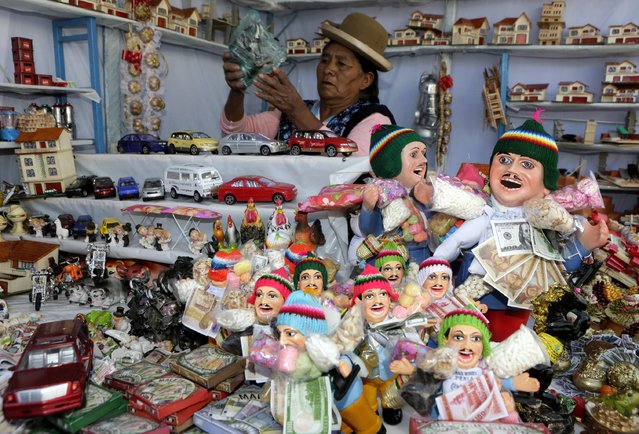
A woman sells statues of the Ekeko, god of fortune, at the traditional “Alasitas” fair in La Paz January 24, 2015. During the fair, Bolivians buy miniature versions of goods like cars, money and houses they would like to own in real life during the year. (Photo by David Mercado/Reuters)

A woman sells statues of the Ekeko, god of fortune, at the traditional “Alasitas” fair in La Paz January 24, 2015. During the fair, Bolivians buy miniature versions of goods like cars, money and houses they would like to own in real life during the year. (Photo by David Mercado/Reuters)
Details
25 Jan 2015 09:59:00
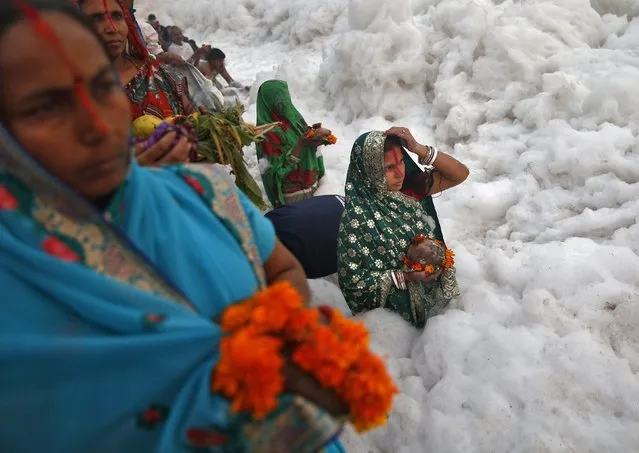
Hindu women worship the Sun god Surya in the polluted waters of the river Yamuna during the Hindu religious festival of Chatt Puja in New Delhi October 30, 2014. (Photo by Ahmad Masood/Reuters)

Hindu women worship the Sun god Surya in the polluted waters of the river Yamuna during the Hindu religious festival of Chatt Puja in New Delhi October 30, 2014. Hindu women fast for the whole day for the betterment of their family and the society during the festival. (Photo by Ahmad Masood/Reuters)
Details
30 Oct 2014 13:48:00
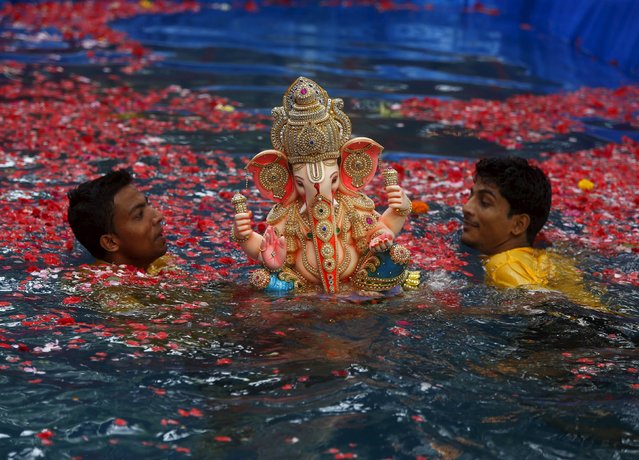
Volunteers carry an idol of the Hindu elephant god Ganesh, the deity of prosperity, in a pond for its immersion during the ten-day-long Ganesh Chaturthi festival in Mumbai, India, September 18, 2015. (Photo by Shailesh Andrade/Reuters)

Volunteers carry an idol of the Hindu elephant god Ganesh, the deity of prosperity, in a pond for its immersion during the ten-day-long Ganesh Chaturthi festival in Mumbai, India, September 18, 2015. During the festival, the idols will be taken through the streets in a procession accompanied by dancing and singing, and will be immersed in a river or the sea in accordance with the Hindu faith. (Photo by Shailesh Andrade/Reuters)
Details
19 Sep 2015 12:55:00