Loading...
Done
A boy walks past boats docked at the entrance gate of the fishermen's village in the El Max area of the Mediterranean city of Alexandria September 12, 2014.  El Max, where hundreds of boats dart through the canals, has been called the “Venice of Egypt” for its waterways and relaxed atmosphere. Its fishermen, however, worry about how they will make ends meet on meagre earnings they  say are being reduced further by polluted waters that are making fishing more difficult. (Photo by Amr Abdallah Dalsh/Reuters)

A boy walks past boats docked at the entrance gate of the fishermen's village in the El Max area of the Mediterranean city of Alexandria September 12, 2014. El Max, where hundreds of boats dart through the canals, has been called the “Venice of Egypt” for its waterways and relaxed atmosphere. Its fishermen, however, worry about how they will make ends meet on meagre earnings they say are being reduced further by polluted waters that are making fishing more difficult. While the government has tried to fix the state's bloated finances by cutting subsidies and reining in spending, some argue the reforms hurt Egypt's most vulnerable who have long relied on a generous system of fuel and food subsidies to supplement low incomes. (Photo by Amr Abdallah Dalsh/Reuters)
Details
12 Dec 2014 12:42:00
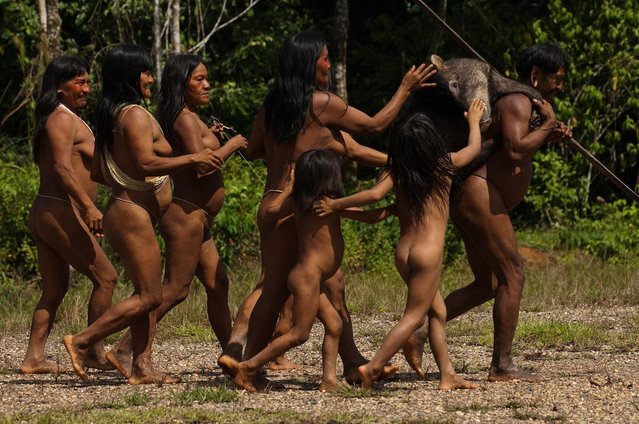
Spectacular images offering insight into the lives of the Huaorani people in the Ecuadorian Amazon have been revealed showing how they use traditional methods to hunt monkeys for food. The stunning pictures were taken by conservation photographer Pete Oxford from Torquay, Devon in the Ecuadorian Amazon. “The Huaorani Indians are a forest people highly in tune with their environment. Many are now totally acculturated since the 1950s by missionaries”, said Pete. “Today they face radical change to their culture to the proximity of oil exploration within their territory and the Yasuni National Park and Biosphere Reserve, they are vastly changed. Some still live very traditionally and for this shoot, through my Huaorani friend, a direct relative of those photographed he wanted to depict them as close to their original culture as possible. They still largely hunt with blow pipes and spears eating a lot of monkeys and peccaries”. The Huaorani are also known as the Waorani, Waodani or the Waos and are native Amerindians. Their lands are located between the Curaray and Napo rivers and speak the Huaorani language. Pete says that during his visit he was welcomed into the group and hopes that ancient cultures can be saved. Here: The tribe were seen celebrating after a hunter returned to camp with a wild pig. (Photo by Pete Oxford/Mediadrumworld.com)

Spectacular images offering insight into the lives of the Huaorani people in the Ecuadorian Amazon have been revealed showing how they use traditional methods to hunt monkeys for food. The stunning pictures were taken by conservation photographer Pete Oxford from Torquay, Devon in the Ecuadorian Amazon. Here: The tribe were seen celebrating after a hunter returned to camp with a wild pig. (Photo by Pete Oxford/Mediadrumworld.com)
Details
20 Jan 2017 07:58:00
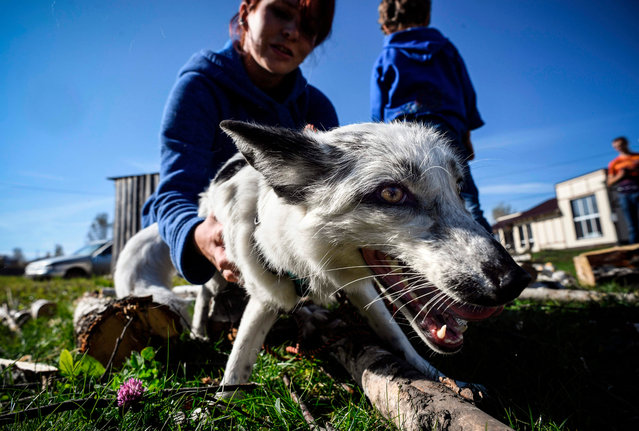
Tatyana Abramova, 33, plays with her home fox Plombir at her countryside house outside Siberian city of Novosibirsk on September 12, 2020. The official start of the Soviet experiment to better understand the domestication of animals by humans began in 1959, and was initiated by geneticists Dmitri Beliaiev and Lioudmila Trout on a farm in Akademgorodok, the scientific center of excellence in Siberia. Their primary objective was to domesticate foxes, to understand how the ancestor of wolves, another canine, evolved into a loyal and loving dog. And understand what this domestication tells us about the genetic evolution of species. (Photo by Alexander Nemenov/AFP Photo)

Tatyana Abramova, 33, plays with her home fox Plombir at her countryside house outside Siberian city of Novosibirsk on September 12, 2020. The official start of the Soviet experiment to better understand the domestication of animals by humans began in 1959, and was initiated by geneticists Dmitri Beliaiev and Lioudmila Trout on a farm in Akademgorodok, the scientific center of excellence in Siberia. Their primary objective was to domesticate foxes, to understand how the ancestor of wolves, another canine, evolved into a loyal and loving dog. And understand what this domestication tells us about the genetic evolution of species. (Photo by Alexander Nemenov/AFP Photo)
Details
25 Oct 2020 00:05:00
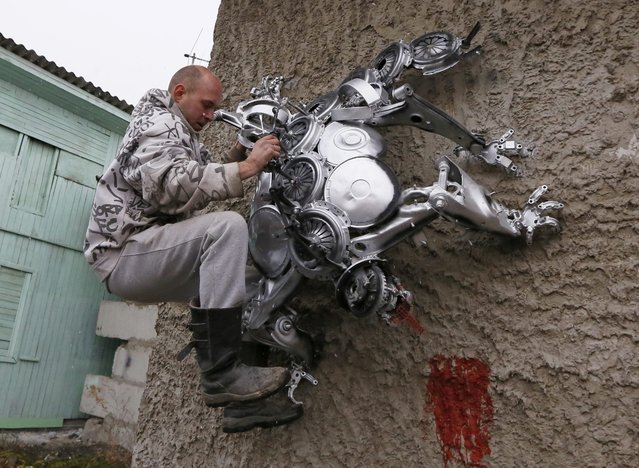
Mechanic and welder Sergei Kulagin, 32, strengthens the bracing of a spider sculpture, made by Kulagin, during a demonstration on the wall of an automobile repair workshop in the town of Divnogorsk outside Krasnoyarsk, Siberia, October 15, 2014. Enthusiast Kulagin, who works as a mechanic of an automobile service station, created about 20 sculptures made of used car parts and components during his non-working hours. (Photo by Ilya Naymushin/Reuters)

Mechanic and welder Sergei Kulagin, 32, strengthens the bracing of a spider sculpture, made by Kulagin, during a demonstration on the wall of an automobile repair workshop in the town of Divnogorsk outside Krasnoyarsk, Siberia, October 15, 2014. Enthusiast Kulagin, who works as a mechanic of an automobile service station, created about 20 sculptures made of used car parts and components during his non-working hours. (Photo by Ilya Naymushin/Reuters)
Details
18 Oct 2014 10:36:00
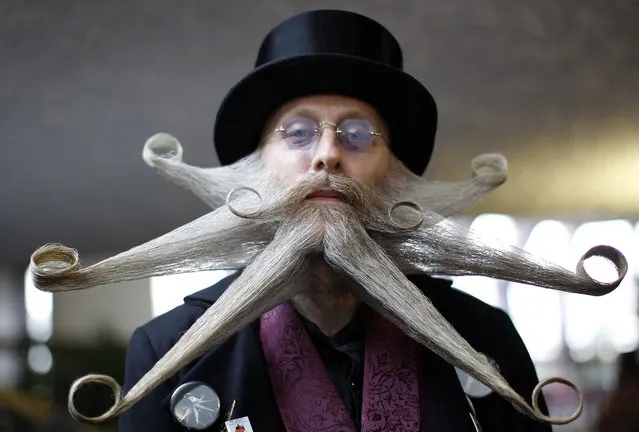
Armin Bielefeldt of the U.S. poses with his beard art work before the Beard World Championship 2013 in Leinfelden-Echterdingen near Stuttgart November 2, 2013. Bielefeldt needs more than 6 hours for his art work. More than 300 people from around the world compete in different moustache and beard categories. (Photo by Michaela Rehle/Reuters)

Armin Bielefeldt of the U.S. poses with his beard art work before the Beard World Championship 2013 in Leinfelden-Echterdingen near Stuttgart November 2, 2013. Bielefeldt needs more than 6 hours for his art work. More than 300 people from around the world compete in different moustache and beard categories. (Photo by Michaela Rehle/Reuters)
Details
05 Nov 2013 14:00:00
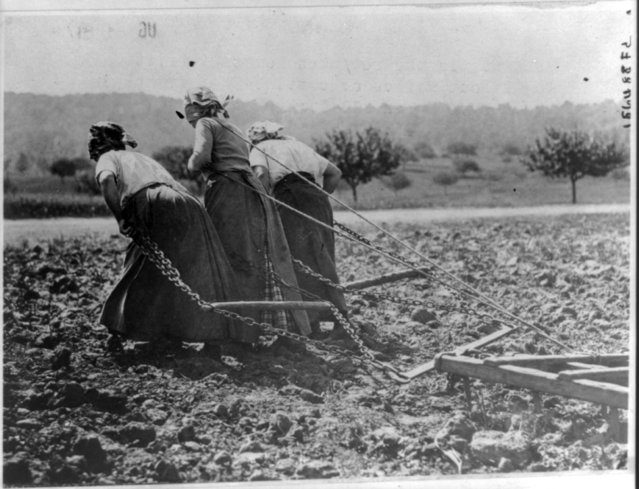
Peasants in the re-taken Somme District work in the fields, circa 1916- 1917, in this Library of Congress handout photo. (Photo by Reuters/Bain Collection/Library of Congress)

Peasants in the re-taken Somme District work in the fields, circa 1916- 1917, in this Library of Congress handout photo. For women 100 years ago, opportunities to work beyond the home and take part in political life were very limited. As the 20th century progressed, hard-won progress included gradually improved voting rights, while the upheaval of war pushed doors ajar as women worked as part of the war effort. U.S. Library of Congress archive photos show women's workplaces ranging from a flour mill in England to a coal mine in Belgium or Lincoln Motor Co.'s welding department in Detroit. International Women's Day is celebrated on March 8. (Photo by Reuters/Bain Collection/Library of Congress)
Details
03 Mar 2016 11:39:00
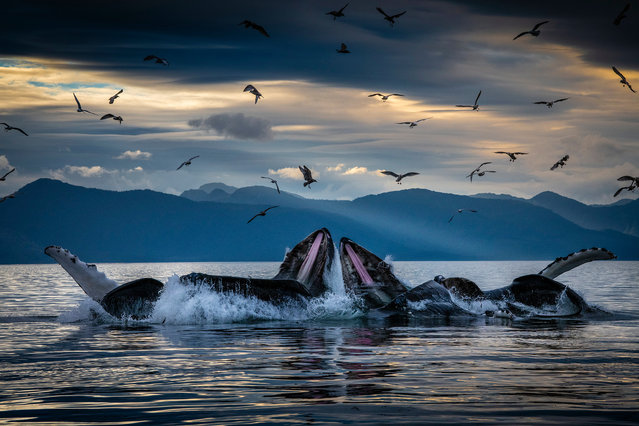
“Secrets of the Whales”. Skerry’s photographs celebrate the lives and culture of whales, illuminating recent research and their diverse behaviours. His latest work focuses on four key species: sperm whales, humpbacks, orca and beluga whales. Humpback whales bubble-net feeding off the coast of Alaska. They work cooperatively to feed on herring by blowing a perfect ring of bubbles underwater to form a net encircling the fish. The whales then swim up through the centre of the bubble net with their mouths open. (Photo by Brian Skerry/National Geographic Photo/Visa pour l'Image)

“Secrets of the Whales”. Skerry’s photographs celebrate the lives and culture of whales, illuminating recent research and their diverse behaviours. His latest work focuses on four key species: sperm whales, humpbacks, orca and beluga whales. Humpback whales bubble-net feeding off the coast of Alaska. They work cooperatively to feed on herring by blowing a perfect ring of bubbles underwater to form a net encircling the fish. The whales then swim up through the centre of the bubble net with their mouths open. (Photo by Brian Skerry/National Geographic Photo/Visa pour l'Image)
Details
04 Sep 2021 09:02:00
Contestants perform during the semifinals of the first Miss Colonia pageant hosted by the Factoría nightclub in Veracruz, Mexico, Sunday, March 5, 2023. The nightclub held the pageant as part of annual Women’s Day events and the only requirement for contestants was to prove residency in working-class areas of the city, known as “colonias”. Prizes originally covered utility bills and property taxes, but when the event attracted more sponsors the prizes expanded to include cash, travel, dental work, spas and makeovers. (Photo by Felix Marquez/AP Photo)

Contestants perform during the semifinals of the first Miss Colonia pageant hosted by the Factoría nightclub in Veracruz, Mexico, Sunday, March 5, 2023. The nightclub held the pageant as part of annual Women’s Day events and the only requirement for contestants was to prove residency in working-class areas of the city, known as “colonias”. Prizes originally covered utility bills and property taxes, but when the event attracted more sponsors the prizes expanded to include cash, travel, dental work, spas and makeovers. (Photo by Felix Marquez/AP Photo)
Details
12 Jul 2024 04:53:00