Loading...
Done
Humanoid robots compete in a group match of the 20th RoboCup in Leipzig, Germany, June 30, 2016. Thousands of participants from over 40 countries are competing this year in RoboCup 2016 with their humanoid soccer playing robots in Leipzig, Germany. “When established in 1997, the original mission was to field a team of robots capable of winning against the human soccer World Cup champions by 2050”, according to RoboCup. Now participants compete in five different soccer categories as well as RoboCup Rescue, which researches robotic effectiveness and usefulness to first responders. (Photo by Sebastian Willnow/EPA)

Humanoid robots compete in a group match of the 20th RoboCup in Leipzig, Germany, June 30, 2016. About 3,500 participants from 45 countries and regions compete in the robot world championship until 04 July. (Photo by Sebastian Willnow/EPA)
Details
02 Jul 2016 12:39:00
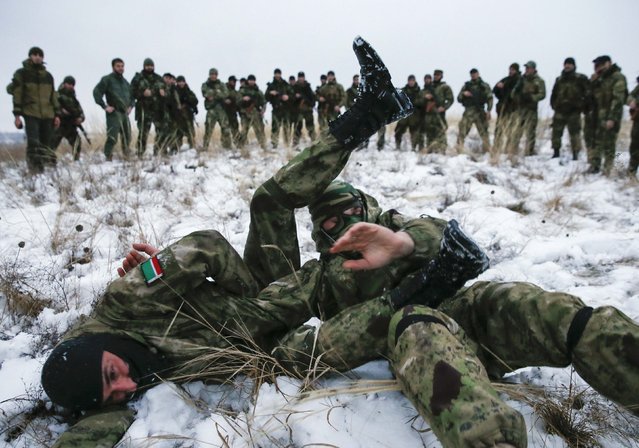
Pro-Russian separatists from the Chechen “Death” battalion take part in a training exercise in the territory controlled by the self-proclaimed Donetsk People's Republic, eastern Ukraine, December 8, 2014. Chanting “Allahu Akbar” (God is greatest), dozens of armed men in camouflage uniforms from Russia's republic of Chechnya train in snow in a camp in the rebel-held east Ukraine. (Photo by Maxim Shemetov/Reuters)

Pro-Russian separatists from the Chechen “Death” battalion take part in a training exercise in the territory controlled by the self-proclaimed Donetsk People's Republic, eastern Ukraine, December 8, 2014. Chanting “Allahu Akbar” (God is greatest), dozens of armed men in camouflage uniforms from Russia's republic of Chechnya train in snow in a camp in the rebel-held east Ukraine. They say their “Death” unit fighting Ukrainian forces has 300 people, mostly former state security troops in the mainly-Muslim region where Moscow waged two wars against Islamic insurgents and which is now run by a Kremlin-backed strongman. (Photo by Maxim Shemetov/Reuters)
Details
11 Dec 2014 13:58:00
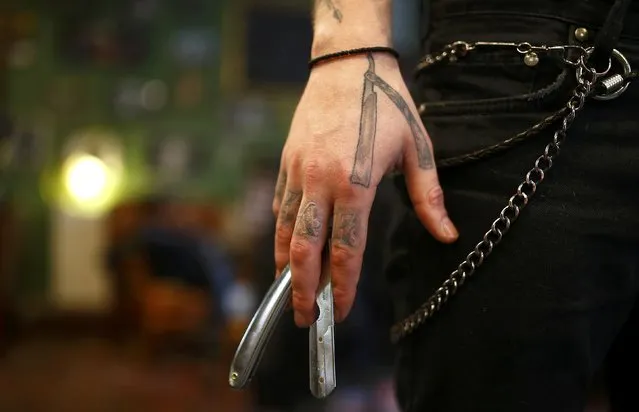
Alex “Torreto” Vellios, a 26-year old barber sports his tattoo of an open razor as he holds a real razor while preparing for his first customer of the day at his Torreto barber shop in Frankfurt, January 6, 2015. (Photo by Kai Pfaffenbach/Reuters)

Alex “Torreto” Vellios, a 26-year old barber sports his tattoo of an open razor as he holds a real razor while preparing for his first customer of the day at his Torreto barber shop in Frankfurt, January 6, 2015. Inspired by a childhood trip to the barbers with his grandfather in Greece, Vellios, a formally trained hairdresser and self-taught barber, fulfilled his dream of opening his own gentleman's barber shop five months ago and has turned it into a successful male grooming and shaving business with customers now waiting up to three to four weeks for an appointment to see him. (Photo by Kai Pfaffenbach/Reuters)
Details
09 Jan 2015 13:00:00
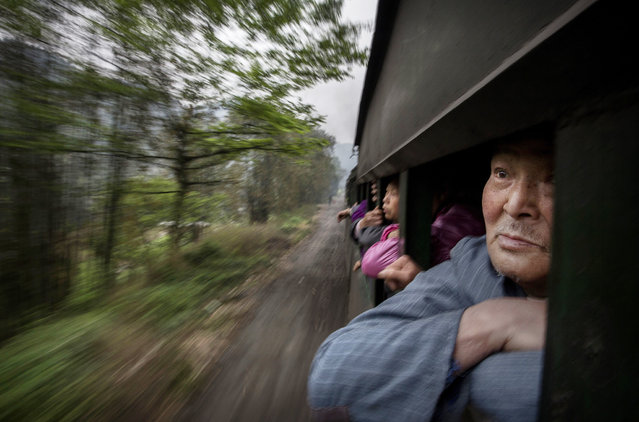
Local villagers ride a local coal powered steam train on March 27, 2015 at a station in the town of Shixi , Sichuan Province, in Southern China. While China boasts the world's most extensive high-speed rail infrastructure. (Photo by Kevin Frayer/Getty Images)

Local villagers ride a local coal powered steam train on March 27, 2015 at a station in the town of Shixi , Sichuan Province, in Southern China. While China boasts the world's most extensive high-speed rail infrastructure with over 16,000 kilometers of track, the Shixi-Bagou railway is still a primary connection for local villagers between towns and is kept alive by tourist cars carrying passengers for ten times the price. The rail line came into service in the late 1950s and the train was initially used to transport coal from a now-shuttered mine before passenger carriages were added. (Photo by Kevin Frayer/Getty Images)
Details
12 May 2015 12:00:00
Kambeba Indian, Dream Braga, 18, aims his arrow in a jungle near the village Tres Unidos, Amazon state May 9, 2015. Dream Braga has been shooting fish with a bow and arrow for most of his life. In the Amazonian village where he grew up, that was what kids did for food and fun. (Photo by Bruno Kelly/Reuters)

Kambeba Indian, Dream Braga, 18, aims his arrow in a jungle near the village Tres Unidos, Amazon state May 9, 2015. Dream Braga has been shooting fish with a bow and arrow for most of his life. In the Amazonian village where he grew up, that was what kids did for food and fun. He participated in the Indigenous Archery Project which recruits Amazon native children to compete with modern archery equipment and try for a place on the national team, with the 2016 Olympics in Rio de Janeiro as their ultimate goal. After training with Olympic coaches for three months, he has now been promoted to Brazil's national team. (Photo by Bruno Kelly/Reuters)
Details
17 May 2015 11:19:00
Not many divers visit the Gunilda, due to its remote location, depths of 270 feet, and chilly (38 degrees F/3 degrees C) temperatures. (Photo by Becky Kagan Schott/Caters News Agency)

These stunning images reveal the remains of a more than century-old sunken ship that has been preserved beneath freezing Lake Superior. The ship looks almost exactly the same as it did the day it sunk beneath waves all those years ago. At 60 meters long (approximately 198 feet), the «Gunilda» sunk after it struck some rocks and was not saved. Now, these stunning images have been captured 107 years after the sinking when a small group of divers revisited the vessel. (Photo by Becky Kagan Schott/Caters News Agency)
Details
25 Apr 2018 00:01:00
Chinese women wear protective masks as they are dressed in traditional clothing from the Qing Dynasty era outside a park on March 29, 2020 in Beijing, China. A limited section of the iconic tourist site was re-opened to the public this week allowing a smaller number of visitors to reserve tickets online in advance and to enter after passing health screening. With the pandemic hitting hard across the world, China recorded its first day with no new domestic cases of the coronavirus last week, since the government imposed sweeping measures to keep the disease from spreading. For two months, millions of people across China have been restricted in how they move from their homes, while other cities have been locked down in ways that appeared severe at the time but are now being replicated in other countries trying to contain the virus. Officials believe the worst appears to be over in China, though there are concerns of another wave of infections as the government attempts to reboot the worlds second largest economy. In Beijing, it is mandatory to wear masks outdoors, retail stores operate on reduced hours, restaurants employ social distancing among patrons, and tourist attractions at risk of drawing large crowds remain closed. Monitoring and enforcement of virus-related measures and the quarantine of anyone arriving to Beijing is carried out by neighborhood committees and a network of Communist Party volunteers who wear red arm bands. A primary concern for Chinese authorities remains the arrival of flights from Europe and elsewhere, given the exposure of passengers in regions now regarded as hotbeds for transmission. Since January, China has recorded more than 81,000 cases of COVID-19 and at least 3200 deaths, mostly in and around the city of Wuhan, in central Hubei province, where the outbreak first started. (Photo by Kevin Frayer/Getty Images)

Chinese women wear protective masks as they are dressed in traditional clothing from the Qing Dynasty era outside a park on March 29, 2020 in Beijing, China. A limited section of the iconic tourist site was re-opened to the public this week allowing a smaller number of visitors to reserve tickets online in advance and to enter after passing health screening. (Photo by Kevin Frayer/Getty Images)
Details
01 Apr 2020 00:05:00
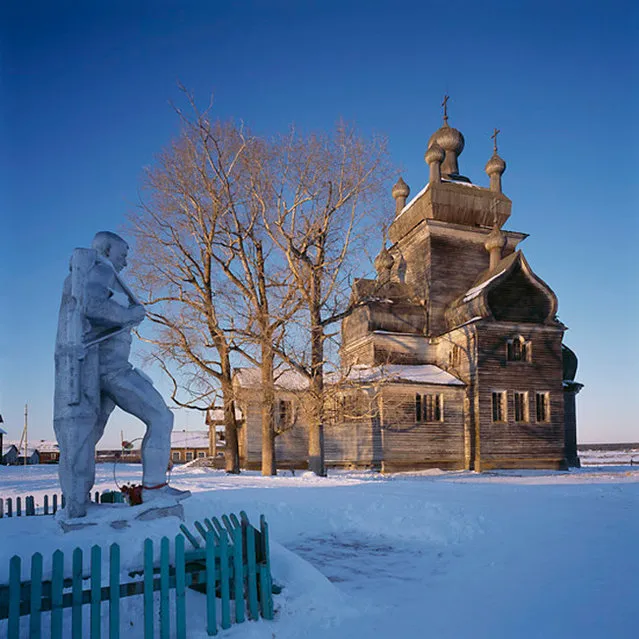
Wooden Churches - Travelling In The Russian North By Richard Davies Part 2

While communism, collectivism, worms, dry rot and casual looting failed to destroy the majestic wooden churches of Russia, it may be ordinary neglect that finally does them in. Dwindled now to several hundred remaining examples, these glories of vernacular architecture lie scattered amid the vastness of the world’s largest country. Just over a decade ago, Richard Davies, a British architectural photographer, struck out on a mission to record the fragile and poetic structures. Austerely beautiful and haunting, “Wooden Churches: Traveling in the Russian North” (White Sea Publishing; $132) is the result. Covering thousands of miles, Mr. Davies described how he and the writer Matilda Moreton tracked down the survivors from among the thousands of onion-domed structures built after Prince Vladimir converted to Christianity in 988.

See also: Wooden Churches Part1


Details
28 Nov 2013 12:13:00