Loading...
Done


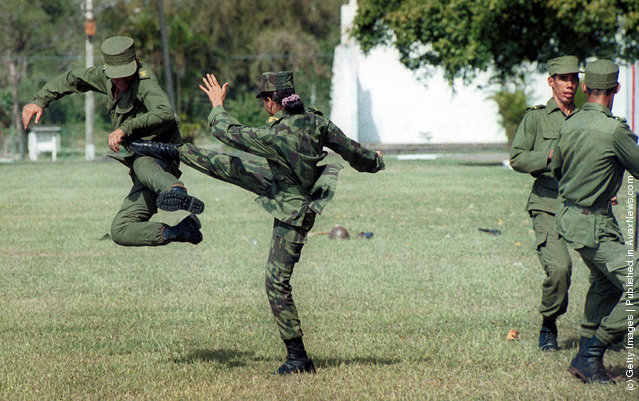
Cuban soldiers receive combat training at the Cadets School “Antonio Maceo” November 28, 2001, 30 kilometers East of Havana. (Photo by Jorge Rey/Getty Images)
Details
25 Jul 2011 12:12:00
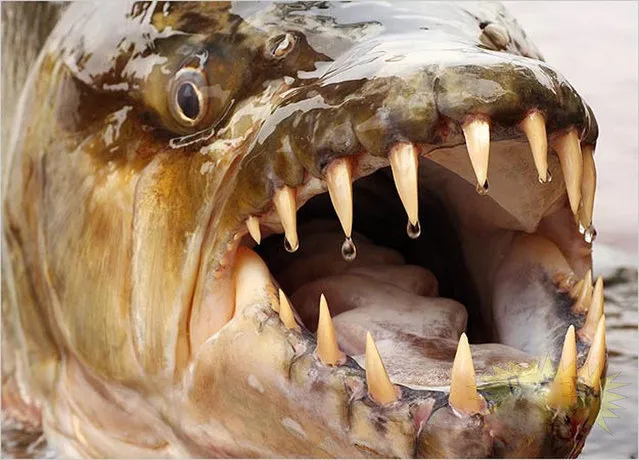
Hydrocynus goliath, also known as the goliath tigerfish, giant tigerfish or mbenga

“Hydrocynus goliath, also known as the goliath tigerfish, giant tigerfish or mbenga, is a very large African predatory freshwater fish. The giant tigerfish is restricted to the Zaire River system, Lualaba River, Lake Upemba and Lake Tanganyika”. (Photo by Tigerfishcamp / Tourettefishing / Bigfishesoftheworld)
Details
15 May 2012 12:04:00
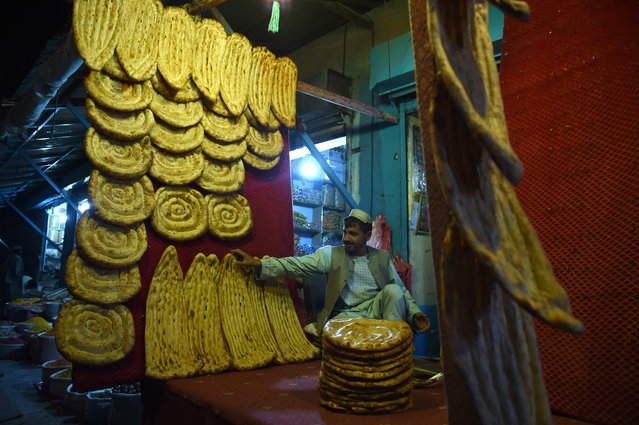
In this photograph taken on October 4, 2016, an Afghan baker prepares bread at his shop as he waits for customers in Lashkar Gah, the capital city of Helmand province For years Helmand was the centerpiece of the Western military intervention in Afghanistan only for it to slip deeper into a quagmire of instability, with almost the entire southern province teetering on the verge of collapse. Intensified fighting has killed hundreds and forced thousands to flee to besieged capital Lashkar Gah, sparking a humanitarian crisis as the city – one of the last government- held enclaves – risks falling to the Taliban' s repeated ferocious assaults. (Photo by Wakil Kohsar/AFP Photo)

In this photograph taken on October 4, 2016, an Afghan baker prepares bread at his shop as he waits for customers in Lashkar Gah, the capital city of Helmand province. For years Helmand was the centerpiece of the Western military intervention in Afghanistan only for it to slip deeper into a quagmire of instability, with almost the entire southern province teetering on the verge of collapse. Intensified fighting has killed hundreds and forced thousands to flee to besieged capital Lashkar Gah, sparking a humanitarian crisis as the city – one of the last government- held enclaves – risks falling to the Taliban' s repeated ferocious assaults. (Photo by Wakil Kohsar/AFP Photo)
Details
08 Dec 2016 12:41:00
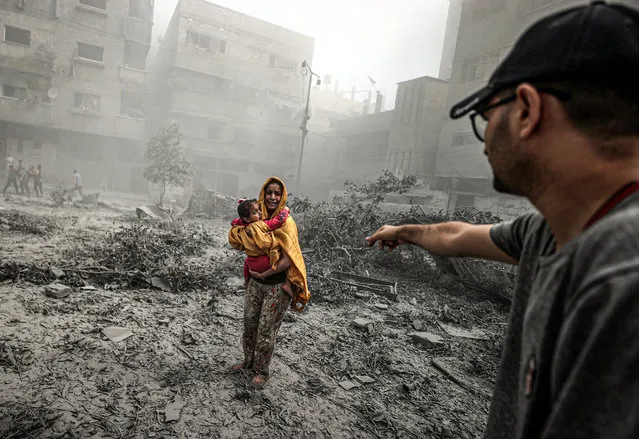
A woman holding a girl reacts after Israeli airstrikes hit Ridwan neighborhood of Gaza City, Gaza on October 23, 2023. (Photo by Ali Jadallah/Anadolu via Getty Images)

A woman holding a girl reacts after Israeli airstrikes hit Ridwan neighborhood of Gaza City, Gaza on October 23, 2023. (Photo by Ali Jadallah/Anadolu via Getty Images)
Details
30 Oct 2023 05:55:00
Members of the Maori community march in a protest rally to criticise the government for its policies affecting the Indigenous Maori population in Wellington on November 19, 2024.  (Photo by Sanka Vidanagama/AFP Photo)

Members of the Maori community march in a protest rally to criticise the government for its policies affecting the Indigenous Maori population in Wellington on November 19, 2024. (Photo by Sanka Vidanagama/AFP Photo)
Details
24 Nov 2024 03:49:00
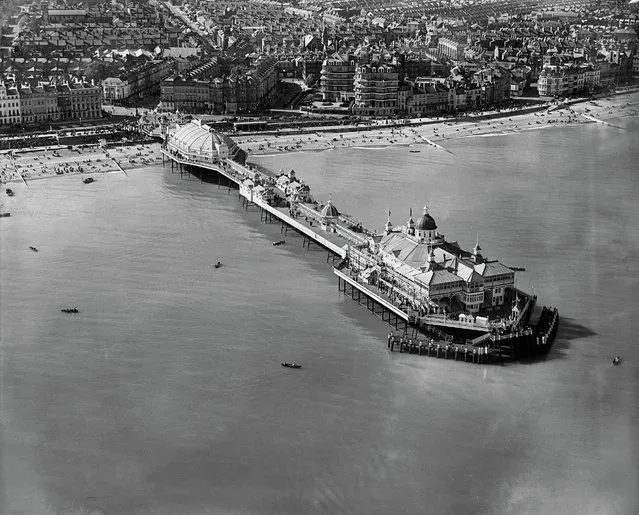
While the lido was described as bringing “modernism to the masses” on the British coast it was just the latest example of a trend that had been developing since Victorian times – transforming seaside towns into resorts for leisure and entertainment. In the latter half of the nineteenth century, the fashion was for local authorities to build great piers stretching from the promenade out into the sea

While the lido was described as bringing “modernism to the masses” on the British coast it was just the latest example of a trend that had been developing since Victorian times – transforming seaside towns into resorts for leisure and entertainment. In the latter half of the nineteenth century, the fashion was for local authorities to build great piers stretching from the promenade out into the sea. The Eastbourne Pier, pictured here in May 1931, was erected between 1866 and 1870 to an ingenious design by Eugenius Birch, which saw the structure sitting on special cups allowing the supporting struts to “move” in bad weather. Arranged on the pier's 1,000-foot length were kiosks, a theatre, a ballroom and a camera obscura. 1931. (Photo by Aerofilms Collection via “A History of Britain From Above”)
Details
25 Feb 2014 12:59:00
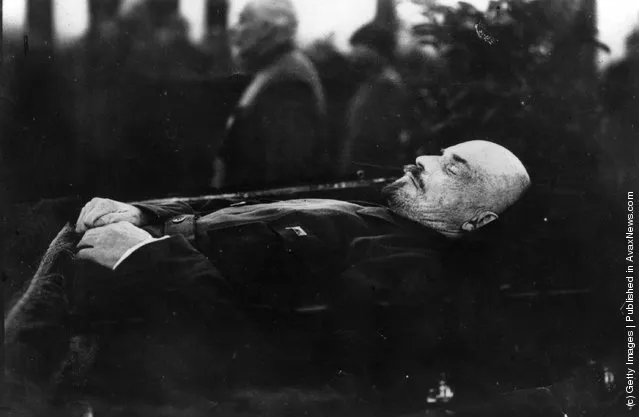
1924:  Vladimir Ilyich Lenin lying in state in the Kremlin

Photo: Vladimir Ilyich Lenin (1870 – 1924) lying in state in the Kremlin. (Photo by Hulton Archive/Getty Images). 1924

Important! For the same article in Russian language click here.

Something quite intriguing is happening within Russian-speaking internet during the last few – should you type a fully academic inquiry (at least, according to Russian academic requirements) in national search engines for "Lenin's mausoleum" – the first thing you get (even in top 10 searches) is website pages talking about black magic and occult. Website authors view this construction differently, but unconditionally agree on one thing: the mausoleum of the "leader of the world proletariat” – the essence of a magical artifact, a sort of “energy vampire”. It was built with a certain purpose: to drain the energy out of miserable Soviet citizens on one hand; and to poison the anthroposphere of one-sixth part of the earth with its vibes (the exact territory that was occupied by the former Soviet Union), depriving the Russian people of will to resist on the other hand. Complete nonsense? No doubt. Nevertheless, an intriguing one. Well, probably because some oddities do exist in mausoleum's history. These oddities are the thing we are going to discuss this time. First, let me refresh you memory on the subject.
Details
16 Oct 2011 11:27:00
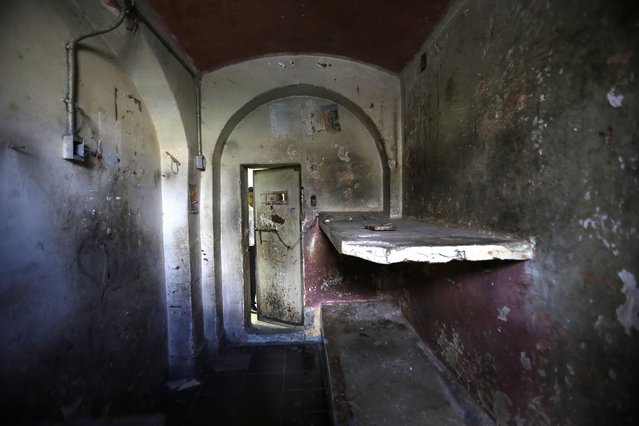
In this April 7, 2015 photo, a tourist peers through the door of a jail cell inside the now empty Garcia Moreno prison during a guided tour for the public in Quito, Ecuador. According to tour guides, this cell was nicknamed “Los Polillas”, or “The Moths”. Here, in a room designed to hold two prisoners, about 15 inmates with drug addictions were locked in overnight by the prison gangs that controlled daily life. The locked-in prisoners were also known to prostitute themselves to get access to drugs. (Photo by Dolores Ochoa/AP Photo)

In this April 7, 2015 photo, a tourist peers through the door of a jail cell inside the now empty Garcia Moreno prison during a guided tour for the public in Quito, Ecuador. According to tour guides, this cell was nicknamed “Los Polillas”, or “The Moths”. Here, in a room designed to hold two prisoners, about 15 inmates with drug addictions were locked in overnight by the prison gangs that controlled daily life. The locked-in prisoners were also known to prostitute themselves to get access to drugs. (Photo by Dolores Ochoa/AP Photo)
Details
03 May 2015 10:34:00