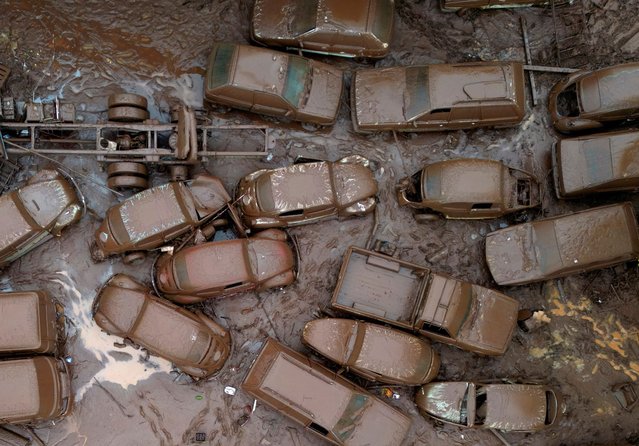
A drone view shows vehicles in the area affected by the floods, in Encantado, Rio Grande do Sul state, Brazil, on May 3, 2024. (Photo by Diego Vara/Reuters)
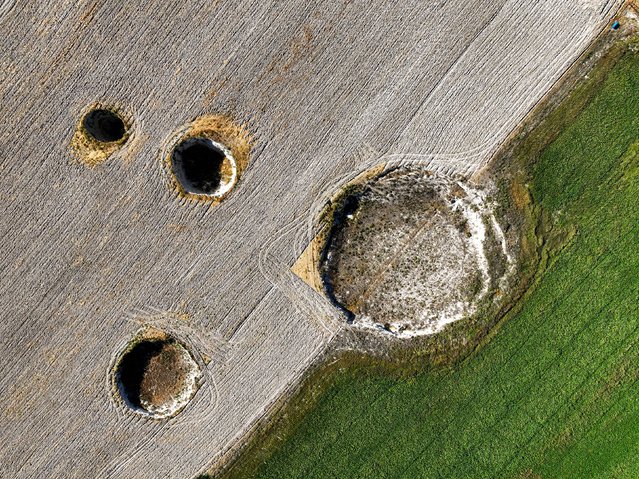
An aerial view of sinkholes (obruk), caused by some form of collapse of the surface layer, in Konya, Turkiye on September 17, 2024. Many sinkholes are observed in the fields of Eseli Plateau located within the borders of Resadiye Neighborhood in the north-west of Karapinar district, where sinkhole formation has increased rapidly in recent years. (Photo by Serhat Cetinkaya/Anadolu via Getty Images)
(L-R) Santiago Enrique Baston and American actress Eva Longoria attend the “Global Gift Gala” Photocall at Four Seasons Hotel George V on October 5, 2024 in Paris, France. (Photo by Lyvans Boolaky/Getty Images)
British-Albanian singer Dua Lipa (left) and American model Emily Ratajkowski goof around at a Puma event in Milan, Italy in the second decade of December 2024. (Photo by Instagram)
Participants wearing colorful costumes take part in the Flowers Parade of the 151th annual Carnival of Nice, in Nice, France, 20 March 2024. The annual Carnival of Nice run from 17 February to 03 March 2024, and the main theme will be “King of Pop Culture”. (Photo by Sebastien Nogier/EPA)
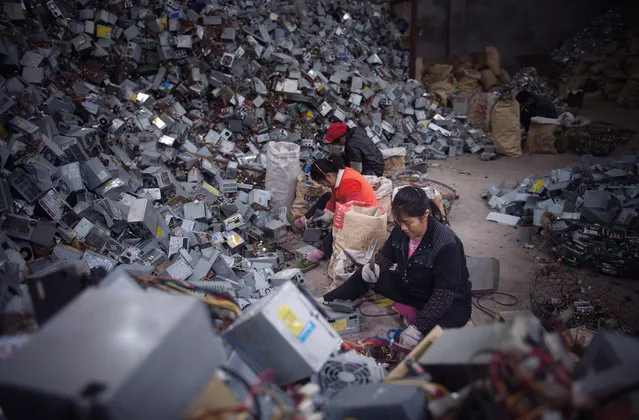
Sustainable development goal target 12.5 is to reduce waste. But with a planet increasingly dependent on technology, is that even possible? As of today, over 30m tonnes of electronic waste has been thrown out so far this year, according to the World Counts. Most e-waste is sent to landfills in Asia and Africa where it is recycled by hand, exposing the people who do it to environmental hazards. Kai Loeffelbein’s photographs of e-waste recycling in Guiyu, southern China show what happens to discarded computers. (Photo by Kai Loeffelbein/laif Agentur)
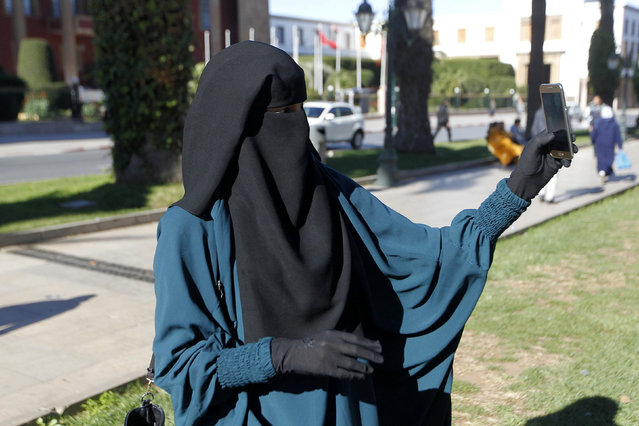
A niqab-wearing Salafist protester takes a selfie as she attends a demonstration against the ban on the sale and manufacturing of the full-burqa in Rabat January 15, 2017. (Photo by Reuters/Stringer)
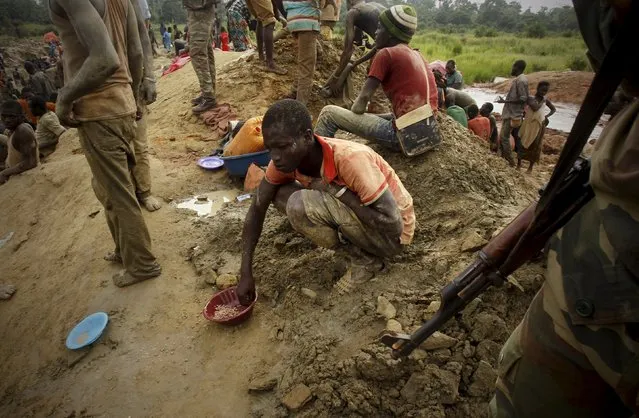
Nestled among the cocoa plantations of western Ivory Coast is a gold mine that does not feature on any official maps. It is not run by an industrial mining company, nor does it pay taxes to the central government. The unlicensed mine is a key part of a lucrative business empire headed by the deputy commander of the West African nation's elite Republican Guard, United Nations investigators allege. Here: A gold prospector sits and eats close to a soldier at a gold mine near the village of Gamina, in western Ivory Coast, March 18, 2015. (Photo by Luc Gnago/Reuters)