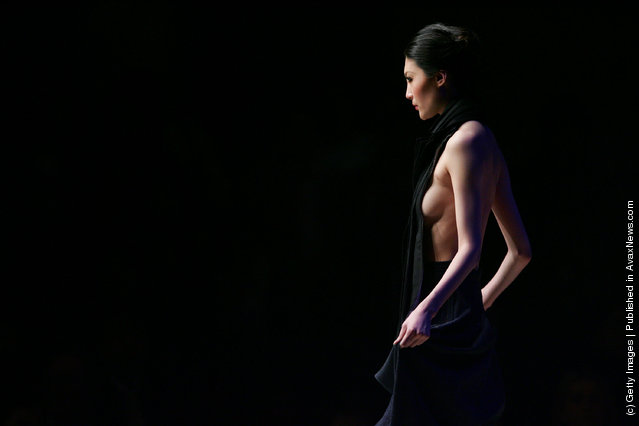
A model walks down the runway at the 13th China International Young Fashion Designers Contest during China Fashion Week on March 25, 2005 in Beijing, China. (Photo by China Photos/Getty Images)
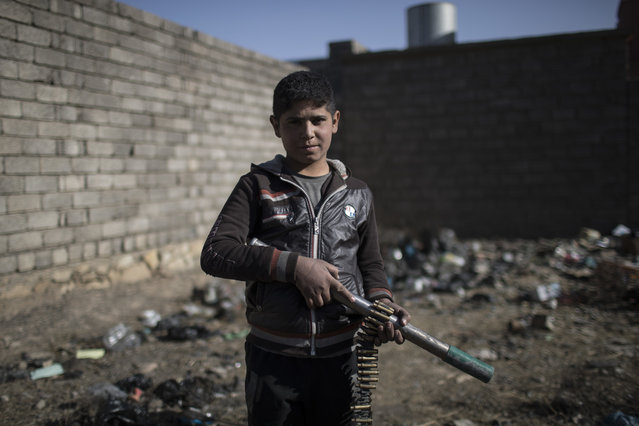
A boy poses for a photo as he plays with a homemade toy gun in Qayara, south of Mosul, Iraq, Tuesday, November 22, 2016. For months, residents of the Iraqi town of Qayara have lived in the darkness from a cloud of toxic fumes released by oil fields lit by retreating Islamic State fighters. (Photo by Felipe Dana/AP Photo)
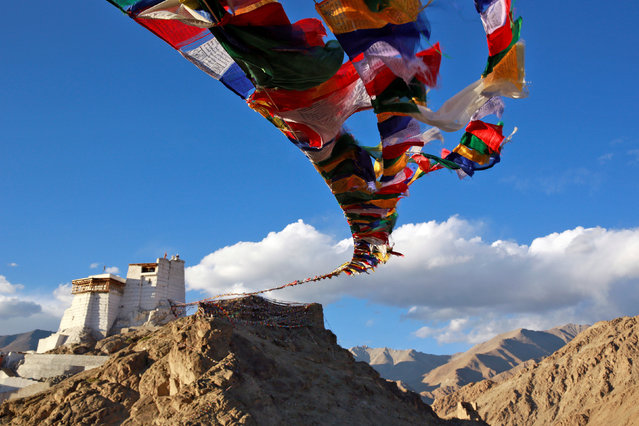
Prayer flags fly at Namgyal Tsemo Monastery above the town of Leh in Ladakh, India September 24, 2016. High in the Indian Himalayas, young novice monks in maroon robes take their lessons inside the 15th-century Thiksey monastery. (Photo by Cathal McNaughton/Reuters)
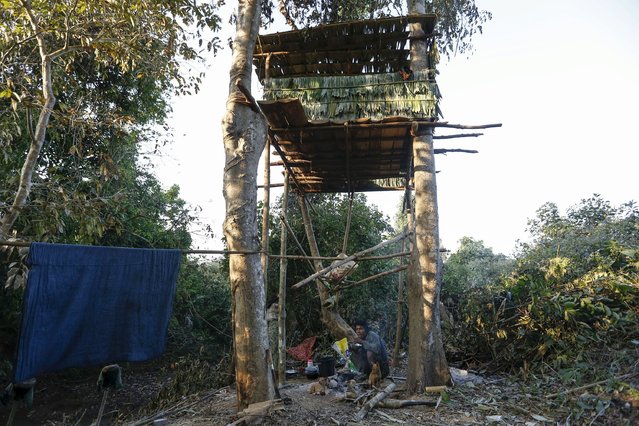
A man eats a meal under his tree house, which acts as a shelter from wild elephants, in Gwe Cho village, Shwe Taung Yan township Ayeyarwady division January 18, 2016. Wild elephants are driving villagers in a Myanmar township to seek refuge while the animals storm their rice paddies, in Ayeyarwady in the Delta region, West of Yangon. (Photo by Soe Zeya Tun/Reuters)
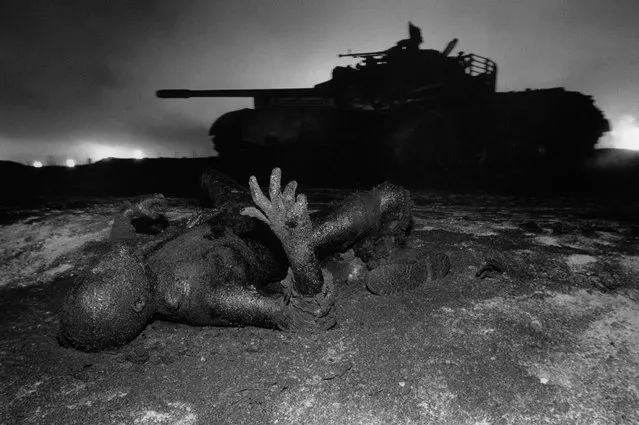
Abbas (1944 – 25 April 2018) was an Iranian photographer known for his photojournalism in Biafra, Vietnam and South Africa in the 1970s, and for his extensive essays on religions in later years. He was a member of Sipa from 1971 to 1973, a member of Gamma from 1974 to 1980, and joined Magnum Photos in 1981. Here: Kuwait, 1991. (Photo by Abbas Attar/Magnum Photos)
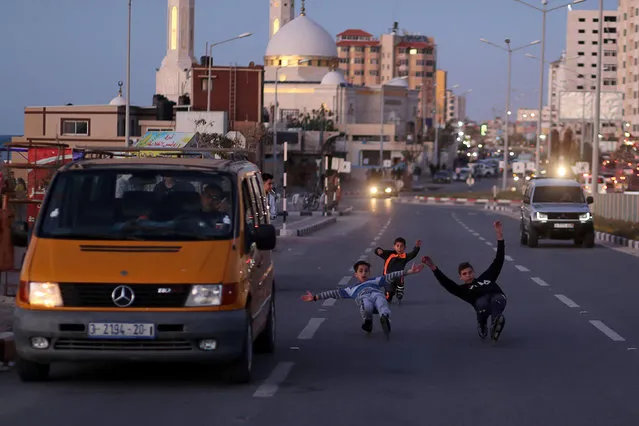
Calling themselves the Gaza skate team, a group of young Palestinians get together to skate and rollerblade amid deprivation and high security. Here: Palestinian boys of Gaza skating Team rollerblade on a street in Gaza City March 8, 2019. (Photo by Mohammed Salem/Reuters)
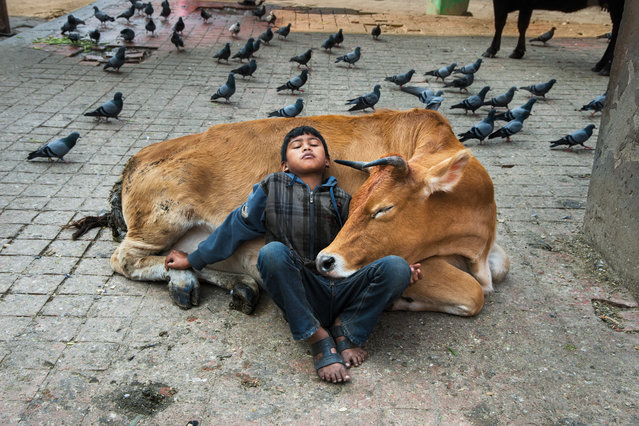
The legendary US photographer’s favourite shots of creatures and how they interact with humans feature in “Animals”, his latest book. Here: A boy rests against a cow, Kathmandu, Nepal, 2013. “Cows have been designated the national animal in Nepal. They roam freely, and are considered sacred by the 80% of Nepalis who are Hindu”. (Photo by Steve McCurry/The Guardian)