Loading...
Done
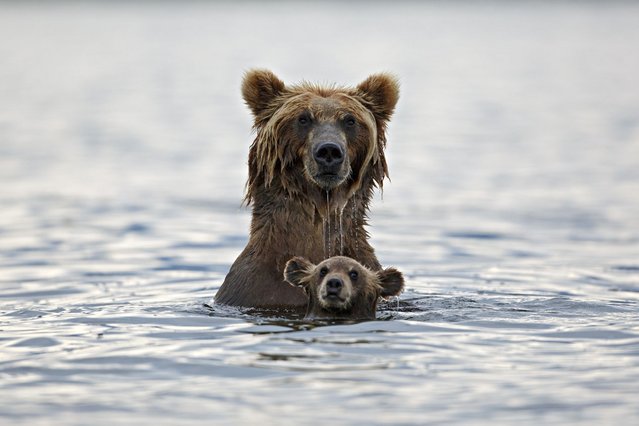
These little grizzly bear cubs had fun making a real splash when their mum took them for a dip to learn how to fish. Kamchatka, Russia. (Photo by Marco Mattiussi/Solent News & Photo Agency)

These little grizzly bear cubs had fun making a real splash when their mum took them for a dip to learn how to fish. Kamchatka, Russia. (Photo by Marco Mattiussi/Solent News & Photo Agency)
Details
11 Jan 2014 13:24:00
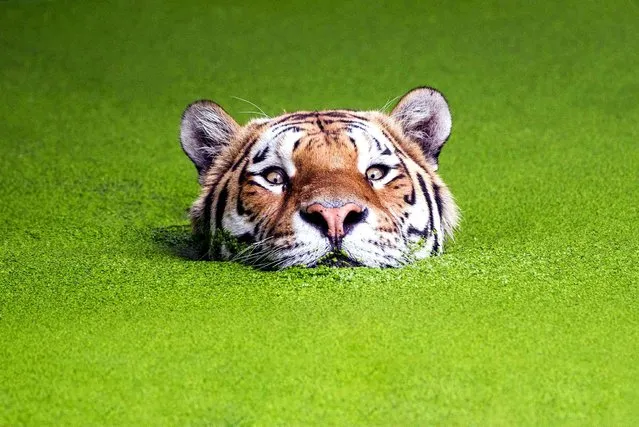
These stunning pictures show a normally vicious tiger calmly swimming in a pool of algae, on Jule 9, 2014. The powerful cat takes a refreshing break by taking a dip in the bright green algae. But it looks like this big cat is scared of getting his head wet as he strains to keep it above the water. After splashing around for a bit the tiger gets out and tries to air-dry with specks of the vegetation dripping off his fur. The striking pictures were taken at Copenhagen zoo by snapper Soren Lundgren Neilson. (Photo by Soren Nielsen/Caters News)

These stunning pictures show a normally vicious tiger calmly swimming in a pool of algae, on Jule 9, 2014. The powerful cat takes a refreshing break by taking a dip in the bright green algae. But it looks like this big cat is scared of getting his head wet as he strains to keep it above the water. After splashing around for a bit the tiger gets out and tries to air-dry with specks of the vegetation dripping off his fur. The striking pictures were taken at Copenhagen zoo by snapper Soren Lundgren Neilson. (Photo by Soren Nielsen/Caters News)
Details
12 Jul 2014 16:58:00
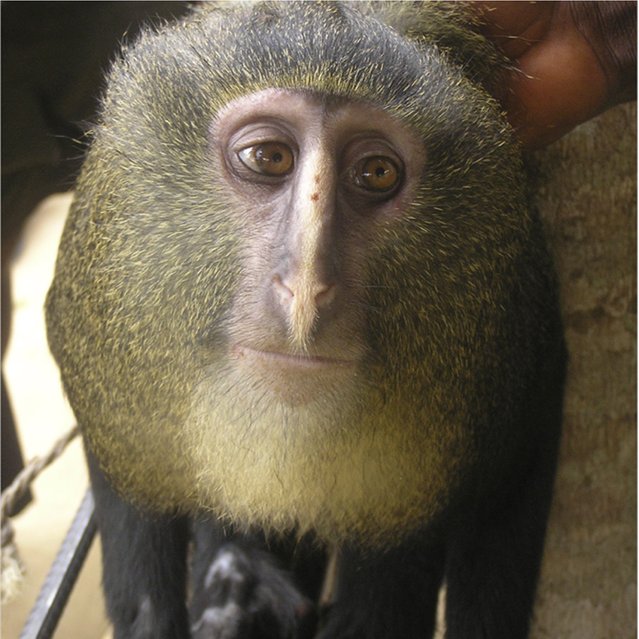
A new species of monkey found in the Democratic Republic of the Congo and identified as Lesula (Cercopithecus lomamiensis) is seen in this undated photograph from an article published September 12, 2012 in the science journal PLOS One. (Photo by Hart J. A., Detwiler K. M., Gilbert C. C./Reuters)

A new species of monkey found in the Democratic Republic of the Congo and identified as Lesula (Cercopithecus lomamiensis) is seen in this undated photograph from an article published September 12, 2012 in the science journal PLOS One. The monkey was first seen in 2007 by researchers John and Terese Hart of the Peabody Museum of Natural History at Yale Research Project. The finding of C. lomamiensis represents only the second new species of African monkey to be discovered in the past 28 years, according to the research article. (Photo by Hart J. A., Detwiler K. M., Gilbert C. C./Reuters)
Details
27 Sep 2012 08:17:00
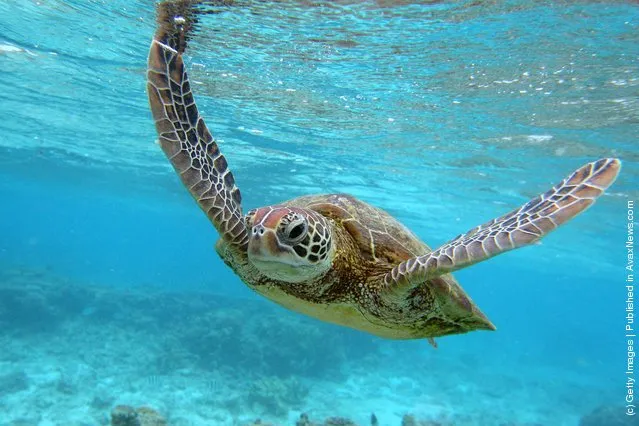
A Hawksbill sea turtle is seen swimming in Lady Elliot Island, Australia

“The Great Barrier Reef is one of the most important sea turtle habitats in the world, with Lady Elliot Island being a key part of that habitat. Every year between November and March the green and loggerhead turtles lumber up the same beach on which they were born more than 50 years ago. These turtles nest on Lady Elliot Island up to nine times in a season, laying between 80 and 120 eggs per clutch. About eight weeks later, young hatchlings leave their nests and head towards the ocean (January to April)”. – Wikipedia

Photo: A Hawksbill sea turtle is seen swimming on January 15, 2012 in Lady Elliot Island, Australia. (Photo by Mark Kolbe/Getty Images)
Details
02 Feb 2012 11:28:00


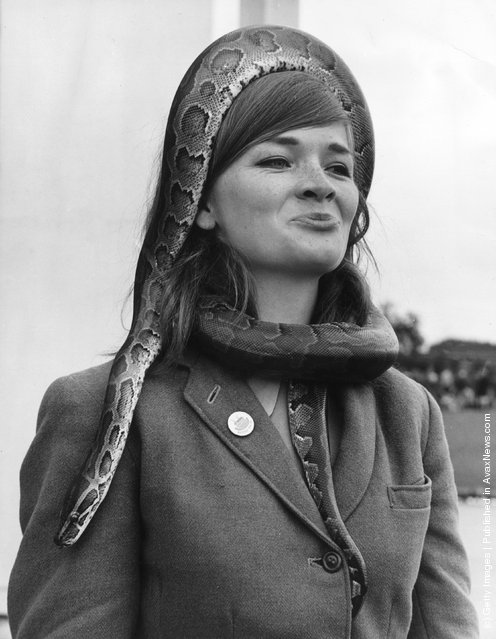
Linda Rooks from Yeovil in Somerset, a hostess at Whipsnade Zoo, wears “Tanga” a 7fy long python as a hat and scarf. (Photo by William Vanderson/Getty Images). 1965
Details
18 Jul 2011 13:14:00
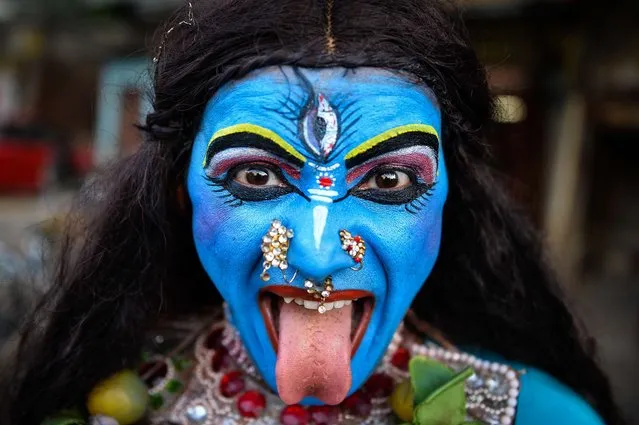
 Indian artist, Ravi Kali (32), dressed as Hindu goddess Kali, participates in a religious procession for the Hindu festival, Ganesh Chaturthi in New Delhi on September 24, 2015. (Photo by Chandan Khanna/AFP Photo)

Indian artist, Ravi Kali (32), dressed as Hindu goddess Kali, participates in a religious procession for the Hindu festival, Ganesh Chaturthi in New Delhi on September 24, 2015. (Photo by Chandan Khanna/AFP Photo)
Details
04 Oct 2015 08:01:00
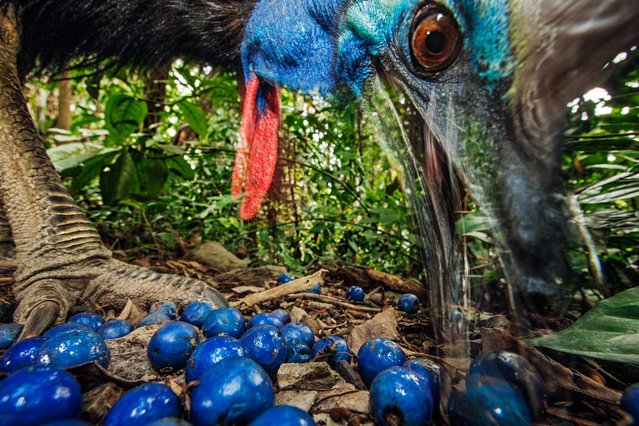
“Cassowaries are large, flightless birds related to emus and (more distantly) to ostriches, rheas, and kiwis”, writes Olivia Judson in the September issue of National Geographic magazine. (Photo by Christian Ziegler/National Geographic)

“Cassowaries are large, flightless birds related to emus and (more distantly) to ostriches, rheas, and kiwis”, writes Olivia Judson in the September issue of National Geographic magazine. How large? People-size: Adult males stand well over five foot five and top 110 pounds. Females are even taller, and can weigh more than 160 pounds. Dangerous when roused, they’re shy and peaceable when left alone. But even birds this big and tough are prey to habitat loss. The dense New Guinea and Australia rain forests where they live have dwindled. Today cassowaries might number 1,500 to 2,000. And because they help shape those same forests – by moving seeds from one place to another – “if they vanish”, Judson writes, “the structure of the forest would gradually change” too. (Photo by Christian Ziegler/National Geographic)
Details
06 Jan 2014 12:21:00
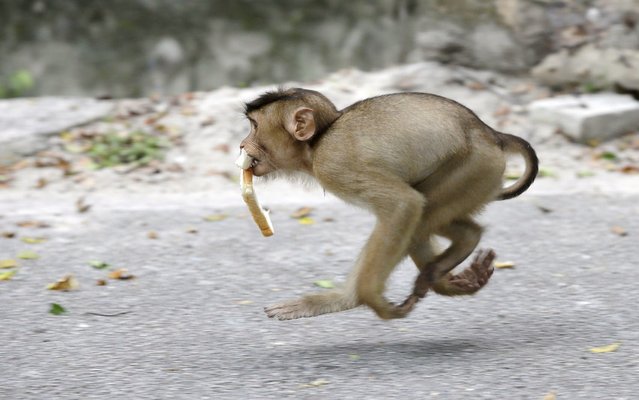
A monkey runs away with a piece of bread in it's mouth at a park in a suburb of Kuala Lumpur, Malaysia, Monday, March 4, 2013. (Photo by Mark Baker/AP Photo)

A monkey runs away with a piece of bread in it's mouth at a park in a suburb of Kuala Lumpur, Malaysia, Monday, March 4, 2013. (Photo by Mark Baker/AP Photo)

P.S. All pictures are presented in high resolution. To see Hi-Res images – just TWICE click on any picture. In other words, click small picture – opens the BIG picture. Click BIG picture – opens VERY BIG picture (if available; this principle works anywhere on the site AvaxNews).
Details
09 Mar 2013 13:07:00