Loading...
Done


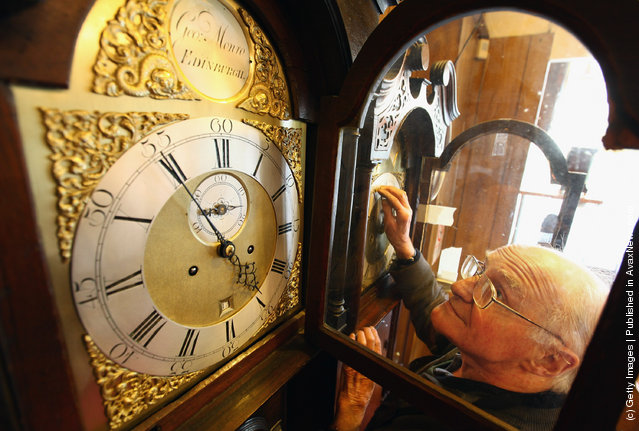
Archie McQuater, 82-year-old clockmaker at Craiglea clocks, adjusts a clock face to British Summer Time (BST) on March 25, 2011 in Edinburgh, Scotland. Clocks will be put forward by one hour at 1:00 AM GMT on Sunday March 27, 2011 officially the start of British Summer Time. British Summer Time will end this year on October 30. (Photo by Jeff J Mitchell/Getty Images)
Details
26 Mar 2011 12:06:00


Dove Jo (L) and HJ Kim kiss beneath a 26-foot statue inspired by the iconic kiss between a nurse and a sailor in Times Square August 12, 2010 in New York City. Alfred Eisenstaedt took the famous photograph on V-J Day marking the end of World War II. (Photo by Mario Tama/Getty Images)
Details
24 May 2011 09:12:00


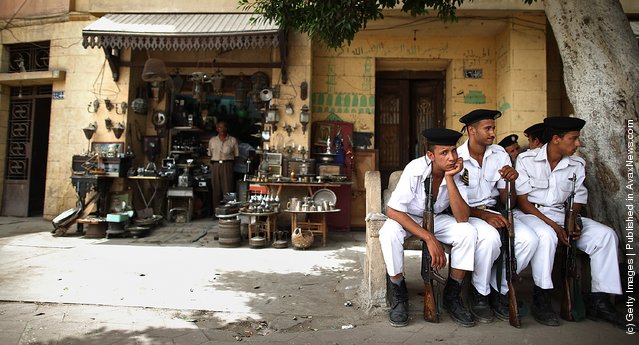
Tourist Police sit in the shade on a road leading to the Coptic Cairo area on May 27, 2011 in Cairo, Egypt. Protests in January and February brought an end to 30 years of autocratic rule by President Hosni Mubarak who will now face trial. Food prices have doubled and youth unemployment stands at 30%. Tourism is yet to return to pre-uprising levels. (Photo by Peter Macdiarmid/Getty Images)
Details
29 May 2011 11:42:00
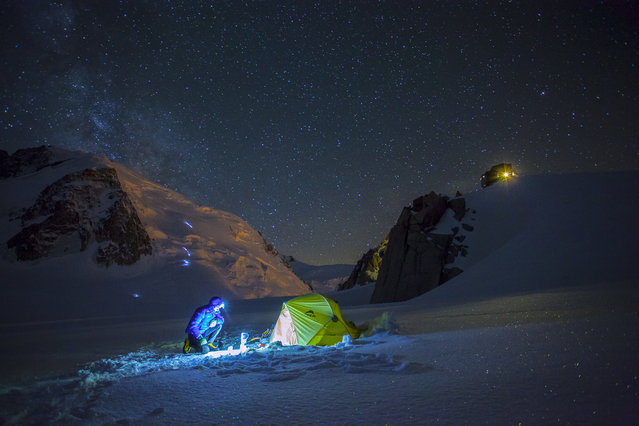
“A snapshot from mountaineer's life”. Have you ever wondered how does a mountaineer's day start? (Photo and caption by Kamil Tamiola/National Geographic Traveler Photo Contest)

“A snapshot from mountaineer's life”. Have you ever wondered how does a mountaineer's day start? I will give you a hint: you wake up at 3 am, set the stove, wake up your partner, pretend it is warm, quickly consume a high-calorie breakfast, watch your friends slowly ascending the icy slopes of your dream summit with their tiny head torches glimmering against perfectly blue ice, and hope for the good weather. One would ask: why all this trouble? The answer is easy: for the love of the adventure and the unknown. Location: Chamonix, Haute Savoye, France. (Photo and caption by Kamil Tamiola/National Geographic Traveler Photo Contest)

ATTENTION! All pictures are presented in high resolution. To see Hi-Res images – just TWICE click on any picture. In other words, click small picture – opens the BIG picture. Click BIG picture – opens VERY BIG picture.
Details
27 Jun 2013 12:47:00
Spectacular images offering insight into the lives of the Huaorani people in the Ecuadorian Amazon have been revealed showing how they use traditional methods to hunt monkeys for food. The stunning pictures were taken by conservation photographer Pete Oxford from Torquay, Devon in the Ecuadorian Amazon. “The Huaorani Indians are a forest people highly in tune with their environment. Many are now totally acculturated since the 1950s by missionaries”, said Pete. “Today they face radical change to their culture to the proximity of oil exploration within their territory and the Yasuni National Park and Biosphere Reserve, they are vastly changed. Some still live very traditionally and for this shoot, through my Huaorani friend, a direct relative of those photographed he wanted to depict them as close to their original culture as possible. They still largely hunt with blow pipes and spears eating a lot of monkeys and peccaries”. The Huaorani are also known as the Waorani, Waodani or the Waos and are native Amerindians. Their lands are located between the Curaray and Napo rivers and speak the Huaorani language. Pete says that during his visit he was welcomed into the group and hopes that ancient cultures can be saved. Here: The tribe were seen celebrating after a hunter returned to camp with a wild pig. (Photo by Pete Oxford/Mediadrumworld.com)

Spectacular images offering insight into the lives of the Huaorani people in the Ecuadorian Amazon have been revealed showing how they use traditional methods to hunt monkeys for food. The stunning pictures were taken by conservation photographer Pete Oxford from Torquay, Devon in the Ecuadorian Amazon. Here: The tribe were seen celebrating after a hunter returned to camp with a wild pig. (Photo by Pete Oxford/Mediadrumworld.com)
Details
20 Jan 2017 07:58:00
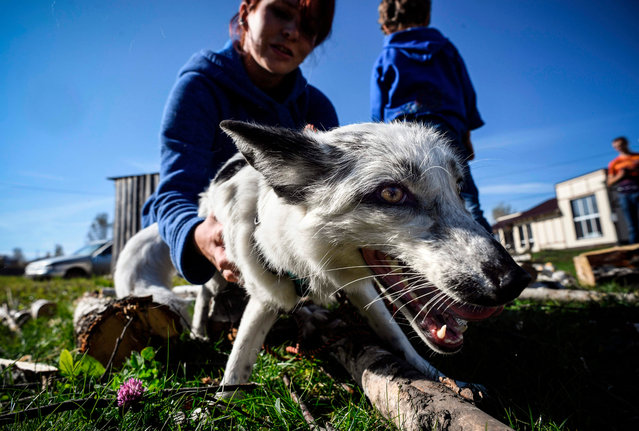
Tatyana Abramova, 33, plays with her home fox Plombir at her countryside house outside Siberian city of Novosibirsk on September 12, 2020. The official start of the Soviet experiment to better understand the domestication of animals by humans began in 1959, and was initiated by geneticists Dmitri Beliaiev and Lioudmila Trout on a farm in Akademgorodok, the scientific center of excellence in Siberia. Their primary objective was to domesticate foxes, to understand how the ancestor of wolves, another canine, evolved into a loyal and loving dog. And understand what this domestication tells us about the genetic evolution of species. (Photo by Alexander Nemenov/AFP Photo)

Tatyana Abramova, 33, plays with her home fox Plombir at her countryside house outside Siberian city of Novosibirsk on September 12, 2020. The official start of the Soviet experiment to better understand the domestication of animals by humans began in 1959, and was initiated by geneticists Dmitri Beliaiev and Lioudmila Trout on a farm in Akademgorodok, the scientific center of excellence in Siberia. Their primary objective was to domesticate foxes, to understand how the ancestor of wolves, another canine, evolved into a loyal and loving dog. And understand what this domestication tells us about the genetic evolution of species. (Photo by Alexander Nemenov/AFP Photo)
Details
25 Oct 2020 00:05:00
A man plays to the cameras as racegoers make their way home at the end of Ladies Day the second day of the Aintree Grand National Festival meeting on April 8, 2016 in Aintree, England. Today is Fabulous Friday and Ladies Day of the three-day meeting of the world famous Grand National Festival where fashion and dressing to impress is as important as the racing. (Photo by Christopher Furlong/Getty Images)

A man plays to the cameras as racegoers make their way home at the end of Ladies Day the second day of the Aintree Grand National Festival meeting on April 8, 2016 in Aintree, England. Today is Fabulous Friday and Ladies Day of the three-day meeting of the world famous Grand National Festival where fashion and dressing to impress is as important as the racing. (Photo by Christopher Furlong/Getty Images)
Details
09 Apr 2016 13:31:00
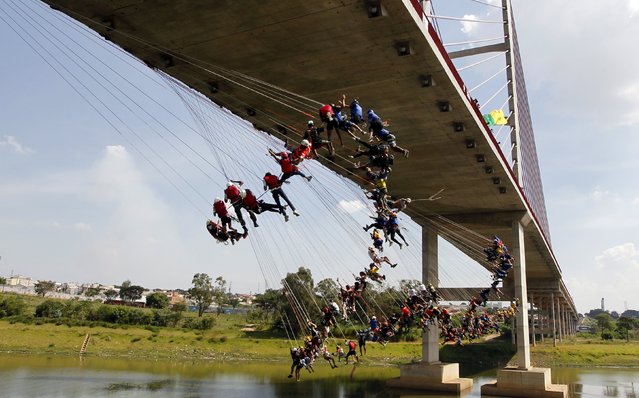
People jump off a bridge, which has a height of 30 meters (98ft), in Hortolandia, Brazil, April 10, 2016. According to organizers, 149 people were attempting set a new world record for “rope jumping”, in which people, tied to a safety cord, jump off a bridge. Rope-jumping, an extreme sport, consists in jumping from impressive heights while tied to a nylon rope. Unlike those used in bungee jumping, the rope has no bounce and participants just slow down at the end of the fall. (Photo by Paulo Whitaker/Reuters)

People jump off a bridge, which has a height of 30 meters (98ft), in Hortolandia, Brazil, April 10, 2016. According to organizers, 149 people were attempting set a new world record for “rope jumping”, in which people, tied to a safety cord, jump off a bridge. Rope-jumping, an extreme sport, consists in jumping from impressive heights while tied to a nylon rope. Unlike those used in bungee jumping, the rope has no bounce and participants just slow down at the end of the fall. (Photo by Paulo Whitaker/Reuters)
Details
12 Apr 2016 11:29:00