Loading...
Done
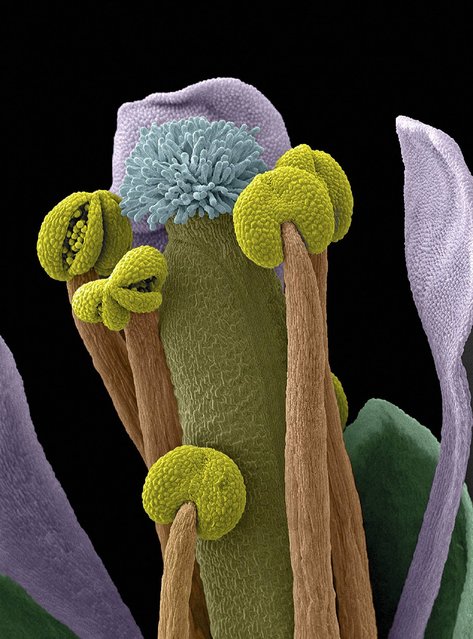
Scanning electron micrograph (SEM) of an Arabidopsis thaliana flower, also commonly known as thale cress. Some of the anthers are open, revealing pollen grains ready for dispersal. Arabidopsis was the first plant to have its entire genome sequenced and is widely used as a model organism in molecular and plant biology. Horizontal width of image is 1200 microns. Magnification 100x. (Photo by Stefan Eberhard/Wellcome Images)

Beautiful, strange and occasionally alarming pictures from the shortlist for this year’s Wellcome image awards – which celebrate the very best in science photography and imaging – from an x-ray of a bat to a micrograph of a kidney stone. The exhibition opens on 12 March at three science centres and the Museum of Science and Industry in Manchester. Photo: Scanning electron micrograph (SEM) of an Arabidopsis thaliana flower, also commonly known as thale cress. Some of the anthers are open, revealing pollen grains ready for dispersal. Arabidopsis was the first plant to have its entire genome sequenced and is widely used as a model organism in molecular and plant biology. Horizontal width of image is 1200 microns. Magnification 100x. (Photo by Stefan Eberhard/Wellcome Images)
Details
11 Mar 2014 05:58:00
A man pulls a cart with collapsed cardboard boxes past boutiques in the Sinchon district in Seoul, May 5, 2015. (Photo by Thomas Peter/Reuters)

A man pulls a cart with collapsed cardboard boxes past boutiques in the Sinchon district in Seoul, May 5, 2015. (Photo by Thomas Peter/Reuters)
Details
21 May 2015 11:16:00
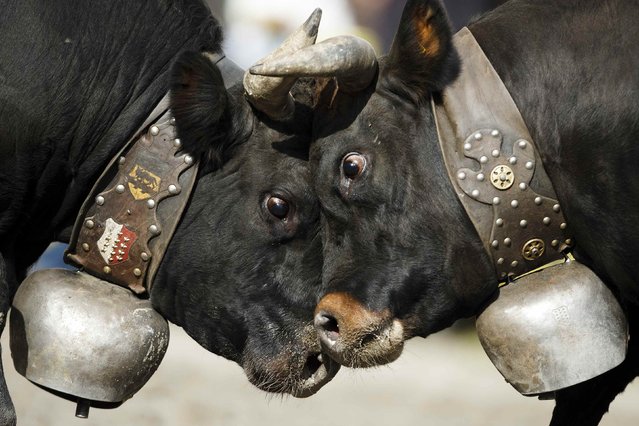
Two Herens cows lock horns during the qualification round of the annual “Battle of the Queens” cow fight finals in Aproz, in the western Alpine canton of Valais May 5, 2013. Each year when taken to the alpine pastures, the cows test their strength and fight for the herd's leadership. The competition continues until a new queen has forced all the other cows to retreat. (Photo by Valentin Flauraud/Reuters)

Two Herens cows lock horns during the qualification round of the annual “Battle of the Queens” cow fight finals in Aproz, in the western Alpine canton of Valais May 5, 2013. Each year when taken to the alpine pastures, the cows test their strength and fight for the herd's leadership. The competition continues until a new queen has forced all the other cows to retreat. (Photo by Valentin Flauraud/Reuters)
Details
06 May 2013 12:33:00
A jogger runs on the bank of Donaukanal channel in central Vienna, Austria, September 5, 2016. (Photo by Heinz-Peter Bader/Reuters)

A jogger runs on the bank of Donaukanal channel in central Vienna, Austria, September 5, 2016. (Photo by Heinz-Peter Bader/Reuters)
Details
17 Sep 2016 10:47:00
A wide-angle view shows the ascent of the shuttle Challenger on January 28, 1986. In the seconds after ignition, the rocket engines' hot blast began the process of destruction. (Photo by NASA)

A wide-angle view shows the ascent of the shuttle Challenger on January 28, 1986. In the seconds after ignition, the rocket engines' hot blast began the process of destruction. (Photo by NASA)
Details
28 Jan 2016 12:28:00
A vendor prepares paan, a betel nut-based chewable stimulant at a flower market in Kolkata, India, January 18, 2016. (Photo by Rupak De Chowdhuri/Reuters)

A vendor prepares paan, a betel nut-based chewable stimulant at a flower market in Kolkata, India, January 18, 2016. (Photo by Rupak De Chowdhuri/Reuters)
Details
04 Feb 2016 11:29:00
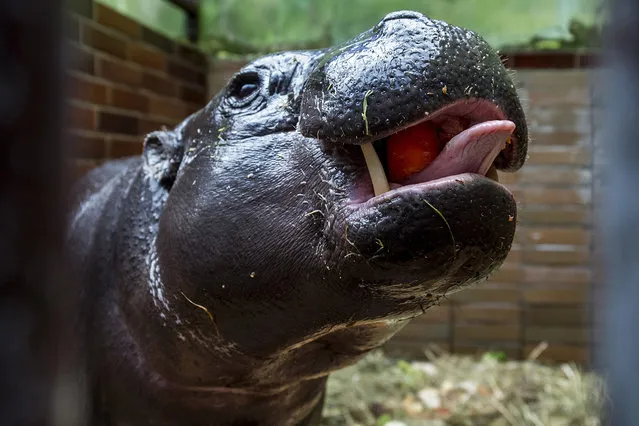
Female of pygmy hippopotamus called Malaya from Netherlands in zoo in Dvur Kralove nad Labem, Czech Republic, February 22, 2016. (Photo by David Tanecek/CTK via ZUMA Press)

Female of pygmy hippopotamus called Malaya from Netherlands in zoo in Dvur Kralove nad Labem, Czech Republic, February 22, 2016. (Photo by David Tanecek/CTK via ZUMA Press)
Details
28 Feb 2016 10:44:00
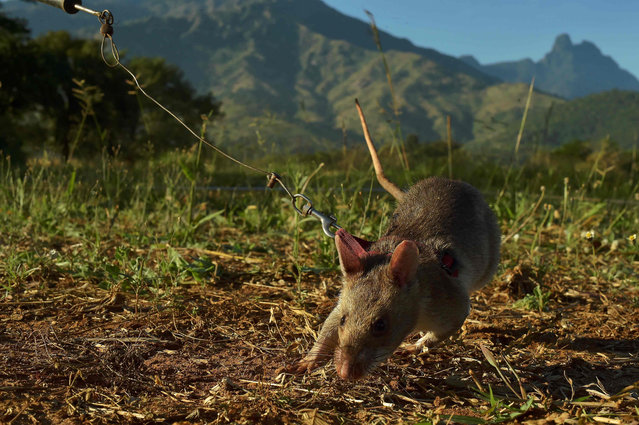
An African giant pouched rat sniffs for traces of landmine explosives at APOPO's training facility in Morogoro on June 17, 2016. (Photo by Carl De Souza/AFP Photo)

An African giant pouched rat sniffs for traces of landmine explosives at APOPO's training facility in Morogoro on June 17, 2016. APOPO trains the rats to detect both tuberculosis and landmines at its facility. Every year landmines kill or maim thousands of people worldwide. The trained rats sniff for explosive and so are able to detect the presence of landmines far faster than conventional methods which involve metal detection. (Photo by Carl De Souza/AFP Photo)
Details
19 Jun 2016 09:52:00